


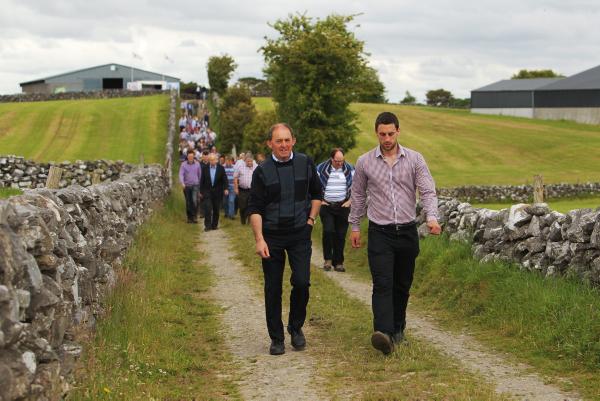

This was one of a number of startling consequences of the prolonged inclement weather on heavy soils in 2012 presented by James O’Loughlin, Teagasc, at last Tuesday’s Irish Grassland Association Beef Conference in Claremorris, Co Mayo.
James’s paper looked at assessing the role of drainage in improving productivity on heavy soils. He said that it was understandable that there will be more interest in drainage, reseeding and other land improvements following the challenges of 2012 and 2013 to date.
However, he cautioned farmers to take a good look at their system and assess the current farm position when deciding on whether or not to implement a land improvement programme on their farm. He said: “It is easy to look at drainage as the cause of problems but it is important to see what else is happening.” He added that there may be more immediate issues for the farm, including growing enough forage for your livestock and, if required, reassessing the stocking rate.
Heavy soils programme
James works with the Teagasc Heavy Soils programme, a group of seven dairy farms in the Munster area who are all farming on heavy soils with poor permeability and high levels of rainfall (an average of 1,600mm in 2012).
As well as reduced grass growth, grass utilisation fell from 8.1t DM/ha to 5.4t DM/ha or a 33% drop in utilisation. The figures are even more dramatic when you consider James’s statement that the participating farms are all high performing productive farms where the target in a normal year is to grow 12.5t grass DM/ha.
Longer lasting effects
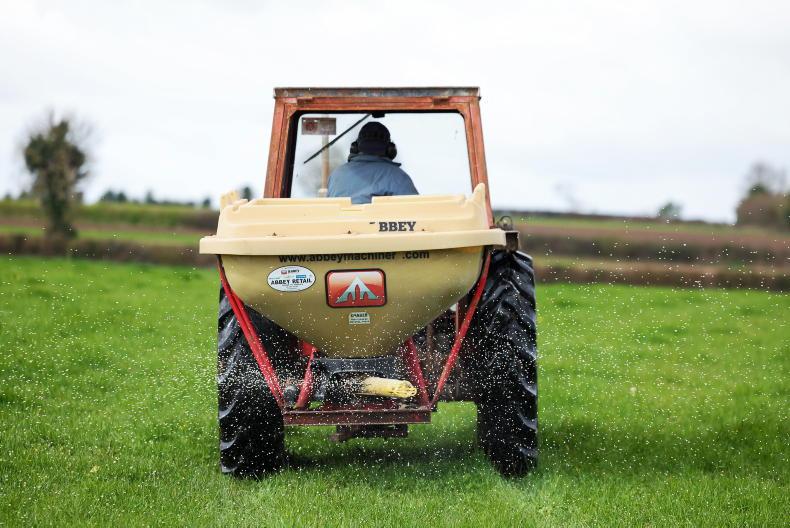
The effects of inclement weather are also longer lasting than just directly reducing grass growth in 2012. Soil pH increased, following planned lime applications on the seven farms, from an average of pH 5.54 in 2010 to an average of pH 5.73 in 2013 but is still well short of the target of pH 6.3 for productive grassland. Phosphorus (P) and potassium (K) levels took a hammering, with P levels falling from 5.56 in 2010 to 4.16 in 2013 and K levels reducing from 116.8 to 84.04. This was despite farmers targeting increased compound fertilizer usage and spreading slurry.
||PIC2||
James said that many farms with heavy soils could have experienced even greater falls in soil P and K, with the area suitable for spreading slurry highly limited to drier lands due to poor traffic ability on a high percentage of lands with heavier soils traditionally used for grazing.
Lower perennial
ryegrass content
Farms in the programme recorded a drop of 9% perennial ryegrass in their swards from an average of 28% perennial ryegrass cover in 2011 to an average of 17% perennial ryegrass cover in 2012. This resulted from a combination of lower soil fertility and severe poaching damage in 2012 on paddocks that had a high percentage of perennial ryegrass in 2011. Soils with very low soil fertility recorded high perennial ryegrass losses.
A reduced area reseeded in 2012 is also contributing to a lower ryegrass percentage but even if reseeding were possible, it would not compensate for the losses recorded in established swards.
James put the losses in context by saying that to increase sward productivity to the target of 12.5t grass DM/ha, sward perennial ryegrass cover needs to increase to 50% with the farms going further away rather than closer to achieving this.
establishing
The stocking rate
The knock-on effects of reduced sward productivity will be a major challenge facing farmers on heavy soils, in particular. James said that it is important to take a step back and look at exactly how much forage the farm can produce and the stocking rate it can comfortably carry in the immediate year’s ahead. This may be a combination of farm produced forage and purchased forage/concentrates.
Whatever the combination, he said it was important to consider these costs and whether or not the stocking rate needs to be reassessed to control costs.
He said that stocking rate on dairy farms with heavy soils was now being pitched at two cows per hectare rather than the higher targets of 2.5 cows per hectare on drier lands. Although this is in a dairy context, he said the same logic applies to all enterprises.
James’s advice is to take a three-year average of good and bad yearly growth when deciding on the most suitable stocking rate. He said that the stocking rate should be based on consistent grass growth and that the focus should be to find out what stocking rate the farm can have and control rather than a stocking rate based on the optimum levels of what grass can be grown in any particular year.
It is important to point out that James is not advocating everyone to lower stocking rates, rather to target the stocking rate to match the farms resources.
In a scenario like this, surplus grass grown in a good year can be used to generate a bank of fodder that will need to be called upon in a bad year.
Drainage problems
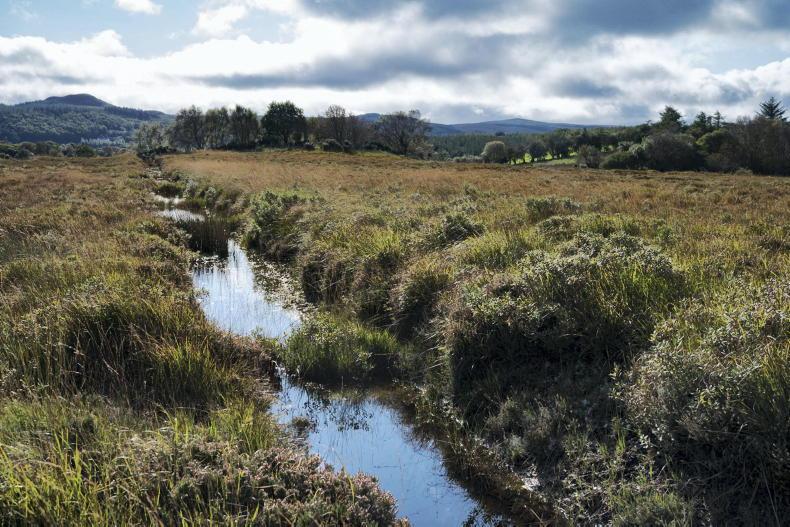
Before undertaking drainage work, James said that it was critical to put a lot of thought into why you are carrying out land drainage. He advised farmers to look at maintenance of existing drains before investing heavily. He said that maintenance work of existing drains had gone out of fashion, partly due to restrictions on spray usage or regular cleaning of open field drains.
In many cases, farmers he had dealt with had achieved good results from concentrating on this approach first. He said that the fact also had to be faced up to that there are soils, no matter what field drainage is carried out, that are just not suitable for grazing livestock in periods of heavy rainfall.
Where field drains had failed, it is important to identify the reasoning of why they failed. This will give a guide on where you should go next. He explained that many drains in recent years were installed without really understanding what was going on deeper in the soil. Therefore, the first step in any drainage programme is to dig a test pit of at least 3m deep to understand what is really happening in the soil. “Some soils require piped drains at 0.8m to 1.5m deep, while others require piped drains of 1.5m to 2.5m deep. This can only be told by looking at the make-up and permeability of soils.
‘‘Other soils still require pipe drains and other complementary measures, such as mole ploughing for example.’’
He added that some wet areas in fields have risen out of compaction rather than drainage problems. The same approach applies to drainage in establishing what is causing the compaction issues and then assessing how they can be solved.



SHARING OPTIONS