


Pneumonia and tetany:
I have been talking to some vets over the past few weeks who all told me that they have had numerous call-outs to calves with pneumonia. The rapid change from last week’s high temperatures to last weekend’s cold spell was the trigger for much of this. Early intervention for calves with early signs of a chill can help to reduce the onset of pneumonia dramatically. Young calves and weaned early autumn-born calves are the highest risk. Cattle should be herded twice daily to catch the disease early. Ensure that cattle have access to good shelter and move from exposed fields or paddocks.
In addition, there have been many cases of tetany due to the cold, wet weather. Low dry matter grass results in the fast passage of grass through the cow’s system reducing her magnesium intake. Ensure that cows have some form of magnesium supplementation in the diet. Most common forms of supplementation are lick buckets or boluses. Magnesium can also be added through drinking water or through concentrate supplementation, but this is rare.
Grazing issues:
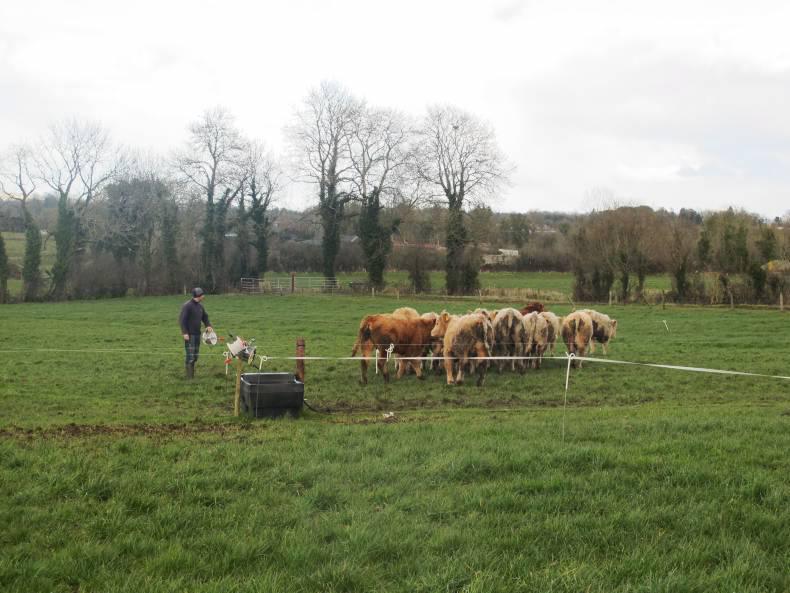
Grazing conditions are variable across the country. In the southern half, there has been little rainfall and grazing conditions are very good. Along the west coast and in the north, there has been much heavier rain and more is forecast. I have been talking to farmers who are struggling to get good levels of utilisation as a result, particularly where bulls are grazing. To maintain growth rates, the bulls should be moved daily in cold wet weather to keep utilisation high. Daily allocations using a strip wire may be most beneficial, and a back fence should also be considered depending on the drinker position. Avoid forcing them to graze below 5cm to 6cm in wet weather. Dry cows, if available, should be used to graze out these areas.
Managing purchased cattle:
Where cattle are being purchased that have not been out at grass, they should be placed in a shed when they arrive on farm. Wait for a dry, warm day for turnout and aim to place them in a field or paddock with adequate shelter.
Finishing cattle on grass:
Where there are a group of steers or heifers that have a target of slaughtering off grass in June, it is essential at this stage that they are being grazed as a priority group on top-quality grass. Energy intake is crucial for the finishing animal. Good quality grass will have an energy level of about 0.95 to 1 UFV/kgDM during the summer. This is similar to that of rolled barley. However, where cattle are on older swards or where the pre-grazing grass heights are over 10cm, the energy intake from grass alone may be low and supplementation will be required. Supplementation may also be beneficial on good quality grass in cold, wet conditions. Supplementation at a rate of 3kg to 4kg per day should take place for the final 30 to 40 days for heifers and 50 to 60 days for steers.



SHARING OPTIONS