Watch: Suckler-to-beef using a different cow type at Newford Farm
The type of suckler cow used at the Newford demonstration herd would not win prizes at pedigree shows, but it was selected to deliver the best output from grass.
Newford Farm’s suckler-to-beef production system is based on achieving high output from a steer and heifer enterprise. This focus is in turn based on driving performance from a grass-based production system.
The Newford demonstration sucker herd in Athenry, Co Galway, is run by Teagasc, Dawn Meats and the Irish Farmers Journal, and is supported by McDonald's.
The target is to primarily finish progeny off grass at 18 to 20 months of age, with cattle requiring a longer finishing period housed and finished for the Christmas market. While grassland management is one key component of the system, the breeding policy and cow type also has a marked influence.
ADVERTISEMENT
Mainly first-cross Aberdeen Angus cows
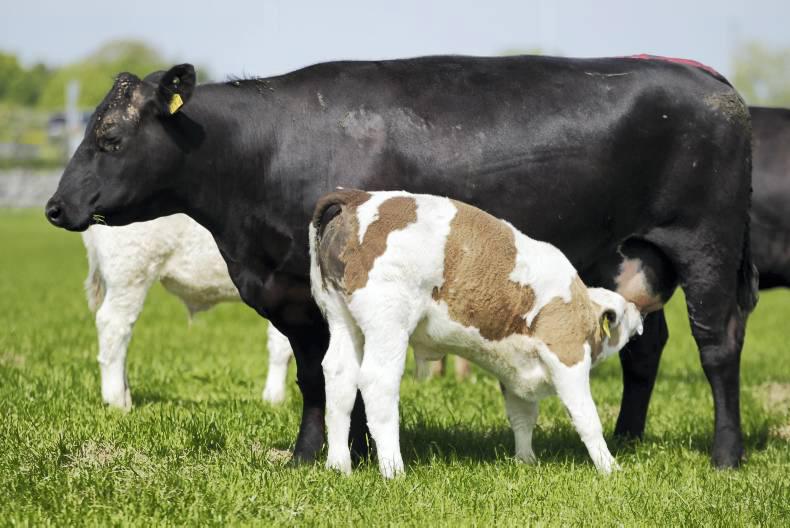
Cow type differs from the norm, with the herd comprising mainly first-cross Aberdeen Angus cows, bred from the dairy herd, with a small percentage of Hereford-cross-Friesian cows. This selection has attracted close attention, with many varying views expressed to date from farmers visiting the herd.
While the cows are not the most stylish, the saying "the proof is in the pudding" is certainly the way they are being viewed on the farm, with fair judgement only possible once a few crops of calves have passed through the system.
Watch Irish Farmers Journal livestock specialist Darren Carty go through the characteristics of the Newford cows in the video below:
Indications to date are that cows are performing well and fit appropriately with the breeding policy of using cows to drive milk production and cheap liveweight gain and careful sire selection to compensate for any misgivings in carcase or growth characteristics of progeny.
Cow credentials
Initial sourcing of older cows in the herd was largely random in terms of background breeding, with more emphasis placed on physical attributes.
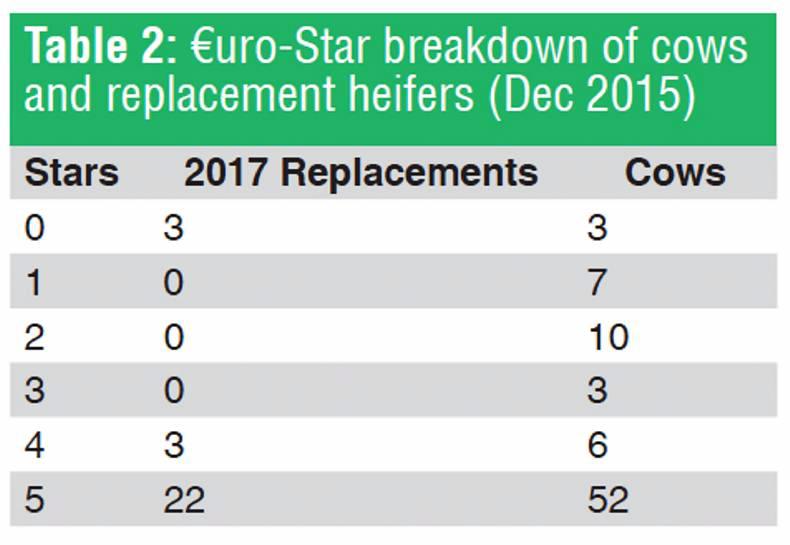
The selection policy in the last two years has been based on a combination of predicted breeding performance and physical attributes of calves, while also taking into account the health status of the herd they are being sourced from. This is reflected in Table 1 and Table 2, which show the predicted breeding performance of cows and replacements entering the herd in 2017 and a breakdown of individual €uro-Star replacement index values.
Lessons learned
It is early days for cows to be analysed, but a few lessons have been learned to date. First-cross cows from the dairy herd have an excellent milk yield potential, which will help deliver favourable weaning weights. However, cows need to be carefully managed to utilise this potential. The farm plan is aimed at reaching the best balance between grass growth, supply and the calving date.
If cows do not get to grass quickly after calving, particularly if silage quality is poor, there may be a risk of cows losing excessive body condition to support milk yield, which, if not addressed, could impact on breeding performance. This is especially the case with first- and second-calvers, which may need preferential treatment if there is any question mark over their nutritional intake.
On the other hand, where the turn-out date is suitable and grassland management is good, then there is great potential to build body reserves (body condition) at a low cost over the grazing season, which can in turn be used to reduce the winter feed requirement and silage intake – a major cost on Irish suckler farms.
Cows are also lighter and in turn easier on the ground, with more potential to turn out earlier. The average weight of first-calvers a few weeks ago was approximately 501kg, while second-calvers weighed 511kg and mature cows weighed 565kg.
This content is available to digital subscribers and loyalty code users only. Sign in to your account, use the code or subscribe to get unlimited access.
The reader loyalty code gives you full access to the site from when you enter it until the following Wednesday at 9pm. Find your unique code on the back page of Irish Country Living every week.
CODE ACCEPTED
You have full access to the site until next Wednesday at 9pm.
CODE NOT VALID
Please try again or contact support.
Newford Farm’s suckler-to-beef production system is based on achieving high output from a steer and heifer enterprise. This focus is in turn based on driving performance from a grass-based production system.
The Newford demonstration sucker herd in Athenry, Co Galway, is run by Teagasc, Dawn Meats and the Irish Farmers Journal, and is supported by McDonald's.
The target is to primarily finish progeny off grass at 18 to 20 months of age, with cattle requiring a longer finishing period housed and finished for the Christmas market. While grassland management is one key component of the system, the breeding policy and cow type also has a marked influence.
Mainly first-cross Aberdeen Angus cows
Cow type differs from the norm, with the herd comprising mainly first-cross Aberdeen Angus cows, bred from the dairy herd, with a small percentage of Hereford-cross-Friesian cows. This selection has attracted close attention, with many varying views expressed to date from farmers visiting the herd.
While the cows are not the most stylish, the saying "the proof is in the pudding" is certainly the way they are being viewed on the farm, with fair judgement only possible once a few crops of calves have passed through the system.
Watch Irish Farmers Journal livestock specialist Darren Carty go through the characteristics of the Newford cows in the video below:
Indications to date are that cows are performing well and fit appropriately with the breeding policy of using cows to drive milk production and cheap liveweight gain and careful sire selection to compensate for any misgivings in carcase or growth characteristics of progeny.
Cow credentials
Initial sourcing of older cows in the herd was largely random in terms of background breeding, with more emphasis placed on physical attributes.
The selection policy in the last two years has been based on a combination of predicted breeding performance and physical attributes of calves, while also taking into account the health status of the herd they are being sourced from. This is reflected in Table 1 and Table 2, which show the predicted breeding performance of cows and replacements entering the herd in 2017 and a breakdown of individual €uro-Star replacement index values.
Lessons learned
It is early days for cows to be analysed, but a few lessons have been learned to date. First-cross cows from the dairy herd have an excellent milk yield potential, which will help deliver favourable weaning weights. However, cows need to be carefully managed to utilise this potential. The farm plan is aimed at reaching the best balance between grass growth, supply and the calving date.
If cows do not get to grass quickly after calving, particularly if silage quality is poor, there may be a risk of cows losing excessive body condition to support milk yield, which, if not addressed, could impact on breeding performance. This is especially the case with first- and second-calvers, which may need preferential treatment if there is any question mark over their nutritional intake.
On the other hand, where the turn-out date is suitable and grassland management is good, then there is great potential to build body reserves (body condition) at a low cost over the grazing season, which can in turn be used to reduce the winter feed requirement and silage intake – a major cost on Irish suckler farms.
Cows are also lighter and in turn easier on the ground, with more potential to turn out earlier. The average weight of first-calvers a few weeks ago was approximately 501kg, while second-calvers weighed 511kg and mature cows weighed 565kg.
If you would like to speak to a member of our team, please call us on 01-4199525.
Link sent to your email address
We have sent an email to your address. Please click on the link in this email to reset your password. If you can't find it in your inbox, please check your spam folder. If you can't find the email, please call us on 01-4199525.
ENTER YOUR LOYALTY CODE:
The reader loyalty code gives you full access to the site from when you enter it until the following Wednesday at 9pm. Find your unique code on the back page of Irish Country Living every week.








SHARING OPTIONS