



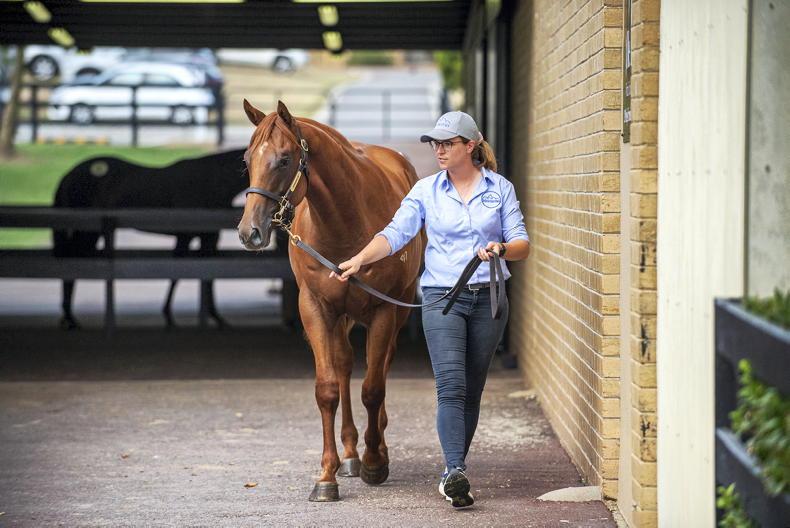
Growing up in the west of Ireland and studying horsemanship (Equitation) at Kildalton College, Ziva Mullins could hardly have imagined that her career would eventually take her to Australia for 12 years.
But every experience along the way helped shape her journey, from working in different roles within the equine industry to discovering her dream career as a breeding and bloodstock executive – a role she now currently works in at Goffs auction house in the UK.
A bloodstock agent is an equine professional who acts as a consultant, adviser and intermediary for buying, selling and managing thoroughbred racehorses and breeding stock. This work involves a lot of travel – attending races and horse sales, visiting stud farms and meeting clients and trainers.
But Ziva’s love for horses started long before she even knew what a bloodstock agent was. “When I was 12, I used to cycle to work in a riding school every Saturday morning because I couldn’t get enough of being around horses,” she says.
These early years around horses gave Ziva a strong grounding in the work ethic, discipline and commitment that would later serve her well in her career.
“That experience gave me exposure to the level of work involved and the dedication that you have to have, because it is hard work, but it is very rewarding.”
Confidence
Career success does not always follow the traditional academic route.
Ziva credits her parents for encouraging her to pursue this line of work, as her passion for horses was very evident. “I am dyslexic and I was diagnosed in primary school. I think my parents could see that this [equine] was an area I really thrived in and that this was something I could do with confidence, and without the feeling of being held back by dyslexia. They saw me reading horsey books which was kind of unheard of when I was a young dyslexic child. It was the only thing I would read.”
Even if you are not very good at what you do, but you are showing genuine passion and a strong work ethic, most people will overlook a few mistakes, if you can prove that you want to learn and want to do it
The experience Ziva gained early in her life continues to underpin her success today: “Learning to ride and getting my own pony gave me an opportunity to be involved at a much bigger level.
Ziva also had good family connections – her grandfather’s brother was Paddy Mullins, father of Willie Mullins.
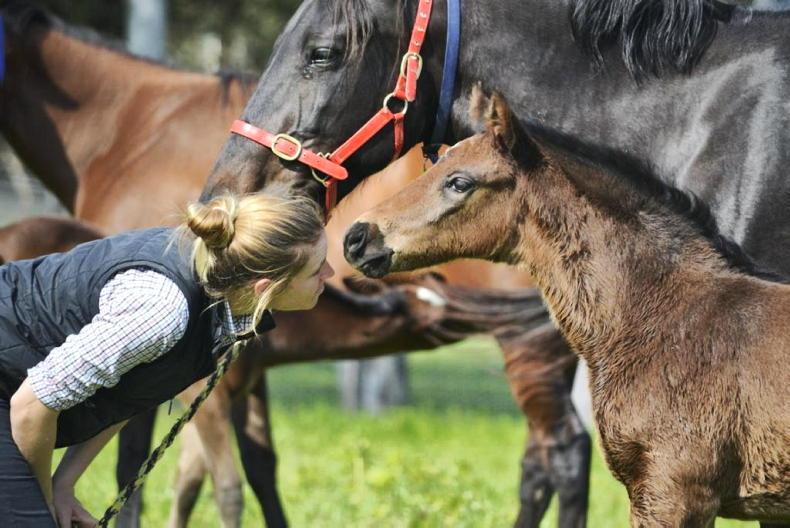
“When I got a little older, I was sent off to Paddy Mullins’ yard, which gave me an introduction to the horse racing industry. This probably cemented the equine industry as a sustainable career choice for me.”
With her interest in horses firmly established, Ziva went on to study horsemanship at Kildalton College.
“I did that Teagasc course for two years and then I went to America for four months and worked for a dressage trainer.”
New perspective
Working overseas gave Ziva a new perspective. Speaking about gaining experience abroad, she says, “I essentially started the main part of my career when I went to Australia probably in a way that I may not have been able to do if I stayed in Ireland.”
Hard work is key, according to Ziva, as is the right attitude and a willingness to learn.
“Even if you are not very good at what you do, but you are showing genuine passion and a strong work ethic, most people will overlook a few mistakes, if you can prove that you want to learn and want to do it.”
Interestingly, Ziva studied counselling while she was in Australia, developing additional skills that have helped her in various aspects of her career.
“My mum found this counselling course and said this is really interesting and something you can pursue remotely.”
This additional training became invaluable as Ziva progressed from practical, hands-on management into the more corporate side of the industry.
“I felt I needed to evolve and engage myself in something else. As I progressed from the physical hands-on management side of things into the more corporate side of the industry, working for auction houses and sales companies, I used that training more and more every day in my interactions with people and in the psychological aspects of auctions.”
Ziva advises young people not to wait until they graduate before developing the skills needed.
“Young people can work on strengthening their communication skills and focusing on their emotional intelligence which will give them an advantage,” she advises.
Practical skills
Practical equine skills are just as important as soft skills: “no matter what area of the industry you are entering, obviously your practical skills around horses are essential.
“Learn from people you know, asking questions develops that skillset. Nobody in the industry is precious about the knowledge they can impart, in my experience.”
For anyone thinking of pursuing a career in bloodstock or breeding, Ziva’s approach is simple: “Just go for it.”

She adds, “Work experience and summer jobs can provide a valuable introduction to the industry and give young people the chance to discover where their interests might lead.
“There are plenty of places looking for willing people to come and have a go whether it is a racing stable, a breeding operation or a sales company. If you want to do a few weeks’ work experience, generally companies will be open to it – take a summer job, dip your toe in the water because you never know what experience opens up for you in the long run.”
She highlights that there are many people in the industry who do not come from equine or agricultural backgrounds and simply, “went out and found an opportunity to go and work in it”.
Ziva’s career trajectory is a reminder that there is no single route into a career with horses.
For anyone considering this path, her message is clear: “build practical experience, develop your people skills, ask questions and be willing to take a chance. It it could open the door to a future you never expected.”




SHARING OPTIONS