Patrick Nuttall, Roundwood, Co Wicklow, runs a 500 Cheviot-cross mid-season lambing flock and a 50-cow suckler-to-beef herd. This year, ewes scanned at 1.8 lambs per ewe and Patrick hopes to wean 1.6 lambs.
He said September is the beginning of the sheep year on his farm. Hoggets are vaccinated for Toxoplasmosis at a cost of €3.50 to €4 per ewe. While relatively expensive, he feels it is a worthwhile cost, especially after outbreaks in 1999 and 2005. Preparation for lambing starts at the National Ploughing Championships with a visit to the UCD stand, as Patrick plans his lambing date to coincide with student work experience.
The ram effect is used (teaser rams) to compact lambing and last year, 16 breeding rams were let out on 25 October. Patrick believes in plenty of ram power in achieving a tight lambing spread; 80% of ewes usually lamb within the first two weeks.
As such, help is very important for lambing time on the Nuttall farm, with 70 to 80 ewes lambing on peak days. Three UCD students are employed to help ease the workload.
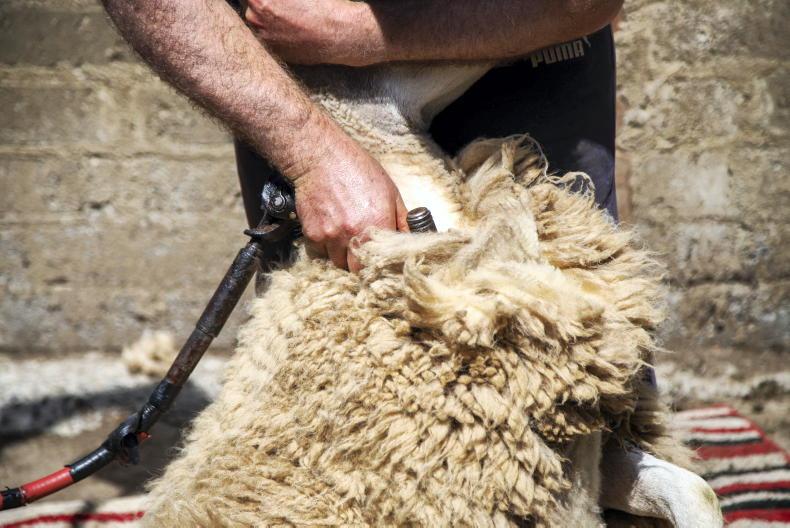
Ewes are housed on plastic and expanded metal slats in early December when the grass usually runs out. They are winter-sheared two to three days after housing. He finds winter shearing has a number of benefits:
You can see the condition of the ewes easily.Lambs are born at heavier weights.Wool won’t get caught and block up the gaps in slats.Ewe nutrition
Once housed in early December, all ewes are fed pit silage ad lib. Triplet-bearing ewes are introduced to 0.45kg of oats per head per day after scanning on 10 January.
Five weeks before lambing, triplets are switched on to an 18% pregnant ewe ration, fed at a rate of 0.45kg per ewe. Three weeks before lambing, this rate is doubled to 0.9kg and triplets are fed twice a day.
Twin-bearing and thin, single-bearing ewes are introduced to 0.45kg of oats eight weeks before lambing. The 18% ration is fed to these ewes four weeks before lambing at 0.68kg per ewe. Single ewes get 0.45kg of the ration 10 days before lambing starts.
Lambing routine
When a ewe lambs, she is taken out of the big pen and is put in a single 5ftx5ft straw-bedded pen with her lambs. The lamb’s navel is sprayed with iodine. If required, any weak lamb is dried off with a towel and placed under an infra-red lamp for an hour to warm it up.
Ewes are checked for milk supply on both sides. If the ewe doesn’t have milk both sides, she is tagged with a red identification tag for culling later in the year. Triplet-born and weak lambs are fed straight away after birth with colostrum from their own ewe or from a milky ewe to give them the best chance of survival.
Lambs remain in single pens to aid bonding with their mother for 24 to 36 hours, depending on pen space. Patrick has a good setup, with 90 individual lambing pens in total. This number is usually capable of handling the flow of newborn lambs, giving them adequate time to bond with their mother.
Before being moved out to bigger pens, ewes and lambs are lettered (A to Z) in a certain colour. When they reach the end of the alphabet, the colour is changed. Single lambs are identified by a dot on the tail of both the ewe and the lamb.
Sheep are then moved to group pens for another two to three days to give adequate time for the lambs to build up hardiness before going out to grass – this is to make sure sufficient bonding has taken place.
There are usually six to seven ewes in the group pens and small square bales are left in the pen to increase the shelter for lambs.
Recording
Before going out to grass, lambs are given an identification tag that will tell Patrick the year they were born and an ID number that is used to record any issues with the lamb during the year.
They are castrated and tailed using rubber rings. They also receive a Scabivax vaccine to prevent orf.
The ewe’s identification tag is recorded and the number of lambs she has is recorded into a sheep book for future reference. Lambs are given an hour to settle after the rubber rings are applied before going out to grass.
To make life easier during lambing, the students and Patrick take turns watching sheep during the night. Details of specific issues are recorded on a white board in the shed so that when someone starts their shift, they can see what needs urgent attention.
A catering company looks after lunch during the day, which really helps to free up time and the bill can be written off against tax.
Wet fostering
Single ewes are watched closely during lambing time. Patrick doesn’t want to be left with lots of pet lambs.
When a single ewe is at the point of lambing, she is caught and gently placed on her side. An empty plastic fertilizer bag is placed flat under her tail and the single lamb is delivered. The plastic bag catches the majority of lambing fluid or discharge during birth.
The foster lamb (usually a strong triplet lamb) is rubbed against the discharge to help transfer the scent of the ewe’s own lamb to the foster lamb. The foster lamb’s legs are secured with cable ties for a short period so the lamb won’t stand up too quickly.
Once this process is complete, the ewe is given access to her own newborn lamb and the foster lamb. She is then left undisturbed with the two lambs for 10 to 15 minutes in the group pen.
The ewe and lambs are then moved to a single pen, the cable ties on the foster lamb are cut and it is marked with iodine on the back of its head so it can be identified again.
A stripe of red marker down the side of the leg is put on the ewe and lambs so fostered couples can always be identified. Patrick finds this fostering works approximately 90% of the time.
He avoids fostering lambs onto hogget ewes because he likes to take it easy on these young ewes in their first year. If ewes do not take to the fostered lamb, they are restrained in a fostering pen for a number of days. If they persist on not taking to the lamb, they are tagged and culled later in the year.
Hygiene
Sheep are housed on expanded metal and plastic slats. These are cold, hygienic surfaces that limit bacterial growth.
Ewes are footbathed regularly in a zinc solution using a portable race in the main shed. This keeps lameness down to a minimum. Individual pens are cleaned out every two to three days and hydrated lime is spread to kill bacteria.
Colostrum is taken very seriously on this farm and weak lambs are given a feed as soon as possible to boost immunity to disease. The compact lambing period helps reduce disease build-up that may be more evident in longer lambing periods on other sheep farms.
Patrick Nuttall, Roundwood, Co Wicklow, runs a 500 Cheviot-cross mid-season lambing flock and a 50-cow suckler-to-beef herd. This year, ewes scanned at 1.8 lambs per ewe and Patrick hopes to wean 1.6 lambs.
He said September is the beginning of the sheep year on his farm. Hoggets are vaccinated for Toxoplasmosis at a cost of €3.50 to €4 per ewe. While relatively expensive, he feels it is a worthwhile cost, especially after outbreaks in 1999 and 2005. Preparation for lambing starts at the National Ploughing Championships with a visit to the UCD stand, as Patrick plans his lambing date to coincide with student work experience.
The ram effect is used (teaser rams) to compact lambing and last year, 16 breeding rams were let out on 25 October. Patrick believes in plenty of ram power in achieving a tight lambing spread; 80% of ewes usually lamb within the first two weeks.
As such, help is very important for lambing time on the Nuttall farm, with 70 to 80 ewes lambing on peak days. Three UCD students are employed to help ease the workload.
Ewes are housed on plastic and expanded metal slats in early December when the grass usually runs out. They are winter-sheared two to three days after housing. He finds winter shearing has a number of benefits:
You can see the condition of the ewes easily.Lambs are born at heavier weights.Wool won’t get caught and block up the gaps in slats.Ewe nutrition
Once housed in early December, all ewes are fed pit silage ad lib. Triplet-bearing ewes are introduced to 0.45kg of oats per head per day after scanning on 10 January.
Five weeks before lambing, triplets are switched on to an 18% pregnant ewe ration, fed at a rate of 0.45kg per ewe. Three weeks before lambing, this rate is doubled to 0.9kg and triplets are fed twice a day.
Twin-bearing and thin, single-bearing ewes are introduced to 0.45kg of oats eight weeks before lambing. The 18% ration is fed to these ewes four weeks before lambing at 0.68kg per ewe. Single ewes get 0.45kg of the ration 10 days before lambing starts.
Lambing routine
When a ewe lambs, she is taken out of the big pen and is put in a single 5ftx5ft straw-bedded pen with her lambs. The lamb’s navel is sprayed with iodine. If required, any weak lamb is dried off with a towel and placed under an infra-red lamp for an hour to warm it up.
Ewes are checked for milk supply on both sides. If the ewe doesn’t have milk both sides, she is tagged with a red identification tag for culling later in the year. Triplet-born and weak lambs are fed straight away after birth with colostrum from their own ewe or from a milky ewe to give them the best chance of survival.
Lambs remain in single pens to aid bonding with their mother for 24 to 36 hours, depending on pen space. Patrick has a good setup, with 90 individual lambing pens in total. This number is usually capable of handling the flow of newborn lambs, giving them adequate time to bond with their mother.
Before being moved out to bigger pens, ewes and lambs are lettered (A to Z) in a certain colour. When they reach the end of the alphabet, the colour is changed. Single lambs are identified by a dot on the tail of both the ewe and the lamb.
Sheep are then moved to group pens for another two to three days to give adequate time for the lambs to build up hardiness before going out to grass – this is to make sure sufficient bonding has taken place.
There are usually six to seven ewes in the group pens and small square bales are left in the pen to increase the shelter for lambs.
Recording
Before going out to grass, lambs are given an identification tag that will tell Patrick the year they were born and an ID number that is used to record any issues with the lamb during the year.
They are castrated and tailed using rubber rings. They also receive a Scabivax vaccine to prevent orf.
The ewe’s identification tag is recorded and the number of lambs she has is recorded into a sheep book for future reference. Lambs are given an hour to settle after the rubber rings are applied before going out to grass.
To make life easier during lambing, the students and Patrick take turns watching sheep during the night. Details of specific issues are recorded on a white board in the shed so that when someone starts their shift, they can see what needs urgent attention.
A catering company looks after lunch during the day, which really helps to free up time and the bill can be written off against tax.
Wet fostering
Single ewes are watched closely during lambing time. Patrick doesn’t want to be left with lots of pet lambs.
When a single ewe is at the point of lambing, she is caught and gently placed on her side. An empty plastic fertilizer bag is placed flat under her tail and the single lamb is delivered. The plastic bag catches the majority of lambing fluid or discharge during birth.
The foster lamb (usually a strong triplet lamb) is rubbed against the discharge to help transfer the scent of the ewe’s own lamb to the foster lamb. The foster lamb’s legs are secured with cable ties for a short period so the lamb won’t stand up too quickly.
Once this process is complete, the ewe is given access to her own newborn lamb and the foster lamb. She is then left undisturbed with the two lambs for 10 to 15 minutes in the group pen.
The ewe and lambs are then moved to a single pen, the cable ties on the foster lamb are cut and it is marked with iodine on the back of its head so it can be identified again.
A stripe of red marker down the side of the leg is put on the ewe and lambs so fostered couples can always be identified. Patrick finds this fostering works approximately 90% of the time.
He avoids fostering lambs onto hogget ewes because he likes to take it easy on these young ewes in their first year. If ewes do not take to the fostered lamb, they are restrained in a fostering pen for a number of days. If they persist on not taking to the lamb, they are tagged and culled later in the year.
Hygiene
Sheep are housed on expanded metal and plastic slats. These are cold, hygienic surfaces that limit bacterial growth.
Ewes are footbathed regularly in a zinc solution using a portable race in the main shed. This keeps lameness down to a minimum. Individual pens are cleaned out every two to three days and hydrated lime is spread to kill bacteria.
Colostrum is taken very seriously on this farm and weak lambs are given a feed as soon as possible to boost immunity to disease. The compact lambing period helps reduce disease build-up that may be more evident in longer lambing periods on other sheep farms.







SHARING OPTIONS