



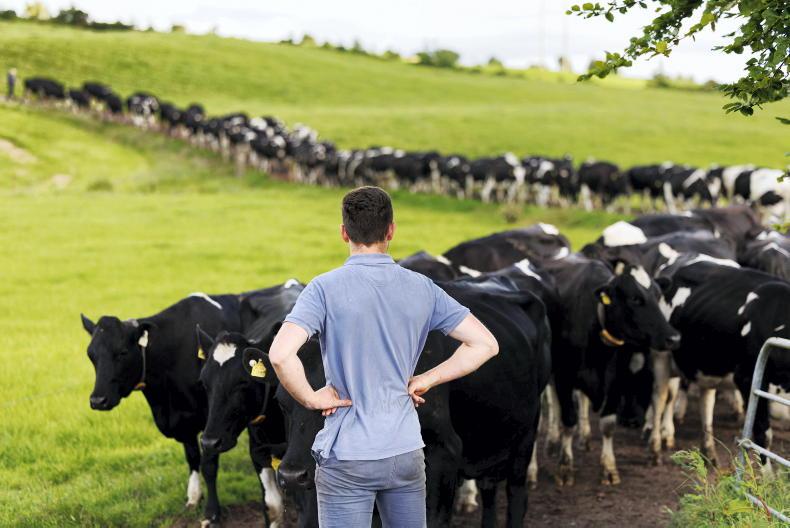
Megan Searson
Roscrea, Tipperary

Megan finished Agricultural Science in the University of Galway in May and comes from a farm, breeding pedigree beef stock – Charolais, Limousins and Belgian Blues – alongside a dairy herd.
“I enjoyed the course, third and fourth year had more practical work and more interesting, farming-focussed modules.
“In 10 years, I’d like to be working with the Department of Agriculture and have some Charolais cattle of my own as well, doing a bit of part-time farming and showing cattle.
“I am positive about the future of farming in Ireland, but I know it is hard to get started, especially if you don’t come from a farming background. I would like to see more help for people who don’t come from a farming background to set up a farm.
“A lot of young people are involved. You go to shows and see a lot of young people in the commercial side of things. It’s good to see.
“Young people bring new ideas. They have the knowledge from college and bring this onto farms and put it to use. They show farmers that things can be done differently, and that it will work. It can be better and more environmentally friendly. There are so many changes in agriculture now, some farmers aren’t even aware of them.”
In terms of changes and challenges facing this generation of farmers, Megan believes environmental regulations will be the biggest one.
“The whole environment thing, the greenhouse gas emissions, down the line I think there will be more cuts to the national herd and agriculture. I think the Government will be harder on farming so that they meet their targets.
“Our parents never had these problems. They didn’t even know what greenhouse gas emissions were when they were our age.”
Niamh Loughlin
Manorhamilton, Co Leitrim

Coming from a suckler and sheep farm, Niamh just finished four years in ATU Letterkenny, studying Animal and Crop Science.
“Growing up on a farm, I didn’t really look into studying anything else. I really enjoyed the course and I’m glad I did it, it’s what I always wanted to do.
“Placement was the highlight – I went to England to do a lambing season and that was unreal to see. It was so different to home.
“In the next few years I’d like to travel and see agriculture on the other side of the world. Then I’d like to come home and farm part-time.
“For young people there’s a lot of challenges, especially around land accessibility. Starting out now, it is so hard to get land. It is so expensive to get into farming.
“But there are lots of supports and aids out there, and hopefully there will be more in the future. I definitely have a positive outlook for it.”
Production targets
Niamh thinks that agricultural graduates have more knowledge of the production targets to be reached on farms: “There’s a lot of emphasis on animal performance and improving profitability.
“Graduates nowadays have more knowledge on that side of things. Rather than going out and doing just the physical side, they know a lot about the book side of it too.
“The traditional way of farming isn’t going to make you a living nowadays. You have to move with the times.
“I don’t even know how I picture farming in 50 or 60 years … I think there’ll be a lot more forestry and environmental farming.
“When I’m older, I hope to be still producing beef and lamb, and getting paid for it.”
Pierce McKevitt
Omeath, Louth

“We are a new generation, we have new ideas and great ways of getting information about farming. We have contacts from all over the world that maybe years ago might have been harder to reach. We can see how farming is done all over the world and bring those ideas home.
“Over my lifetime in the sector, I would like to see it become easier to get into farming.
“There are a lot of people I went to college with who want to farm but don’t have land at home, or maybe won’t be left the farm. It is very difficult to get into it. I’d like to see more help with finances. They’d be flying if they could get started.
“There are a lot of older people getting out of farming, but there’s also a lot of young people who’d like to get into it.”
Policy
Pierce believes one of the biggest changes in the last few years is policy.
“In our parent’s generation, it was all about numbers, but now there’s a big cutback on that.
“I think there is a future for the small farmer, you have to treat everyone the same.
“They have always been the backbone of the nation. I think technology will allow small farmers to continue to make money and mean that it will still be worthwhile to have a small farm.
“I think it’s very important to be proud of your farm. I know it’s not feasible, but I think it’s something everyone should have.
“It’s a nice thing to go home to, a farm.”
Shauna Heaney
Ballinalee, Longford

From a suckler farm, Shauna finished animal and crop science in ATU Letterkenny this year.
“I loved Letterkenny, and college. I enjoyed the course, placement was great. It got me jobs milking and my current job in advisory. I am positive about the future of farming; there are plenty of opportunities if you are willing to learn and adapt. Farming is always changing. I think in our farming careers, we will be using more technology than any other generation.
“The biggest challenges we face are the constant change in prices and the environmental regulations. And for young people, if you’re not from a farm, it’s hard to get started.
“In the future, I’d like to part-time farm and have a job on the side.”
Daniel Coughlan
Ballydehob, Co Cork

“The course was good, they dipped our toes in everything, and we got a good feel for the different areas of the sector. For part-time beef farming, which is what we have here, you have small margins. It’s more of a lifestyle, an expensive hobby, with the hope of it being profitable.
“I think young people are more up to date with rules and regulations.
“We went to college for four years and we have a better grasp of things and have more efficient ways of doing them. In 50 years, I think there will be less farmers, and more bigger operations.
“I hope there will be farms for our children and grandchildren.
“You’d like to think, as the years go on with newer technologies, that you are making things more efficient, so you should still be able to part-time farm and work. If I could change things for our generation of farmers, it would be easing off on the rules. I also think the young farmers scheme should be extended to eight years. Five years is very short for anyone who starts out farming young.”



SHARING OPTIONS