



PastureBase farms have grown an average of 9,219kg dry matter per hectare (DM/ha) to date this year, which is 412kg DM/ha below the five-year average, 1,148kg below 2025's levels and 1,072kg below the 10-year average.
A meeting of the national fodder and food security committee took place in Oak Park, Co Carlow, on Monday 7 September, chaired by Mike Magan, which reviewed the impact of the drought on grass production and fodder supplies and to consider the actions that can be taken now to support farmers through the autumn and into next spring.
Teagasc data presented to the meeting showed that grass growth has recovered significantly over the past 10 days following recent rainfall. However, cumulative grass production for 2026 remains behind normal levels.
There are still a number of farms buffer-feeding in drought-affected eastern and southeastern counties.
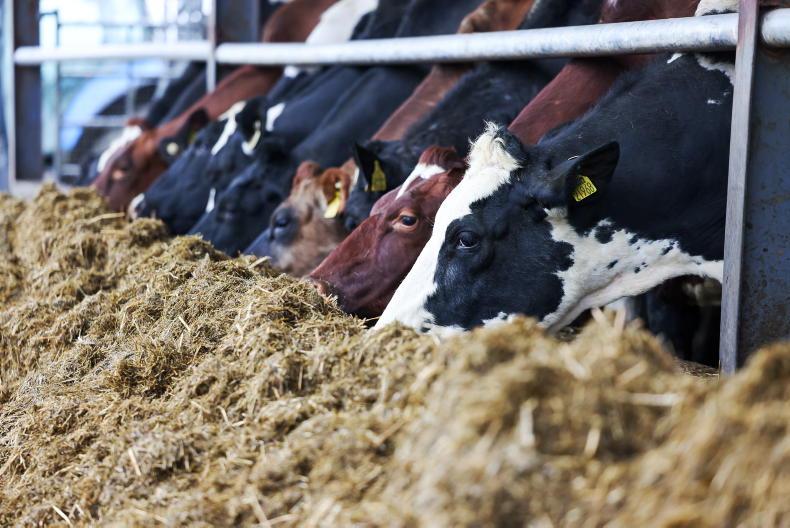
On 4 September across 1,815 farms, supplementary feeds accounted for 44% of the diet, with high levels of silage feeding evident on some farms.
Fodder available
An average of 4.3 months of conserved feed is available on farms, according to current PastureBase fodder budgets from 595 farms.
According to Teagasc, Leinster averaged 4.2 months of conserved feed available, compared with 4.5 months in Munster and Connacht/Ulster.
The Carlow-Kilkenny-Laois-Kildare area recorded the lowest regional figure at 4.0 months.
The data highlights that there is no room for complacency, Teagasc said, and individual farms should continue to assess their fodder stocks as we approach the winter housing period.
The meeting heard that the recovery is not uniform and that the southeast remains the area of greatest concern, with many farms having experienced considerably larger grass production deficits and continuing to use significant quantities of supplementary feed.
Act now
At the meeting, it was emphasised for farmers to act now rather than waiting until winter or spring.
Important points for farmers to note discussed at the meeting include:
Fertiliser advice
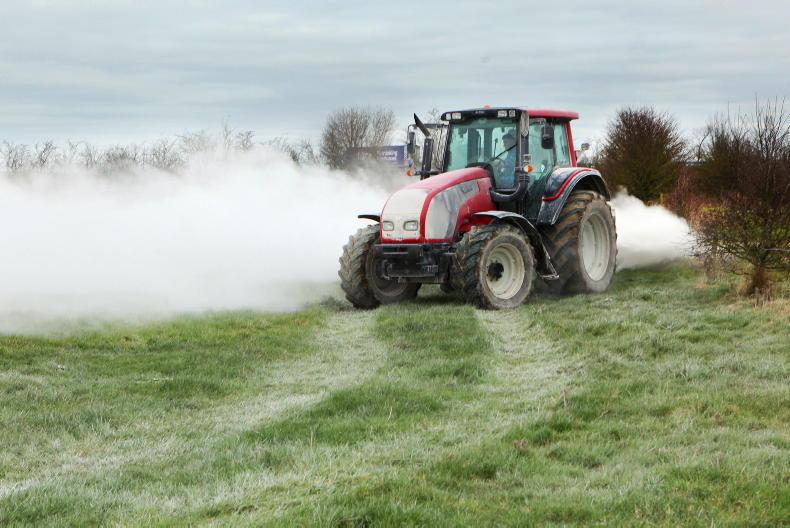
The meeting reiterated current fertiliser advice for farmers to consider the application of chemical nitrogen (N) on grassland over the next week before 14 September and the judicious use of slurry over the next month.
Teagasc stated where grass growth rates are above 35kg DM/ha, consider applying 25kg N/ha (20 units N/ac). Where growth rates are lower, consider applying 15kg N/ha (12 units N/ac).
Teagasc also highlighted that declining day length will soon start to slow grass growth and that excessive fertiliser applications will not be used efficiently as a result.
Committee attendees also proposed and discussed a range of additional measures and supports which they considered could assist affected farmers, including the cost and logistics of transporting fodder between regions, access to finance and possible financial supports, greater utilisation of catch crops, potential regulatory flexibilities and arrangements, which could provide greater confidence to farmers producing or selling additional fodder.
Mental health
The importance of farmer wellbeing and mental health was also strongly emphasised, as farmers experiencing pressure were encouraged not to deal with problems in isolation, but to speak with family, neighbours, advisers, farming organisations or appropriate professional support services.
The movement of fodder sooner rather than later was advised and opportunities for the sector to work together on transport options and utilising backloads on existing journeys for other products were discussed and encouraged.
Stress on farmers who have had to feed winter stocks to livestock this summer was acknowledged.
“The strongest message from today is that there is a lot that can still be done now. Farmers should assess their own position, make the best possible use of grass growth over the coming weeks, complete both fodder and financial budgets and address any likely shortfall early,” chair Mike Magan commented.
“There is no single solution to this challenge. It will require sensible management on farms, movement of fodder where it is available, good advice and communication, and continued co-operation right across the industry.
“Longer term, there is a need to build greater resilience into the farming system. Those farmers that carried over fodder stocks from last winter have been better positioned to cope with the summer drought.”





SHARING OPTIONS