



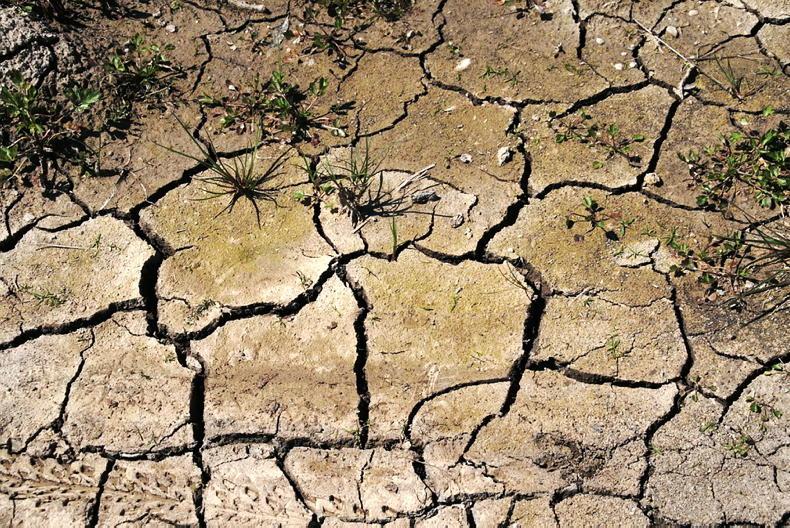
Across Ireland and much of Europe, farmers are facing the effects of prolonged drought and extreme heat this summer, driven by below-average rainfall and higher-than-normal temperatures since early spring.
The latest data from the European Commission’s Joint Research Centre (JRC) and Copernicus European Drought Observatory (EDO), covering 21–31 July, showed high-level drought conditions across much of the continent, with hotspots in France, Germany, Hungary, Romania and the UK.
Around 50% of the EU and UK was experiencing drought at some level of intensity in July. Four major European rivers – the Loire in France, Po in Italy, Rhine in Germany and Danube in Hungary – reached record-low water levels in August, according to Copernicus.
Drought
Scarce rainfall has been the main driver, with severe and prolonged precipitation deficits recorded across many regions. Heatwaves have also pushed temperatures to record levels in several countries.
The World Health Organisation (WHO) has reported more than 10,000 excess deaths across five countries during the most extreme heat episodes, although data are still being collected.
According to the JRC MARS Bulletin published on 27 July, repeated heatwaves shortened the grain-filling period of winter crops, bringing forward the harvest.
This includes Ireland, with 90% of the harvest wrapped up as of last week. EU yield forecasts for winter crops were revised down by 1-4%.
Excessive heat and limited rainfall across western and central Europe have depleted soil moisture and affected flowering in spring crops. Yield forecasts for all spring and summer crops have been reduced, most notably maize and sunflowers, with expected yields down 6-7%.
Hot and dry conditions have continued across many areas since the bulletin was published, suggesting further yield reductions may follow.
Outlook
Seasonal forecasts indicate continued pressure, with August and September expected to remain warm. The climate phenomenon El Niño may also contribute to warmer than normal conditions into spring 2027.
Extreme heat, drought, hail and wildfires have caused agricultural damage estimated at more than €3bn, according to Coldiretti, Italy’s largest farming organisation.
Milk production is down by up to 10% in some areas, while losses across crops including rice, maize, fruit, vegetables and fodder range from 20% to 70% in extreme cases.
Damages to production are most apparent in the north of the country, where water scarcity is putting entire productions at risk.
Research from CREA, Italy’s national agricultural research organisation, also warns that increasingly warm seasons and more frequent drought are putting wine production under pressure by reducing yields and affecting plant health.
CREA says vineyard irrigation can no longer be viewed simply as an emergency measure but is becoming a normal part of producing quality grapes.
A severe drought is affecting large parts of France. EDO data showed more than 85% of the country was under drought conditions in mid-July, compared with around 65% at the same point in 2025 and less than 2% in 2024.
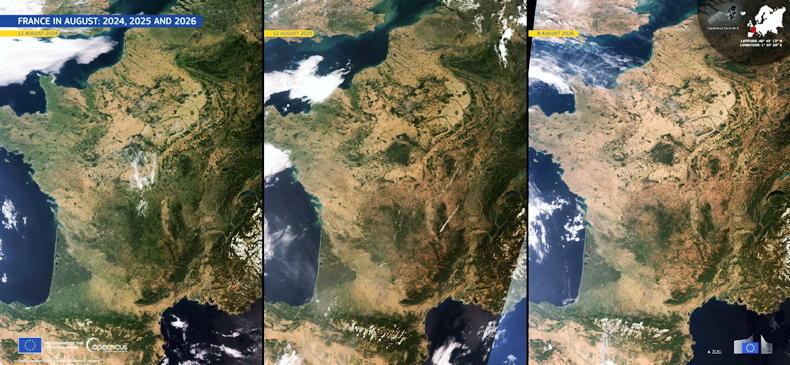
Repeated heatwaves and limited soil moisture have affected the final stages of winter crops and the development of spring crops.
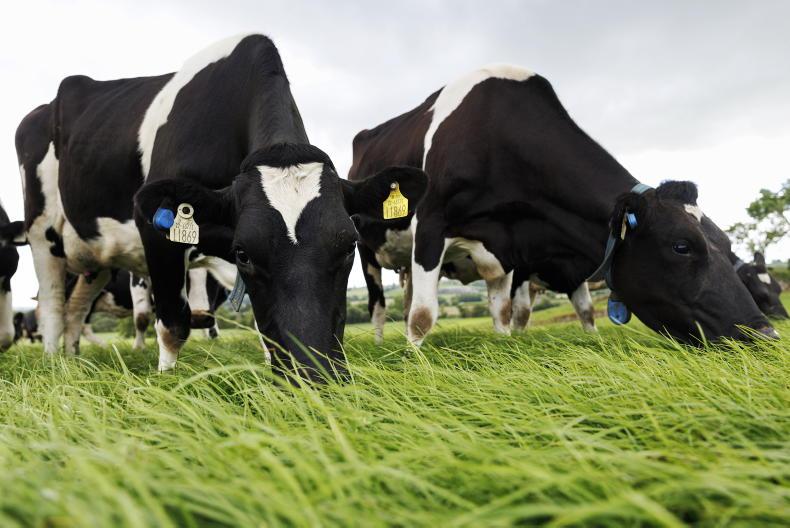
According to Agreste, the statistical service of France’s Ministry of Agriculture, grass growth was one-third below average as of 10 August, worsening fodder shortages across almost all regions.
INRAE, France’s national agricultural research institute, said exceptionally high temperatures have also dramatically accelerated the development of grapevines, with flowering beginning several weeks earlier than normal.
The French Ministry of Agriculture has activated a national drought unit to monitor the situation and coordinate the response.
ETHEAS, Greece’s national association of agricultural cooperatives, has warned that extreme heat, drought and wildfires could push up olive oil prices.
Olive growers fear the combination could reduce the amount of fruit suitable for oil production, with weather conditions over the coming weeks likely to determine the scale of the impact.
Spain’s largest farmer organisation ASAJA, reported that the country’s grape harvest was the earliest to begin in Europe, starting at the end of July.
ASAJA Córdoba expects a normal harvest of around 32 million kilos, but said high temperatures could still affect yields.
ASAJA Alicante estimated cereal yields were 25-30% lower following extreme drought and hail in June and July.
In Belgium, farmer organisation Boerenbond has warned that heatwaves are reducing livestock productivity, with cows producing less milk. It said it was not yet possible to quantify the reduction precisely.



SHARING OPTIONS