Ireland's hottest summer on record has left a lasting mark on the country's vegetable sector, with a new Teagasc report showing yield losses of 25% to 40% in many unirrigated crops and even greater damage in the worst-hit fields.
While rain finally returned in the third week of August, ending an eight- to nine-week drought across the main growing regions, Teagasc said many of the losses were already locked in through poor crop establishment, reduced plant populations and abandoned plantings.
The report shows a sector under pressure, with growers facing rising costs while trying to protect crops during an exceptionally dry season.
Irrigation
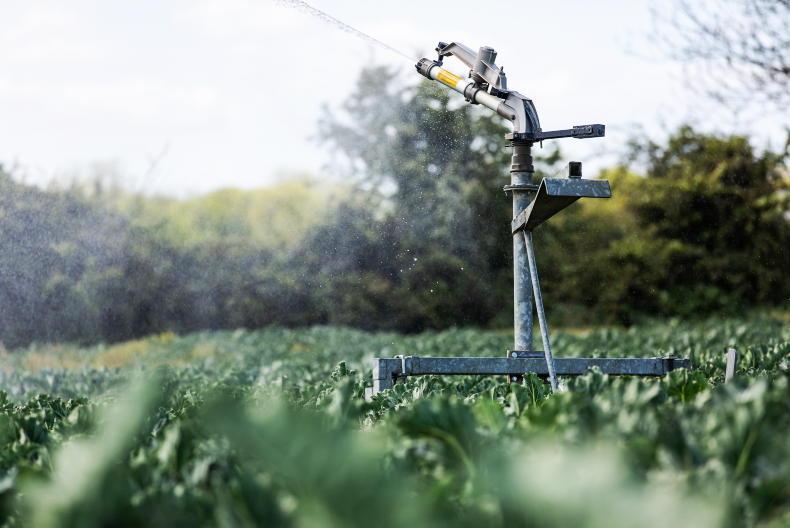
Irrigation made the difference this year, as growers with irrigation generally managed to protect yield, crop size and marketable quality. However, that protection came at a steep price.
The average cost of applying 25mm of water was around €345/ha, although some growers reported costs ranging from €230 to €750/ha. Carrot growers needing seven or eight applications spent between €2,415 and €2,760/ha on water alone, before machinery, equipment and infrastructure costs were added.
Other vegetable crops requiring six to eight applications also racked up irrigation bills of €2,000 to €2,800/ha.
The problem is that only around one-third of Ireland's vegetable production area has enough irrigation capacity to cope with a prolonged drought.
Most irrigation systems are designed for the two- or three-week dry spells growers have traditionally managed. This year's drought stretched to eight or nine weeks in many areas, gradually overwhelming available water supplies and irrigation equipment.
Key regions
By mid-August, soil moisture deficits had reached between 70mm and 100mm across key vegetable-growing counties including Dublin, Meath, Louth, Kildare, Carlow, Kilkenny, Wexford, Waterford, Tipperary and Cork.
Met Éireann confirmed absolute drought conditions across much of the south, east and midlands, with 20 of its 25 weather stations recording at least 15 consecutive days with virtually no rainfall.
Crop damage varied
The impact was felt across the sector, but crops varied depending on whether they were irrigated or not.
Unirrigated cabbage suffered losses of up to 40% in the worst-affected fields, while carrot yields fell by roughly 25% to 40% where irrigation was unavailable. Parsnip yields remain around 20% to 30% below normal.
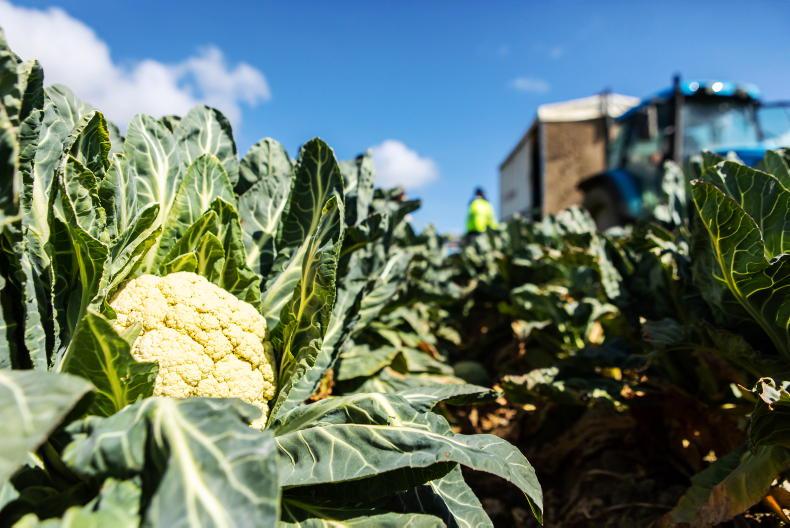
Some cauliflower crops were lost completely, while unirrigated onion crops averaged only 60% to 65% of normal yields. Brussels sprouts remain a particular concern for the Christmas market, as drought-stunted plants are carrying fewer potential sprouts.
Although recent rainfall has helped crops recover strongly in some fields, Teagasc warns this creates a new challenge. Delayed crops are now maturing together, raising the risk of temporary gluts alongside supply gaps elsewhere.
“The real story this year is what it costs to keep crops going. Growers with access to irrigation were applying water four, five or even six times more than normal, in some crops that's an extra €1,380 to €2,070 per hectare in irrigation costs alone," specialist vegetable adviser with Teagasc Eoin Sweetman commented.
"And that cost doesn't tell the whole story either. Even on irrigated ground, we saw higher grade-out rates, more variable size and quality that didn't meet specification, so growers were often paying more to produce less marketable yield, not less overall production.”
Challenges ahead
The report warns that the greatest risk is no longer simply running out of vegetables, but maintaining a steady supply throughout the season.
Higher irrigation, labour, harvesting and packing costs are squeezing grower margins, while winter crops such as Brussels sprouts, leeks, carrots, swedes and winter cabbage remain vulnerable.
The financial pressure comes on top of rising production costs, with Teagasc noting that field vegetable input costs had already risen 77% since March 2020, according to its horticulture crop input prices report published in May.
With Ireland experiencing its second consecutive record-hot summer, Teagasc says climate projections point to more frequent summer droughts in the future.
While Ireland has plenty of water overall, the report argues the real challenge is building the infrastructure needed to store and deliver it when crops need it most.