



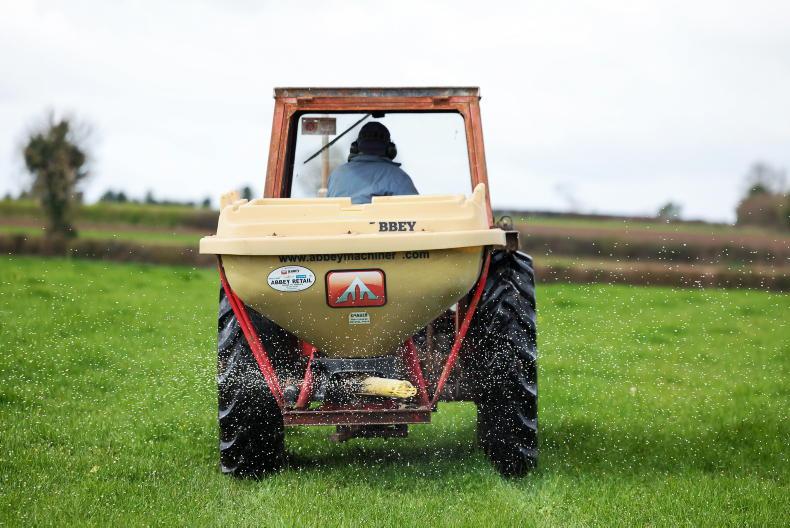
A major pre-Budget lobby of Government ministers and TDs moved up the gears this week as farm organisations sought to secure €30m in a national exchequer top-up for a possible fertiliser support scheme.
Payments under the scheme could be based on the volume of product purchased and registered on the National Fertiliser Database, farmer representatives were told during exploratory talks this week with senior Department of Agriculture officials.
The talks examined how Ireland should pay out its €15.33m share of the €540m EU relief fund which aims to tackle the hike in fertiliser and fuel costs as a result of the ongoing Middle East conflict.
An application process for the support payment is not envisaged, given that payments for each applicant would be based on the volume of fertiliser purchased, but it remains unclear what will happen where fertiliser purchases have not been uploaded to the fertiliser database.
It has been suggested that any moves on the issue could be made as part of the wider package in the Budget.
Although State funding to a maximum of 200% or around €30m – which would take the Irish fertiliser package to over €45m – is permitted to bolster the fertiliser supports, it is unclear whether this money will be forthcoming.
Department officials at the fodder committee meeting this week stressed that a final decision on a State top-up of the fertiliser package had yet to be taken.
It has been suggested that any moves on the issue could be made as part of the wider package in the Budget.
It is estimated that the fertiliser support payment will amount to €11.40/t based solely on the EU fund of €15.33m.
However, the payment could reach €34/t if the full permissible State top-up is delivered.
We cannot have lower limits that mean a farmer using less fertiliser gets nothing
ICMSA president, Denis Drennan, called on Minister Heydon to allocate the maximum allowable amount of funding to the scheme under EU regulations.
Providing supports of just €11.40/t would be a “complete insult to farmers” given the “brutal and horrendous 2026” they had endured in terms of “weather, output price, and inflated costs”, Drennan said.
ICSA’s Edmond Phelan warned that all farmers had to be able to access the fertiliser supports.
“We cannot have lower limits that mean a farmer using less fertiliser gets nothing,” he said.


SHARING OPTIONS