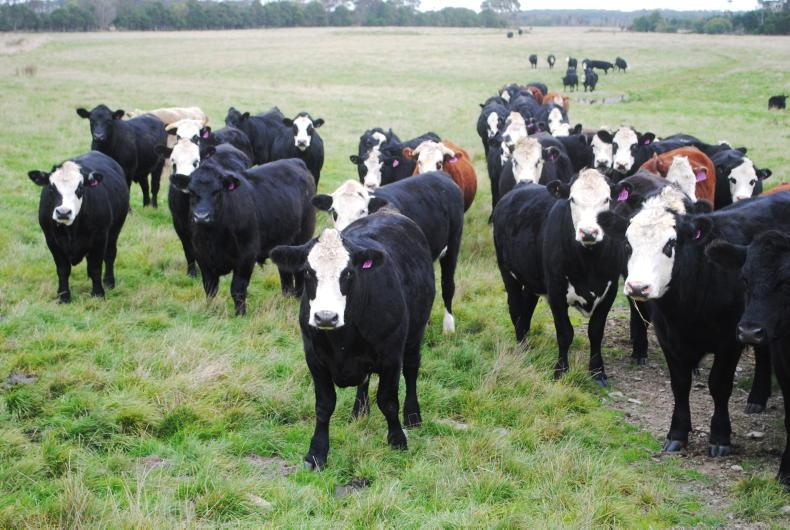
While Ireland may be the Emerald Isle, and known for its grass-growing ability, a small island off the coast of Tasmania is perhaps the best place on Earth to run cattle.
King Island sits in the Bass Strait, 80km off the north-west coast of Australia’s smallest island state.
Because of its maritime climate, the island experiences no extremes of weather with annual temperatures usually ranging only from 13°C to 21°C, allowing clover and ryegrass to stay green and grow year-round.
The growing conditions allow farmers to graze stock throughout the year, with little need for feeding.
The idea of running 1,000 Angus cows and followers on grass alone for the entire year would be dream stuff for Irish farmers, but their King Island peers are fortunate enough to be able to do just that.
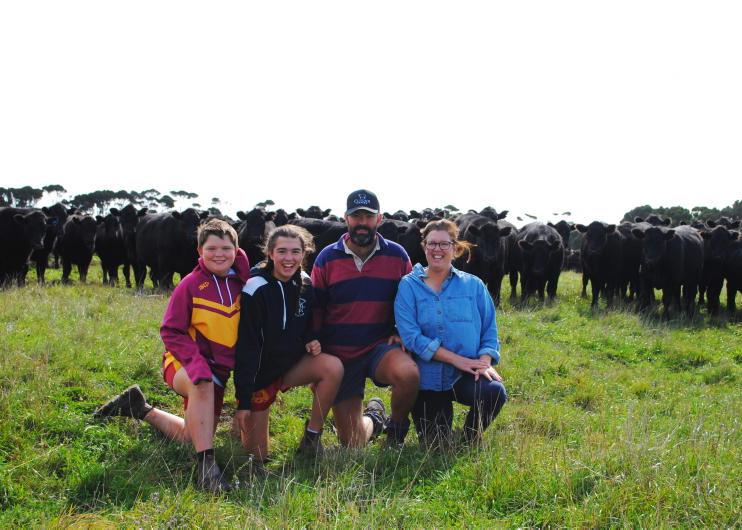
Beef producers Tim Schuuring and Claire Perry operate a 970ha farm in the centre of the island.
They calve down 990 Angus cows each year, sell half the bullocks as stores, finish the other half, and all non-replacement heifers.
They may save and use as little as 50 bales of hay a year, just to feed to weanlings during weaning, and no grain is fed to any cattle, at any stage.
“We’re not fodder cutters,” Schuuring made clear.
“Our fodder is probably on the cow’s back, and strategic nitrogen [use] in late autumn and early winter.”
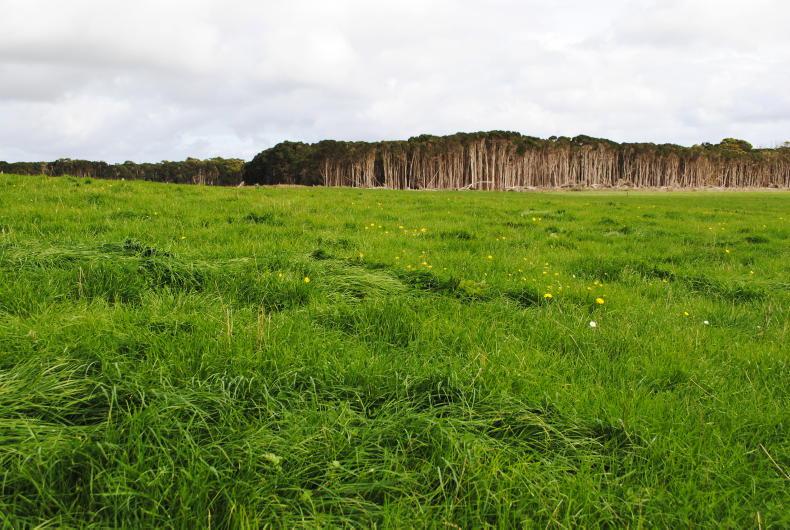
He said the cows get nothing other than grass at foot, and in tougher parts of the year, they get by through strict rotations.
“The cows, in the good part of the season, they store their fat,” Perry added.
She said while King Island’s climate enables near year round grass growth, there are some parts of the year where things become tight.
Schuuring said in some years, once it gets dry, and grass growth ceases, the cows have to tough it out, with priority given to the younger cattle.
He said this is what their Angus cows are “built and bred for”.
“We’re chasing those moderate and easy-doing sort of cows that have to fend for themselves, really,” he said.
“As soon as [the cows] are weaned, we’ll shut them down, and they just have to do what they’re built to do.”
Reducing hay and silage costs, and eliminating grain costs altogether, is one of the ways King Island farmers can offset the significant freight and shipping costs they experience by being so remote.
The couple are currently paying €105/head to ship cattle to be processed by JBS on the Tasmanian mainland.
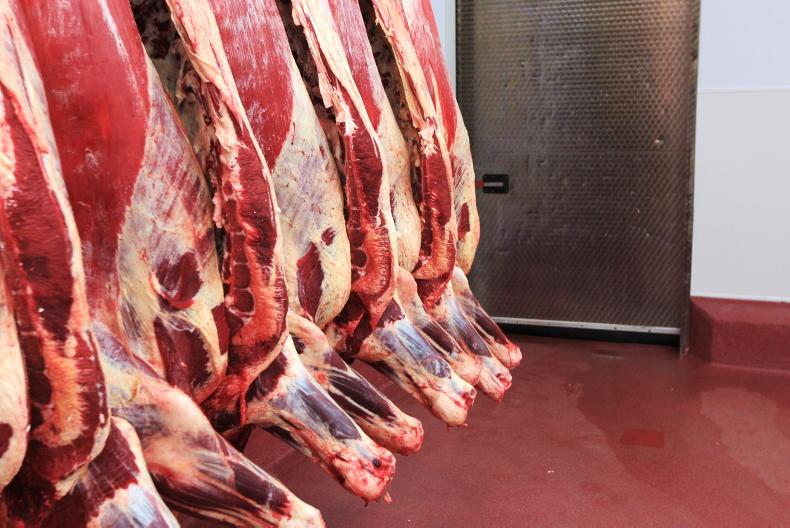
A carcase weight of 280-300kg, or 600kg liveweight, is the target for finished bullocks, and they’re typically shipped from May through to September.
Calving starts in early September and finishes by late October.
Heifers are checked twice a day and cows three times a week, on set days.
“They’ve got to look after themselves,” Schuuring explained.
The couple’s farm receives about 1000 millimetres of rainfall a year which causes mineral leaching at times, and stock have to be given mineral supplementation.
All young cattle receive long-acting selenium and copper boluses, and Copper B12 and selenium is given to cows, along with a scour vaccine.
All paddocks are limed every five years, and approximately 100kg of urea is spread per hectare per year.
‘Just keep growing’
Fellow King Island farmer Duncan Clemons runs 1200 Angus cows on 1900ha in the northern part of the island.
He finishes all followers off grass to beef with up to 3200 cattle on the property at any one time.
Like many of his neighbours, he’s been able to keep cattle thriving throughout the year off grass alone, and can get by with as few as 300 round bales of hay a year.
He said one of the biggest advantages of farming on King Island was its traditional 12-month growing season.
“It’s beautiful in the winter where if you shut a paddock up, it’ll just keep growing,” Clemons said.
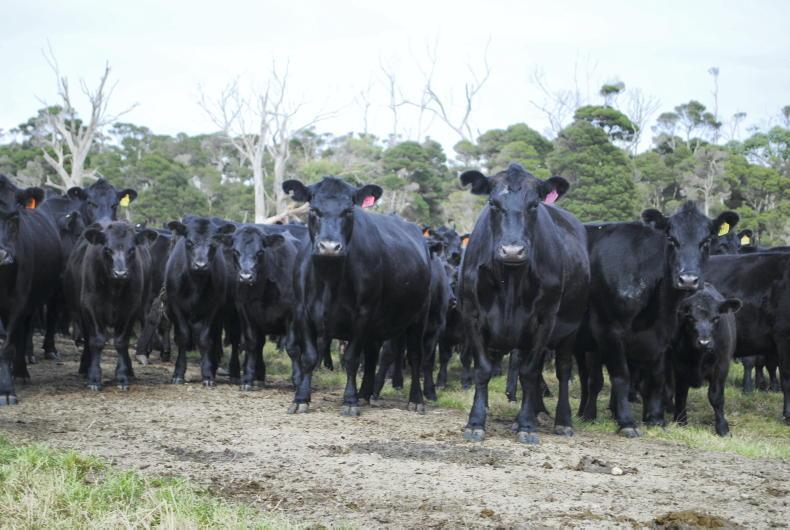
All stock are finished through JBS’s grass-fed programs.
“The first ones that go in July, usually average in a normal year about 320 kilograms dressed, up to 650kg [live weight],” he said.
“As you go into the spring, those weights start to come up a bit more, up to 340-350kg dressed.”
Fattening cattle are put on semi-coastal country over the winter, and about 300 cows are put on what Clemons described as “rawer” coast.
“I leave them up there just until they calve,” he said.
He said then, for the last six weeks of gestation, the cows might run out of grass, so they are brought back to better ground before they calve.
Clemons said the demand for grass-fed beef in Australia has strengthened in recent years.
However, he said while the story behind the beef was important, it still ultimately had to taste good – and that was key.
To achieve high-quality beef which meets the required Meat Standards Australia (MSA) grades, he looks for bulls with high intra-muscular fat (IMF) figures.
“With genetics at the moment, there’s a big push for marbling, almost trying to get a Wagyu feel in the Angus breed to get that better taste and experience for the customer,” he said, adding that the industry had to follow the trend.
Mr Clemons said such an approach allows him to secure a 40c/kg bonus from the factory.
He said this helped to cover the high freight costs of getting his cattle to the mainland.
“If you can hit that target and can get more cattle in that marbling and higher grading, it makes sense,” he said.
‘Nuggety’ Black Baldies
Fred Perry has been beef farming on King Island for more than 50 years.
He runs 600 cows and finishes all followers on 1200ha, alongside wife Shona.
All cattle are finished to a target carcase weight of 285kg with nine millimetres of fat, again via the JBS grass-fed program, a processor with a near-total monopoly on the island.
The seasoned farmer said when it comes to grass-fed beef, Black Baldies – a straight Hereford/ Angus cross – are the only cattle for the job, all because of their hybrid vigour.
“That’s where we find we’ve been really successful with the Poll Hereford cross,” he said.
“The first drafts finished will be those Black Baldies.
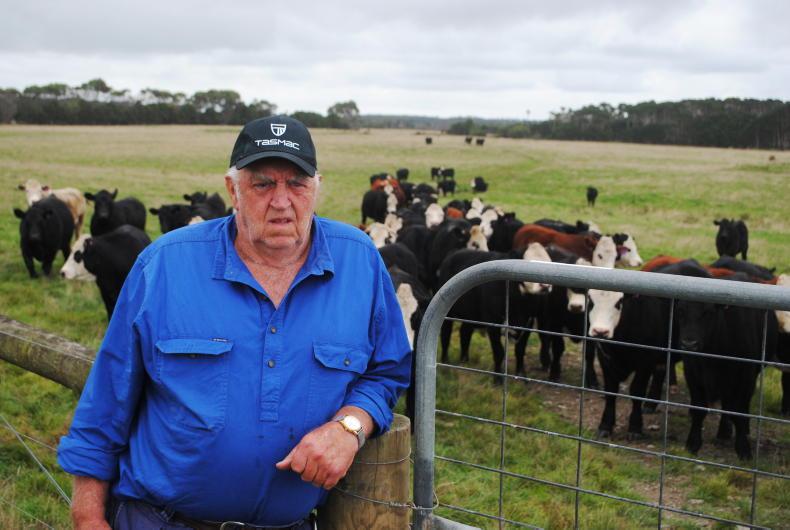
“It’s well and truly documented that they’re the most efficient animal in the beef industry.”
All cattle are finished off grass, and only weanlings receive a small amount of hay.
“There’s a different type of animal that is suitable for grass production,” he said.
Fred said the cattle he reared were deep-bodied and easily-fleshed, and described them as “nuggety”.
Fred’s experience has also taught him that when it comes to managing cattle, less is more.
He feels nowadays, a lot of farmers handle cattle too often.
“I like to keep the tractor in the shed, and the cattle eating grass in the paddock,” he said.
“Every time you have to bring them in out of the paddock, and weigh them or something, it’ll probably take them two or three days to make it up. They like to be in the paddock and that’s where they should be.”