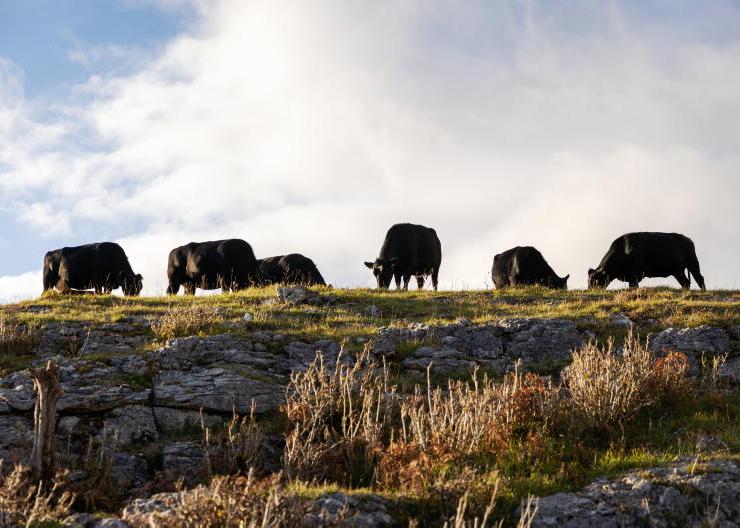
Virtual fencing is helping farmers improve targeted grazing while supporting biodiversity across the Burren and Aran Islands, ACRES Burren-Aran Co-operation Project manager Dr Joanne O’Connell told last week’s Teagasc Signpost webinar.
The ACRES Burren-Aran Co-Operation project covers the Aran Islands and the Clare and south Galway areas of the Burren.
There are almost 1,300 participating farmers managing around 60,000ha of scored farmland in this project. As one of eight ACRES co-operation project zones nationally, it uses a results-based system, where farmers are awarded for the environmental quality of their land while receiving support to improve habitats.
One of the landscape actions available through the project is targeted grazing using virtual fencing, in the form of a GPS-tracked collar. The technology allows farmers to create virtual boundaries for livestock using an app, reducing the need for temporary electric fencing.
“The idea is that you draw a pasture to contain the animals by marking out a virtual fence boundary on your phone and that allows you to see where your animals are in a real time location,” O’Connell explained.
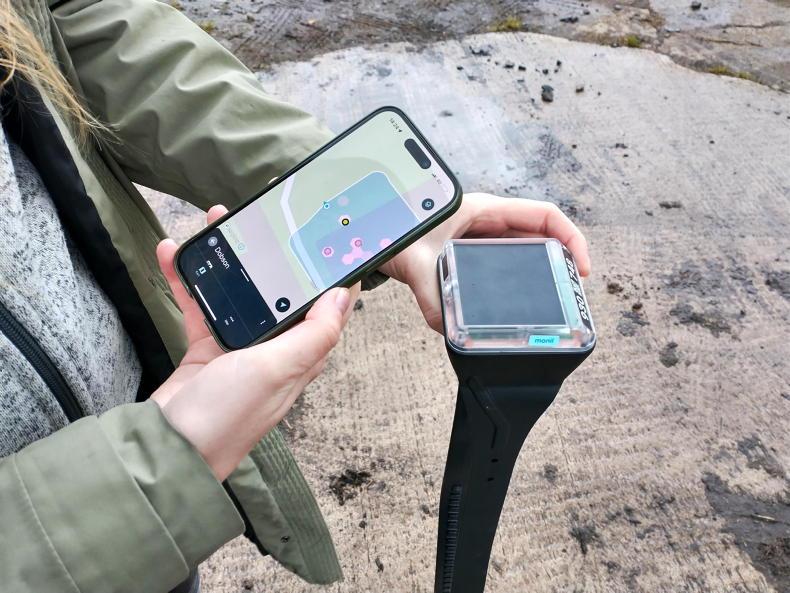
As animals approach the virtual boundary, they first receive an audio warning. If they continue forward, they receive a mild electric shock, training them to stay within the designated area.
“It works by musical cues and also electric shock, as the animal moves closer to the fence, they get a musical cue and if they get too close to that virtual line, they will get an electric shock, which is similar to a mains fence,” she said.
The technology was initially tested in the Burren through the ReFarm pilot programme, with 20 farmers prior to it being included as a landscape action in ACRES.
“Since that, we have put in about 75 different plans with virtual fencing, which covers about 55 private fields and five commonage fields, a total of just under 1,900ha of land,” O’Connell said.
Speaking on the ReFarm programme, project agriculturist Aoife Forde mentioned that out of the 20 farmers involved in the programme, 12 or 13 of them were under the age of 40, with many also working off farm.
Winterage
Forde said the technology could also be useful on large winterage sites where gathering animals can be difficult.
“The sites are so large that it can be used as a tool to locate the herd,” she said.
She added that all animals in a grazing group should be fitted with collars.
“They are herd animals, so if two or three cows are crossing the boundary line, other cattle are going to follow by instinct,” she said.
On the Aran Islands, the project is also trialling GPS collars on goats to help control scrub. O’Connell said that goats traditionally played an important role in managing briars, blackthorn and ivy, but numbers have declined over time.
By combining goats with virtual fencing, farmers can manage scrub without installing additional fencing. It can also improve access to stone walls and encourage the regrowth of species-rich grassland.
Forde encouraged farmers interested to contact their local ACRES co-operation team to discuss whether virtual fencing would suit their farm.
She explained that funding of €404 per collar is available through the landscape action, covering the purchase cost and the first year’s subscription.
Farmers are also required to complete training before using the collars. Forde stressed that correct training of both farmers and livestock is essential to ensure the technology works effectively.
“Once the farmer was set up, they learned quite quickly,” she said. “Can they use DoneDeal? Can they access the mart online? If they can do these two things, they are probably well able to use the collars.”