



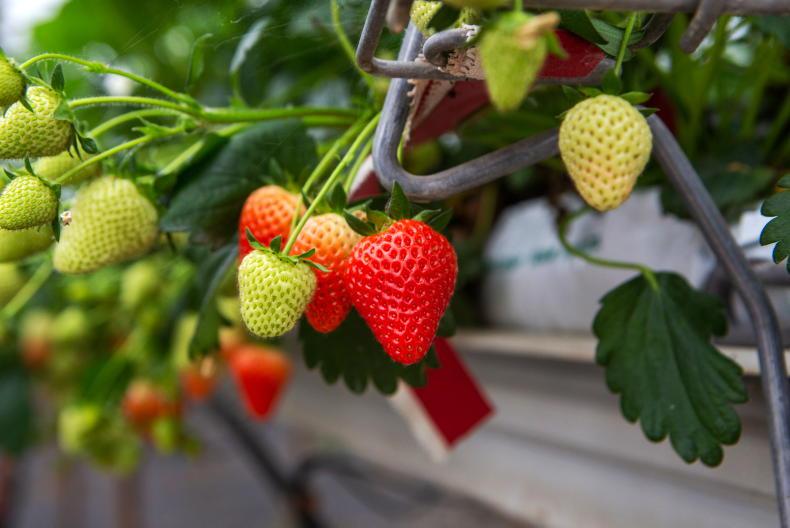
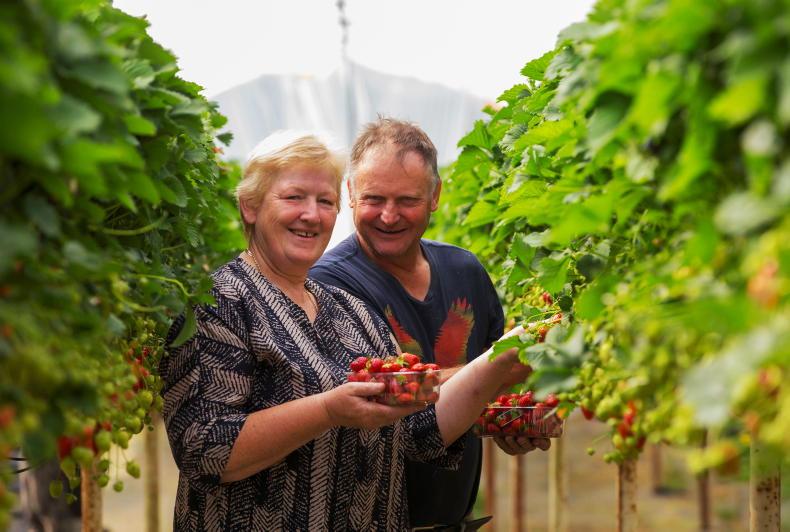
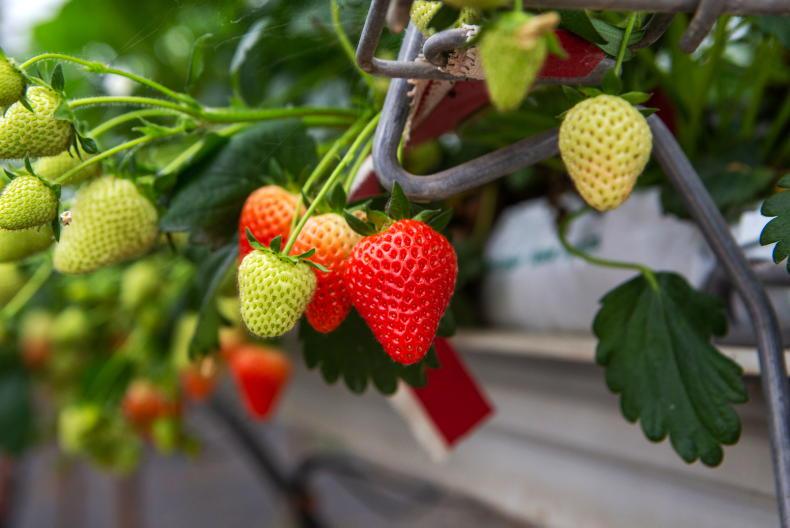
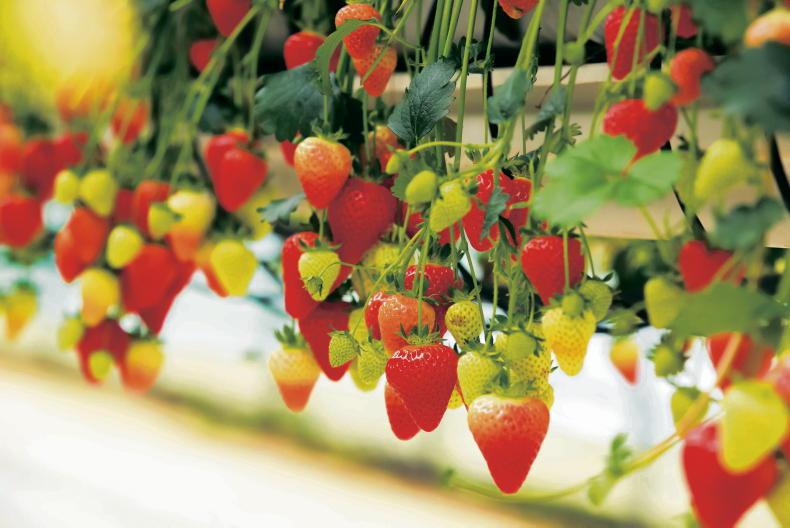
Strawberry growers have said that overall 2026 has been a good season for strawberries with strong demand from consumers, however the ongoing issue of obtaining labour and its costs remains while the hot weather has put some pressure on growers too.
The heat over recent weeks has brought strawberry crops in a bit earlier, Niall McCormack, a strawberry and raspberry grower from Co Longford said.
McCormack is also chair of the IFA national soft fruit and veg committee.
“Crops have suffered a bit with the extra heat. Strawberries have tended to be ripening that little bit earlier with yields back a little bit," he told the Irish Farmers Journal.
He also grows raspberries which he said can find this warm weather stressful too.
McCormack highlighted that overall it has been a reasonably good year and that consumption across Ireland has been very strong.
“People are looking for an Irish strawberry and they are recognising that we have a very good product. Irish strawberries are second to none, they’re a lot more flavoursome and nutritious than the stuff being imported. That’s the one positive in the whole situation.”
McCormack also pointed out that there is a shortage of good labour for soft fruit and vegetable production in Ireland.
“A lot of growers are under pressure labour-wise and it’s something that going to have to be approached by Government or else they'll have virtually no horticultural industry in the future.”
As well as weather and supermarkets, McCormack named labour as one of the major challenges facing the sector currently.
Seasonal work permits
In terms of the seasonal work permits, he explained that it is badly needed within the soft fruit and veg sector.
“The seasonal work permit has been talked about for the last 10 years. There's a seasonal work permit in nearly every other European country at the minimum wage of the country but there's still none in Ireland. They're talking about another pilot scheme this year, which is a complete and utter joke.”
Vincent Murphy from Murphy’s Wexford Strawberries said the hot weather can make the strawberries a bit softer than usual, however it was good year in all for strawberries with strong sales.
Murphy said that costs have gone up this year and reiterated that labour costs are one of the biggest challenges that he is facing with the increasing minimum wage.
The warmer weather has brought strawberries in a bit quicker Cyril Wheelock from Wheelock’s strawberries said.
“It makes it a little bit difficult management wise, it meant we had a lot of fruit at one stage and less at other stages, but that’s the way it goes.”
We try to grow what we sell and sell what we grow.”
Consumption
It has been a great season with people eating a lot of fruit this summer, Eamonn Crean from Greenhill Fruit Farm told the Irish Farmers Journal.
He said the quality of berries and disease levels have held “pretty good” this season.
In recent warm weather, Crean said if you’re able to keep up with harvesting the fruit which are ripening more quickly in the heat then things run smoothly.
Blackberries also did well this year he said, as the weather suited them and they seem to be becoming more popular.
He did highlight that yearly increases in the minimum wage is putting pressure on margins for soft fruit growers.
“The word on the ground is that minimum wage is going €15/hour next year, so that would be another big jump.”
“60% of our costs is labour.”
Crean discussed how obtaining planning permission is becoming more and more difficult as the process is long and slow to meet requirements.
He also said that the falling numbers of fruit and vegetable growers in Ireland needs to be addressed.
“The grant system within the Irish Government was cut back.”
“The Government need to wake up and give them good support. It’s a very high turnover, tight margin game. If you don’t have a great team and good culture in the place, it could die a death super fast.”
IFA
The IFA has warned that prolonged hot and dry weather, combined with rising input costs, is putting significant pressure on Irish horticulture growers, with field vegetables and potatoes particularly affected.
IFA fruit and vegetable committee chair Niall McCormack said some unirrigated field vegetable crops have seen yields fall by up to 60%, while irrigated crops are down by up to 20%.
He said irrigation is adding significantly to costs, with a single application costing more than €100/ac and many crops requiring repeated watering.
“This is causing a perfect storm for increased costs and diminished returns,” McCormack said, calling on retailers to review farm-gate prices and crop specifications to reflect the challenges facing growers.
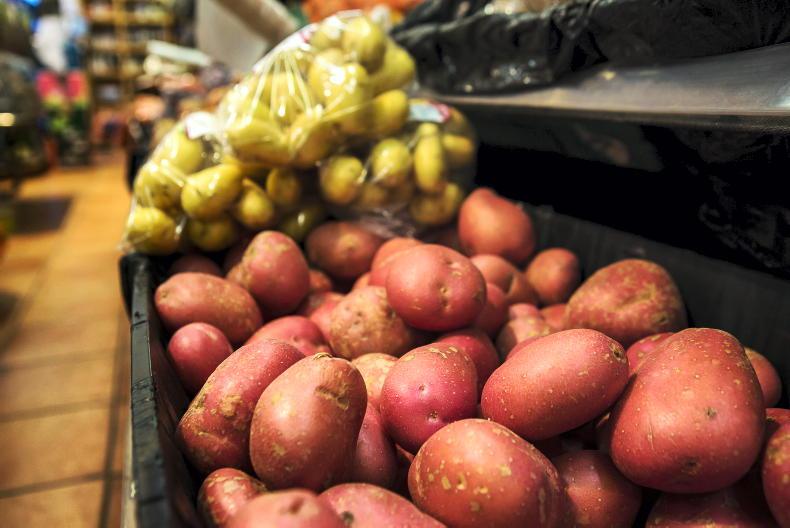
IFA Potato Committee chair Jason O’Leary said potato crops are also under severe moisture stress, with yields down by up to 40% in some areas.
With production already costing around €5,000/ac before land rental and other costs, he warned that reduced yields could make potato production unviable for some growers.
While supply is expected to meet market demand this year, O’Leary said the bigger concern is whether growers will be able to continue producing potatoes in Ireland next year.


SHARING OPTIONS