



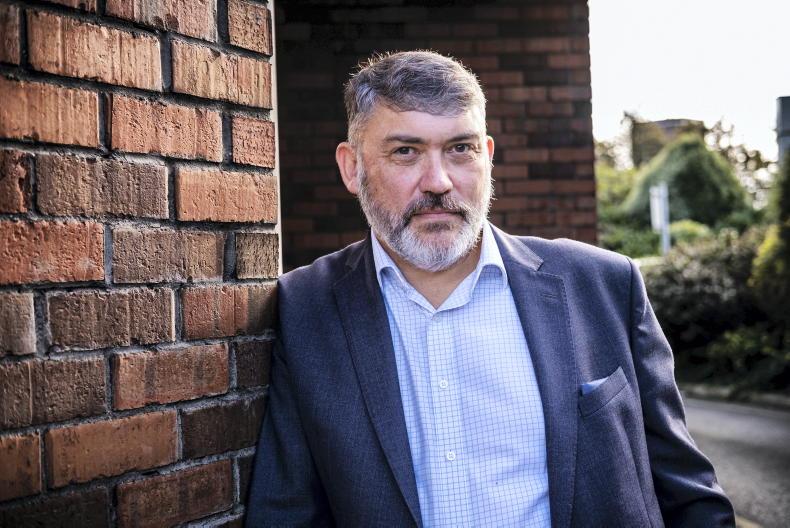
Macra CEO Michael Curran claimed that a “toxic” relationship between the programme director of its Make the Moove mental health hotline and Macra's then-president saw him prepared to shut down the project he saw as “floundering”.
A Workplace Relations Commission (WRC) decision dated 26 August found against a complaint taken by the former programme director of Make the Moove Conor Holohan, who had alleged that six actions taken by Macra’s CEO forced him to resign from the role.
On 27 March 2025, six months after assuming his role in Make Moove, Mr Holohan lodged a formal complaint with Macra alleging its then-president Elaine Houlihan had engaged in “bullying, mistreatment and undermining behaviour”.
The WRC noted that Mr Curran agreed that there was “substantial merit to the complaint” and that “the conduct of the president was inappropriate”.
When cross-examined, Mr Curran had said that there were no hard allegations about this, but that he heard from members that there was a problem.
Letter
Mr Curran had drafted a letter to send to “the CEO of another voluntary organisation” to request that they carry out an investigation, but that the letter was not sent as “nothing could be done while the complainant was out sick”.
Mr Holohan went absent due to stress on 7 April 2025, handed in his notice on 27 June without having resumed his duties in the interim and finished up two weeks later.
The WRC decision noted that the complaint made against Macra’s president amounted to a “serious allegation” and said it was “regrettable that an investigation wasn’t carried out so that the complainant’s claims could be examined and for the president to have an opportunity to defend herself”.
However, the adjudicating officer stated that it was not the WRC’s role to investigate this March 2025 complaint, but to assess whether actions taken by Macra and its CEO after this complaint had been handed in amounted to penalisation.
Complaint to WRC
The matter was taken to the WRC’s attention when Mr Holohan lodged a complaint with the commission just over a fortnight after finishing up with Macra.
This WRC complaint had alleged “sustained mistreatment and a failure of management to act forced him to resign”.
Among six issues Mr Holohan claimed arose after he complained to Macra over its then-president were a threat from its CEO to shut the service down, two extensions of his probation period and a reduction in pay while on sick leave.
Mr Holohan said that these actions were taken in retaliation to him complaining about the president, which Macra denied to the WRC.
The former worker sought compensation for a loss of €5,625 in earnings, as well as for non-financial losses, including the impact on his mental health, the cost of counselling and the loss of professional fulfilment.
Macra response
Macra claimed that at the time it received a complaint from Mr Holohan regarding its president, the project was “floundering and that the difficulties arose because of interpersonal issues between [Mr Holohan] and the president” – a claim that Mr Holohan denied at the WRC.
The organisation claimed that there had been “potential for fault on both sides”, that Mr Holohan’s probation was extended initially “because of difficulties with the programme” and that the second extension of the probation was operational.
It denied that cutting his sick pay had been a retaliatory action, adding that it was obliged to pay no such wages to staff on probation.
Macra also claimed that its CEO had decided to extend his probation due to “difficulties between the complainant and the president”, but conceded that “communication could have been done better and could have been more official”, as it denied that its actions were meant to penalise Mr Holohan.
The WRC decision states that Macra’s CEO said that the “difficulties between the complainant and the president were putting the programme in jeopardy”.
Mr Curran was reported by the WRC to have agreed that Mr Holohan’s claim that he had said in April 2025 that “Macra has different limbs” and that he was ready to cut off Make the Move did sound like something he would say - but he denied this remark related to the complaint against the president.
The CEO is stated by the WRC to have said that the relationship between the complainant and the president had become “toxic”, but that performance issues led to the extension of his probation, not the making of a complaint.
When asked by Mr Holohan why concerns had not been flagged with him about his performance, Mr Curran replied that he raised issues about his relationship with the president and that he saw these issues as affecting his performance.
The decision said that Mr Curran further stated that his view that Make the Moove was struggling came from Mr Holohan “offering support to other organisations” which he was not authorised to do on his own.
Decision
The adjudicating officer concluded that the decision to extend Mr Holohan’s probation “was done for reasons related to his performance and was not caused by his having made a complaint about the president”.
“I have also concluded that the actions taken by the CEO in the weeks after the complainant went absent due to work-related stress were consistent with the complainant’s contract and was reasonable treatment of an employee on long-term sick leave,” the decision goes on.
“Finally, I reject the complainant’s case that the cumulative effect of the treatment he complained about led him to a position where he had no alternative but to resign from his job. I decide, therefore, that his complaint of penalisation is not well founded.”






SHARING OPTIONS