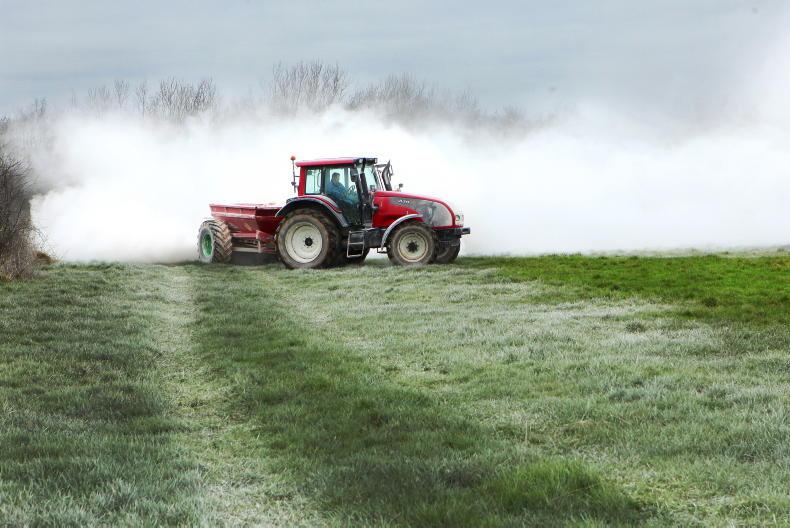
Newsflash: they think its all over, but it's not yet the end of the fertiliser season on grassland farms just yet.
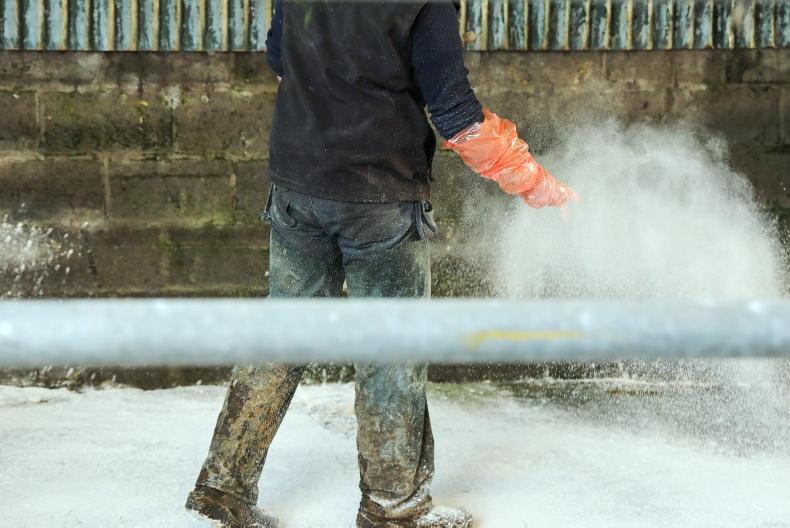
While the chemical fertiliser season is now over, now is a great time to apply lime on grassland. We have seen a massive reduction in lime use on farms in 2026. In 2025, approximately half of the total lime spread was between January and June (equivalent to 0.4m tonnes) compared to only 0.25m tonnes for the first half of 2026.
This is a worrying trend as lime is so important for maximising nutrient efficiency and grass production on farms.
In comparison with an estimated national total lime requirement of 1.85m tonnes for 2026, lime sales were 0.9m tonnes in 2025, down 9% when compared to 2024 levels. We badly need to see this trend reversed.
Return on investment
Research has shown that every €1 invested in lime provides a return of between €6 and €10. With profit margins forecast to be tight this year, investing in lime represents a smart financial decision.
Bringing soil pH up from 5.5 to 6.3 boosts the availability of nitrogen, phosphorous and potash. As a rule of thumb, if the starting pH is 5.7, an application of 5 t/ha (2 t/ac) will raise the pH to approximately 6.3.
Grassland soils with the higher pH can release up to 80kg N/ha per year and increase grass growth by up to 1.5-2.5t DM/ha. This will also help clovers and herbs to persist in swards.
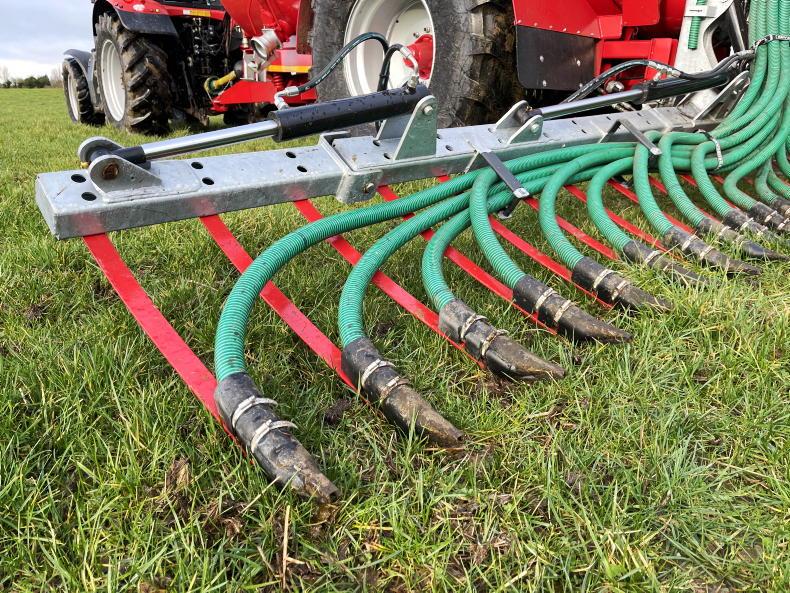
We will be entering the final grazing rotation on most farms in the next two weeks. Farmers can also maximise regrowth over this important period and through the last rotation by spreading any remaining soiled water and slurry in dilute form on grazed paddocks and out blocks before the end of the month.
In the current conditions, slurry will be an excellent nutrient source and can increase autumn grass growth.
Lie of the land
As the closing date for mineral fertiliser application has now passed, it will be another two months before official statistics reveal the final details of the 2026 chemical fertiliser season (which covers the period from October 2025 to September 2026).
Going on previous years, approximately 85% of mineral fertiliser sales take place in the six months between January and June, so we already have a good indication of the trends for 2026.
Teagasc has projected that approximately 348,000 tonnes of N will be used during 2026, although the dry summer is likely to have reduced total applications during July and August. This is very similar to the 349,293 tonnes of N fertiliser for 2025, and a 13% increase on the 2024 level.
Between 2017 and 2025, stabilised urea fertiliser share of total nitrogen content in mineral fertiliser sales rose from 0.5% to 15%, significantly reducing air-pollutant and greenhouse-gas emissions. With the changes in requirements to use protected urea during the last 12 months, the overall share of stabilised urea is likely to have increased further during 2026.