



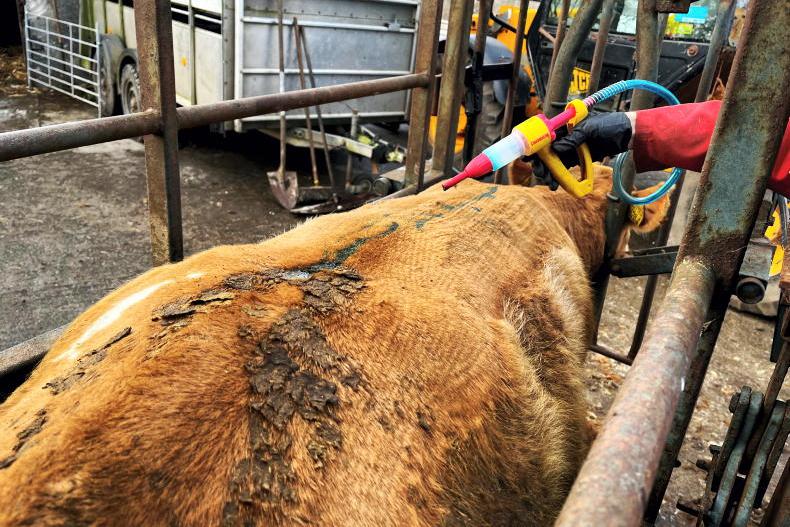
Cases of liver fluke reported around the country have dropped following the mostly mild weather experienced so far this year, according to the latest data from Animal Health Ireland (AHI).
Figures from AHI’s Beef Health Check programme show the average percentage of animals seen with previous liver fluke damage was 5.6%, while active live liver fluke infection was seen in 1.2% of animals in 2025 to date.
“This is a decrease on the same period last year, ending the temporary increase following wet conditions in the 23/24 years,” AHI said.
Of the herds in the programme, 10.9% had at least one animal with live liver fluke seen at slaughter this year. This equates to 1,760 herds of the 16,000-plus herds in the programme.
Liver abscesses were seen in 3.3% of animals and pneumonia levels were at 1.7%, similar to last year.
Higher levels of liver fluke were reported in both 2023 and 2024 due to the wet and relatively warm conditions experienced.
AHI reported last November that, nationally, 39% of herds participating in the programme had signs of liver fluke at slaughter in 2024.
Active infection in one or more animals was seen in 17% of herds last year compared with 13% in 2023.
Regional differences
There were significant regional variations in the levels of liver fluke around the country.
The highest levels so far this year were in Donegal and Sligo, with 30% to 40% of herds with at least one animal with an active live liver fluke infection seen at slaughter.
Roscommon and Leitrim also experienced increased levels of liver fluke compared with the rest of the country, with 20% to 30% of herds with live liver fluke in 2025 to date.
In contrast, herds in the south of the country – including counties Clare, Limerick, Kerry, Cork, Waterford, Wexford and Carlow – reported low levels of liver fluke, some 0% to 10%.
“There are regional differences and the largest percentage of affected herds were in the northwest counties of Donegal, Roscommon and Sligo, where herd owners should remain aware of the risk of liver fluke in their herds,” AHI said in its most up-to-date newsletter.
As part of the Beef Health Check programme, so far in 2025 there have been 433,000 animal records from 16,100 herds, with 49,500 reports issued.
Advice
Writing in the Beef Health Check summer newsletter, Beef Health Check programme manager Dr Natascha Meunier said that while liver fluke is not usually problematic for cattle at this time of year if they were treated at housing, any adult fluke present in animals can lay eggs that contaminate pastures.
“These are liver fluke that may have been picked up in the last grazing season and were either not killed by winter flukicide treatments or were not treated.
“These also might be animals that have picked up liver fluke in the early spring. In the Beef Health Check reports, these are identified as animals that have live liver fluke at slaughter over the first part of the year.
“With the increased levels of liver fluke last year, cattle may have picked up liver fluke earlier than usual or in areas which haven’t seen problems for a year or two.
“It may be necessary to test and treat the group or other animals on the farm if the reports are coming back positive for live liver fluke,” she added.


SHARING OPTIONS