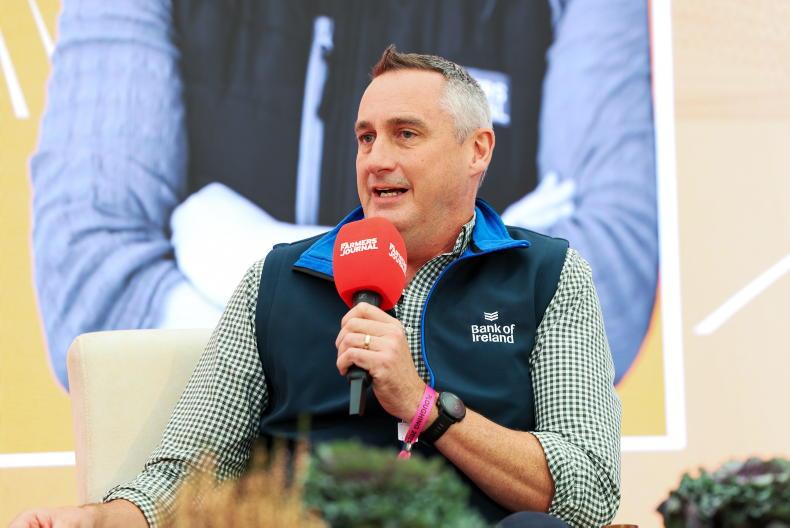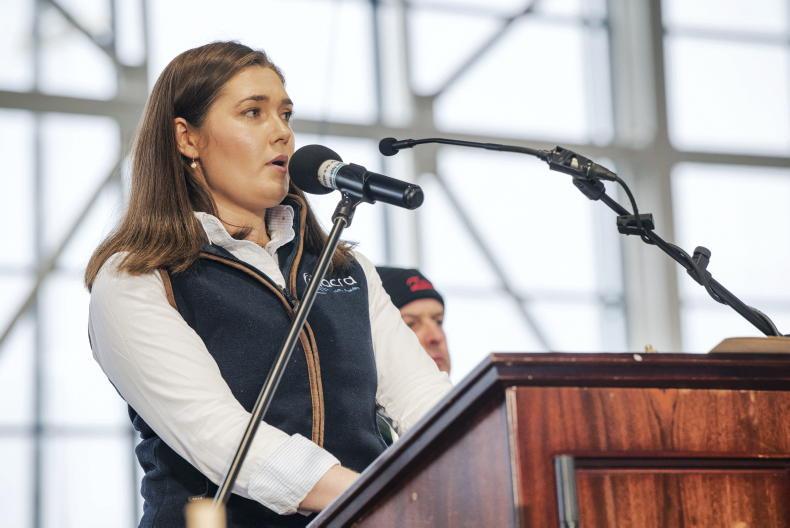
Macra is calling for 10% of Common Agricultural Policy (CAP) funding to be ring-fenced for generational renewal and for Ireland to show greater ambition in supporting the next generation of farmers.
The young farmer organisation launched its position paper on the future CAP at the National Ploughing Championships on Tuesday in Screggan.
Macra president Josephine O’Neill stated that the next CAP, from 2028 to 2034, will be one of the most important policy decisions for the future of Irish farming and that the voice of young farmers must be central to the negotiations.
“The next CAP will shape the future of farming for the next generation. It will determine whether young people can access land, establish a viable farm business and see farming as an attractive career,” she said.
“With Ireland now in the driving seat as it holds the presidency of the Council of the European Union, there is a unique opportunity to steer the future CAP negotiations and fight for an ambitious and meaningful policy for young farmers.”
Macra’s proposals
Macra’s position paper sets out a package of measures aimed at making farming “more accessible, viable and attractive to the next generation.”
The organisation is also calling for Ireland’s CAP allocation to be maintained at a minimum of €10.7 billion for 2028–2034, rather than accepting the significant reduction currently proposed.
“Farmers are being asked to do more for food security, climate action and environmental sustainability, yet the proposed CAP budget for Ireland represents a significant reduction,” the Macra president stated.
Furthermore, Macra is proposing a three-part CAP Succession Scheme, combining a substantial establishment payment for the incoming young farmer, continued income support through the Young Farmer Top-Up and a Generational Renewal Payment for farmers transferring their holdings.
The proposed Young Farmer Establishment Payment would provide €3,600 per hectare, up to a maximum of 50 hectares, giving an incoming young farmer a lump-sum payment of up to €180,000 in their first year of establishment, available for young farmers succeeding to a family farm and new entrants.
The scheme would also provide a Young Farmer Top-Up of €170 per hectare annually, up to a maximum of 50 hectares.
For the exiting generation, Macra is proposing a Generational Renewal Payment of €720 per hectare over five years, up to a maximum of 50 hectares, for farmers aged 65 and over who transfer at least 80% of their farm assets to an incoming young farmer.
Macra estimates that the proposed CAP Succession Scheme would require €553 million over the seven-year CAP period and could support approximately 8,800 farm successions, building on models from the Commission’s Generational Renewal report.
Additionally, the organisation is calling for the reintroduction of meaningful installation aid for young farmers as part of its CAP succession scheme.
The organisation said that Ireland is currently the only EU Member State without dedicated installation aid, leaving young farmers here without the same establishment support available to their counterparts elsewhere in Europe.
Macra is also calling for subsidised and reliable farm relief services to be included and properly funded as a key component of generational renewal under the next CAP, alongside complementary national funding.
The organisation’s position paper calls for replacement services to cover annual leave, sick leave, maternity leave and parental leave, ensuring farmers can take time away from the farm without putting the viability of their business at risk.
Budget 2027
Ahead of the next CAP cycle, Macra is also calling for a €5 million Farm Succession Pilot in Budget 2027 to incentivise and facilitate on-farm succession, providing €50,000 to 100 farms, with €25,000 going to the incoming young farmer and €25,000 to the exiting farmer.
“The Budget 2027 pilot is an opportunity for Government to act now rather than waiting for the next CAP to come into effect,” O’Neill said.
“It would allow us to test the model, demonstrate the demand for dedicated succession support and put the systems in place for a national scheme. This should be the first step towards the comprehensive CAP Succession Scheme we are proposing from 2028.”