



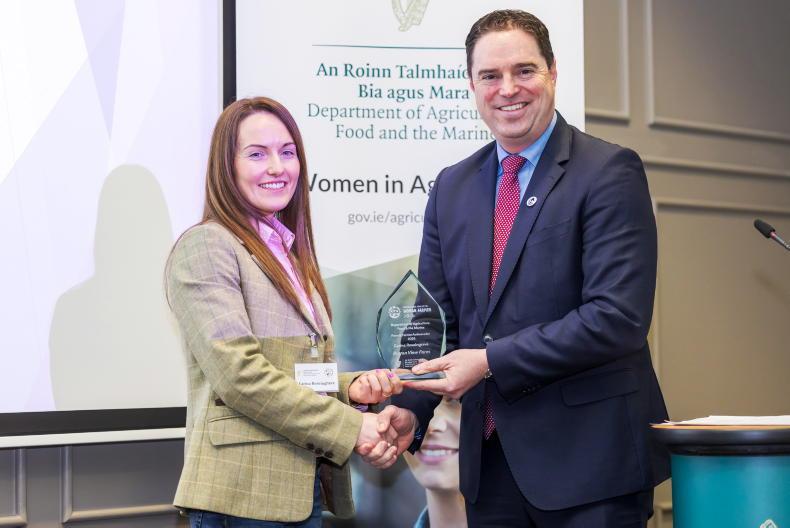
Ireland needs new policies to reward farmers for the work they do, for the hours that they put in unpaid and to strengthen the family farms that do exist, International Year of the Woman farmer ambassador Carina Roseingrave has said.
Speaking at a Department of Agriculture event last week, she said the biggest part of new policies will be to give young people the confidence to see farming as a career with a future.
“The sad reality is Irish agriculture is at a crossroads. We are producing some of the safest, high-quality food in the world. Yet, many farm families are under huge financial pressure, but the farmer takes it on the chin. They take the cost.
“The cost of producing food continues to rise. Feed, fertiliser, fuel, machinery and labour [have] all become so much more expensive. Farmers are being asked to meet higher standards and invest in new technology, all while trying to remain viable and have a family income.
“We need to bring back the connection for the people to food," she said.
Cost of food
The Clare beef and dairy farmer said that we all value good food, but often expect it to come at a lower price.
“Somewhere along the supply chain, someone absorbs the cost. Guess who that is? The farmer. It’s not going to be sustainable for Irish farming to continue.
“If we truly value local food, then we must also value the people producing it and that is the farmer.
"This is where I believe the Government, the Department of Agriculture, Food and the Marine, industry and farmers must continue to work together,” she said.
Children
Children are growing up further removed from the land, she said, not knowing where food comes from.
“Yet, every single one of us depend on agriculture every day. Food just doesn’t appear in the shop, on the shelves, but yet children think it does.
“Behind ever litre of milk, behind every egg collected, behind every piece of beef or lamb, there is a family farm and farmers working tirelessly to make sure food is on the shelf. I believe that we have a responsibility as farmers to tell the story to children, where our food comes from,” she said.
For more, see next week's Irish Farmers Journal.


SHARING OPTIONS