



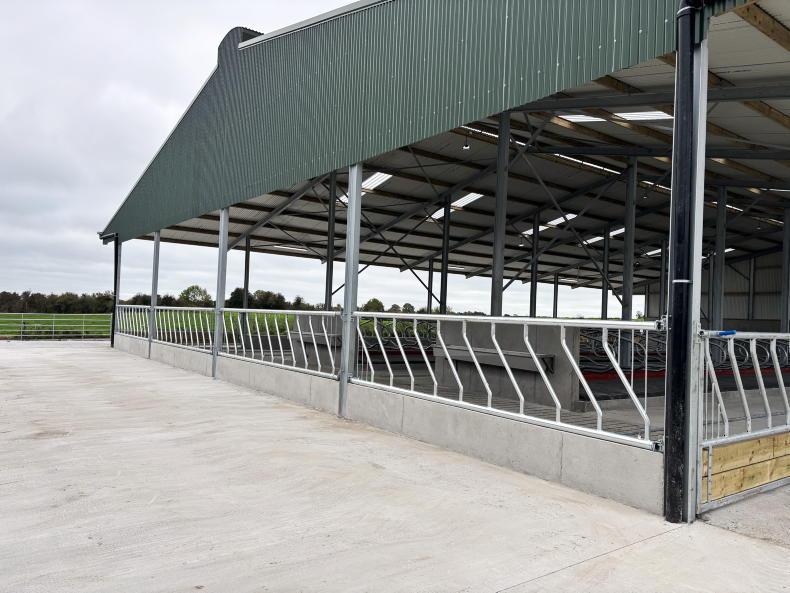
AIB is expecting a similar level of on-farm investment for 2026 as a typical year, according to the bank’s head of agri Donal Whelton.
However, he told the Irish Farmers Journal that farmers are in a very different place compared to this time last year.
He said that cattle prices and milk prices are back, and there is further uncertainty due to geopolitical upset in the Middle East which has caused increases in input costs like fuel and fertiliser.
The current drought in some areas of the country is adding further pressure to farmer finances and as a result it is affecting their mood, he remarked.
“Farmers’ sentiment and confidence is a little bit more stinted. Having said that, the demand for new money for under the €100,000 to €200,000 mark is still quite robust.”
On the other hand, lending for larger capital expenditure projects above this mark is back slightly.
CAP
Whelton noted that farmers are concerned about the new CAP post-2028 and what effect it will have on finances due to reductions in the proposed budget.
He highlighted the importance of direct payments for family farm incomes, particularly in the livestock sector where it can make up a large proportion of income.
“Securing that CAP budget over the next Multi-annual Financial Framework is so important for farmers.”
With potential upcoming changes to CAP and direct payments, he said that AIB takes the worst-case scenario into consideration when working with farmers while also looking at stress tests.
In terms of uncertainty surrounding the future of the nitrates derogation post-2028 as well as milk price over the coming years, Whelton said that dairy farmers are aware of this when borrowing finance.
He said this has to be factored in when borrowing long-term up to 15-20 years.
“We’re doing a base case for the 220[kg organic N/ha stocking rate] but obviously we’re asking the question if it dropped to 190 or 170[kg N/ha], what are the options that are available or what the impact that it would have.”
Working capital utilisation
To assess the financial strength of the sector in any particular year, Whelton said that working capital utilisation is examined as a fair indicator.
“At the end of 2025, we had very low levels of utilisation.
“2025 was a relatively good year across all livestock sectors, obviously the tillage sector a little bit more challenging in 2025 and probably again this year.
“We’ve seen actually no increase in working capital utilisation.
“We thought we might because of the rising costs and that feeds into the fact that they came into 2026 in maybe a relatively strong position.
“However, with tax liabilities to be paid in coming months, farmers could come under more pressure.”




SHARING OPTIONS