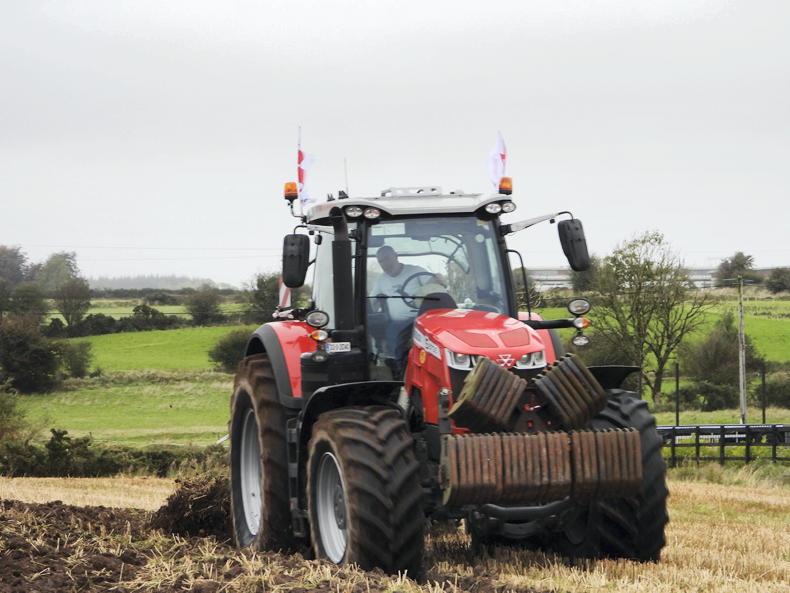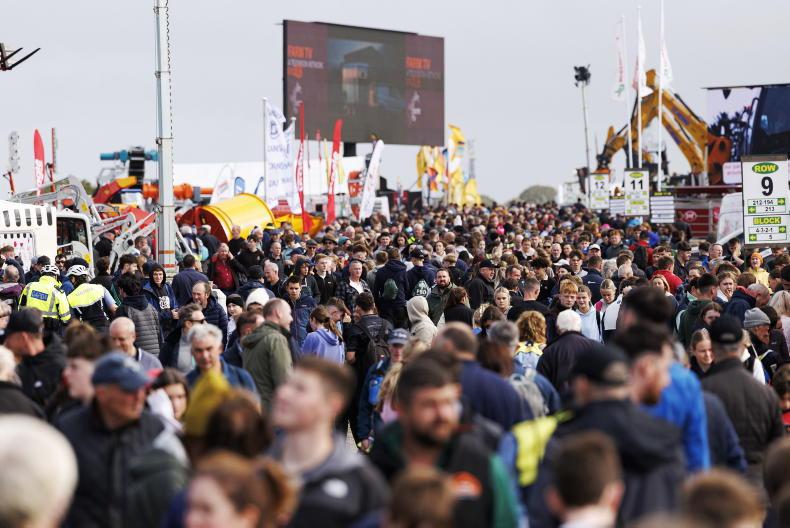
Of the various trials of skill encouraged throughout the country, none is so truly rural or epitomises the spirit of the farming community as much as the ploughing match.
Since the earliest of times, the skills of those who ploughed have been celebrated. According to tradition, Saint Colmcille instituted a Féil na n-Airemon or ‘festival of the ploughmen’ during the sixth century in celebration of his monks who had ploughed the land and tended to the crops.
Today, 15 centuries later, we continue to celebrate the skills of our best ploughmen and women at our modern festivals of ploughing. But what were the origins of the ploughing match in Ireland?
Ploughing matches were established in the 18th century, a period of great development in farming, when agricultural improvers introduced new crops, new methods and new implements.

In Ireland, the Dublin Society, founded in 1731, took an immediate interest in promoting tillage and the latest plough technology by publishing an edition of Jethro Tull’s Horse-Hoeing Husbandry, which was the leading work on cultivation at that time.
New ploughs and other implements were trialled and demonstrated either in the Phoenix Park or at Leixlip. An exhibition was organised in the vaults of Parliament House (modern-day Bank of Ireland, College Green, Dublin), where the latest implements could be readily inspected by landowners and their stewards, and thousands of leaflets advertising new ploughs were distributed throughout the country.
By 1767, the Dublin Society sponsored John Wynn Baker to establish an agricultural implement factory at Celbridge, where 15 different types of plough, both wooden and iron, for both horses and cattle, were produced. These were sold countrywide and were extensively copied by local plough-makers.
New innovations in ploughing undoubtedly caught the imaginations of well-to-do landowners who had a taste for experiment, and the financial resources to indulge in it.
The landed gentleman, holding the most up-to-date plough and a skilled ploughman, ultimately wanted to test his team against that of his neighbour; the ploughing match was born. The organisation of the world’s first ploughing contest is attributed to the Farmer Club of Clackmannanshire, Scotland, in 1784.
A perusal through old newspapers suggests that Ireland’s first ploughing competition can be credited to the Longford Farmer’s Society.
On its formation in October 1789, the society resolved that three guineas would be given to the best ploughman in each barony in the county and a plough worth a guinea and a half to the second-best ploughman.
The Dublin Evening Post praised the Longford Society for its judicious plan, encouraging others to follow suit. It believed that giving prizes to the best ploughmen was “certainly the best means of exciting emulation in that art amongst the peasantry”. Although early ploughing matches had some altruistic elements, they were ultimately a medium through which landed gentlemen could meet, socialise and do business. The ploughing competition itself was merely the preserve of the elite ploughmen of local gentry.
First matches
The ploughing match took on a national dimension with the establishment of the Farming Society of Ireland in March 1800. The society’s primary objective was to organise cattle shows, with a view to improving the country’s livestock.
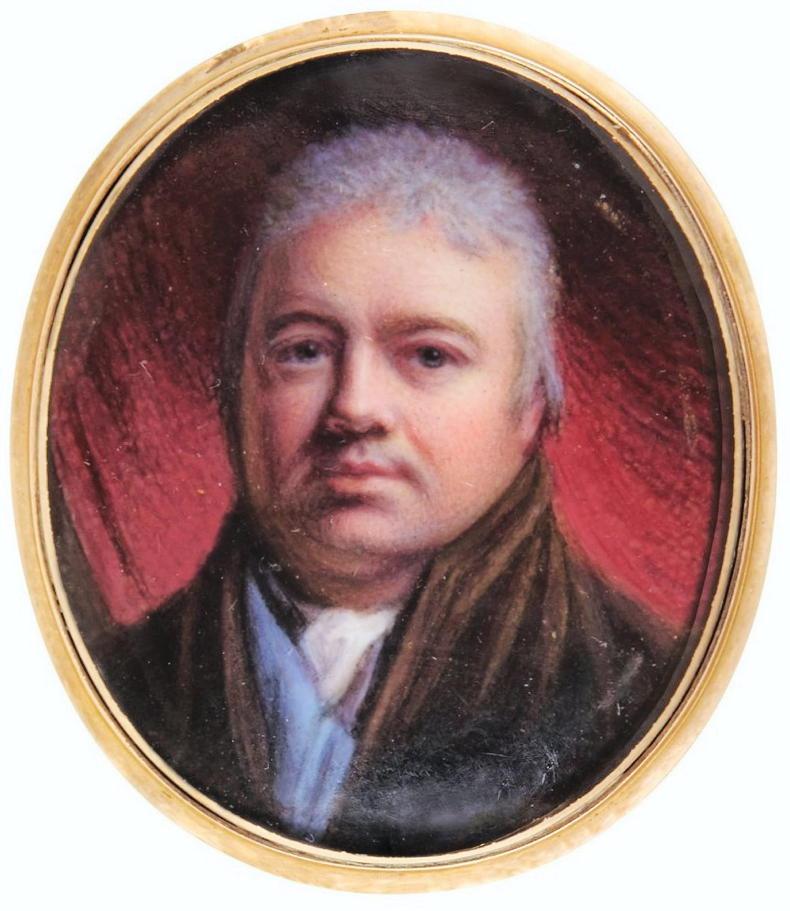
At its inaugural show, held in conjunction with the great fair at Ballinasloe that October, Robert St George of Kilkenny exhibited a two-horse Leicester swing plough ‘driven with reins by a ploughman’. The aim of the exhibition was to demonstrate that a lively two-horse team and lighter plough was a more efficient means of turning the sod than with the traditional teams of four or six slow oxen and a clumsy heavy plough attended by two men.
Accordingly, the society resolved to organise a ploughing competition during its Ballinasloe show the following year. It was duly held on 6 October 1801. There were two classes, one man and two horses and one man and two oxen or heifers, with the winner in each class receiving £10, the runner-up £5. First prize in the horse class was adjudged to the society’s founder, the Marquess of Sligo; the ploughing was undertaken by his un-named ploughman.
From 1803 the ‘grand ploughing match’ was held, not in Ballinasloe, but in conjunction with the society’s Spring Cattle Show in Dublin. The show was initially organised in the grounds of Leinster House and later at the society’s headquarters at Summerhill. The ploughing was held on the landed estates of society members, at various locations such as Terenure, Crumlin and Ballyfermot, all then well outside the city.
Saunders’s Newsletter reported that the 1805 competition was held on the lawn of Huntstown Estate. It recorded that the competition was numerously attended, the animals ornamented with different coloured ribbands, distinguishing their respective proprietors.
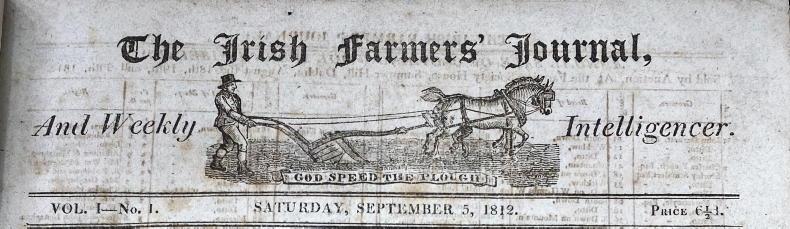
The prize cup was unexpectedly won by Rev. Symes of Wicklow, ploughing with “two small spayed heifers who beat several pairs of fine horses in quickness and step”. During the society’s lifetime all manner of livestock pulled the ploughs in competition. The Irish Farmer’s Journal and Weekly Intelligencer, of 8 April 1820, carried the details of the extensive list of prizes offered at that year’s contest. The main prize of a cup, £3, a hat, jacket and trousers was presented to the person “who shall plough half a rood of ground in the best manner, with one pair of horses, mules, bulls, oxen, or heifers, in reins”.
There is no doubt that the Farming Society’s annual ploughing match was seen as a national contest. In 1806, the Hibernian Journal wrote that “the competition is open to all Ireland”.
From 1807, prospective competitors, to defray the travelling expenses of their men and cattle, were allowed “one British shilling” per mile between their respective farms and Dublin.
The 1806 contest was held at Rathfarnham House, the seat of printing mogul and avid agriculturist George Grierson, where we are told that “a numerous company of Gentlemen were entertained by the hospitable proprietor, who had an elegant collation prepared for them”.
Contemporary newspaper reports suggest that Grierson can be credited with bringing new dimensions to the event, introducing entertainment, side-shows and exhibitions of farm implements, livestock and crops.
The society’s last national ploughing match was held at Glasnevin during the spring of 1827.
Riddled with mismanagement, it was disbanded early the following year. It can be remembered as having generally failed in promoting abstract scientific knowledge but as having achieved some success in encouraging practical husbandry, particularly ploughing.
Going national
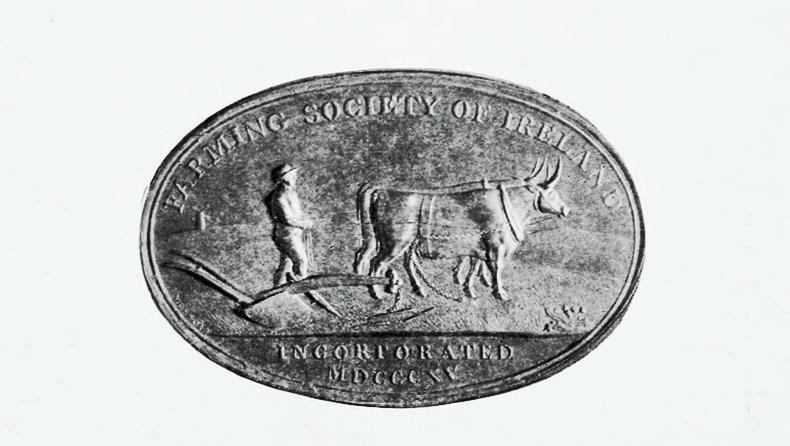
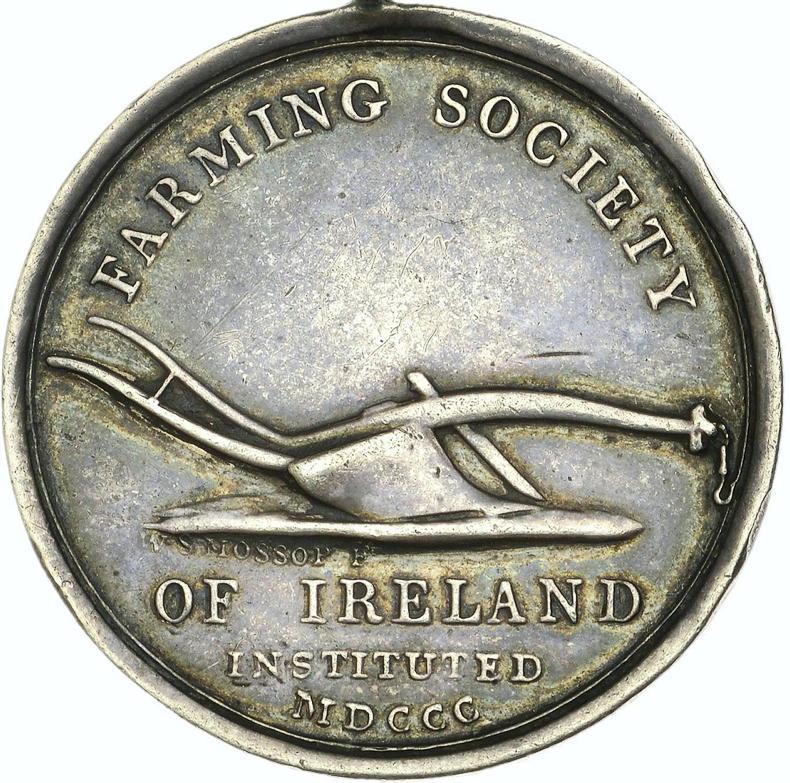
Indeed, ploughing featured heavily in the medals struck by the society. One particular medal, where a farmer is represented as having unyoked a pair of oxen from a plough, gives an excellent portrayal of the ploughing methods of that era.
It was more than a century before another national ploughing competition was established, at Athy in 1931. However, ploughing matches continued to flourish with the numerous local farming societies that came and went during the 19th century, many organising biannual competitions. Many local farming societies eventually morphed into ploughing societies that continue to survive today. For those without the means to organise a show, the local ploughing match was their headline event, a social occasion for all strata of the agricultural community.
Local matches
The small working farmer “holding his own plough” was now also allowed to compete. In 1841 the Report of the Tuam Agricultural Society declared that ploughing contests among small farmers were most earnestly solicited, as they allowed for an improved system to produce better crops, better conditions for the peasant, and showcased young proficient ploughmen to get good situations with large farmers.
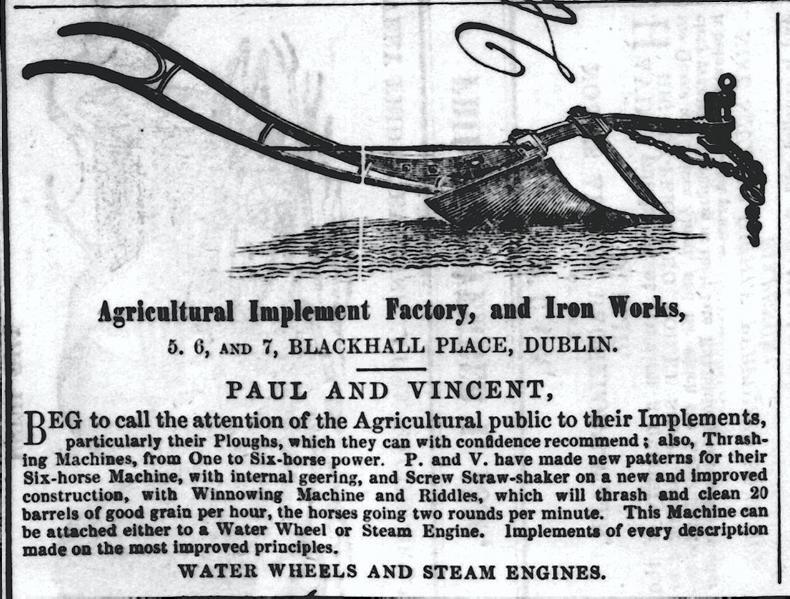
The mid-19th century saw continued improvements in plough technology. The all-iron plough, initially developed in Scotland, gradually displaced its wooden equivalent.
In 1843, the North Inishowen Farming Society reported that on its establishment, just a few years earlier, only the gentry held iron ploughs; now there were 12 or 13 entered for its competitions. Contemporary newspapers and farming periodicals regularly advertised iron ploughs by Dublin firms such as Henry Sheridan and Co, Le Stranges and Paul and Vincent, Ritchies of Ardee and Pierces of Wexford. English companies such as Ransomes and Sims, R Hornsby and Sons and J and F Howard also held a share of the Irish market.
Although technologies continued to evolve, the essence of the ploughing match remained the same. In 1931, the organising committee of the Athy event cited its main objective as “bringing the message of good ploughing to all parts of the country”, not too dissimilar to that of the ploughing match pioneers of earlier times.
John Flaherty farms at Kilflynn, Co Kerry. He holds a PhD in history from Mary Immaculate College in Limerick and is interested in all aspects of rural history. Email: kilflynnium@icloud.com