



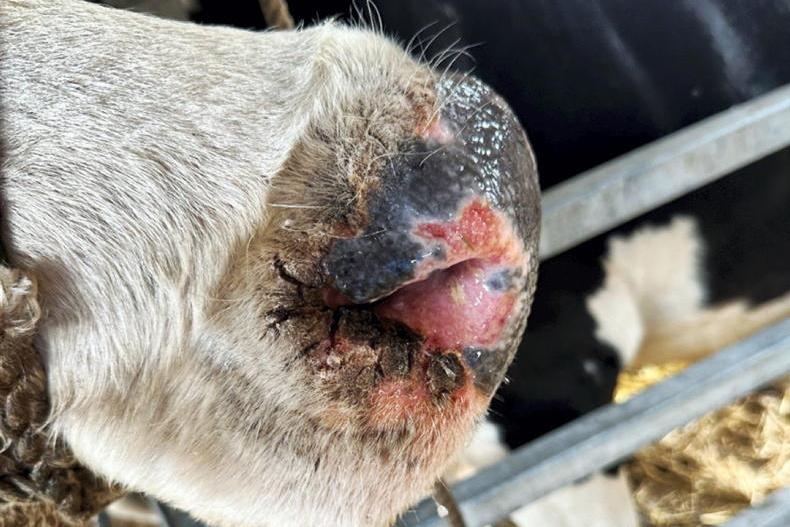
The incidence of bluetongue virus has jumped significantly in the UK, with the Agriculture Horticulture Development Board (AHDB) reporting that the number of confirmed cases has doubled over the last three weeks.
It says that the latest figures published by the Animal and Plant Health Agency (APHA) show more than 1,000 confirmed cases of bluetongue serotype 3 (BTV-3) in the 2026 to 2027 season.
It is highly likely that the confirmed number of cases is nowhere near the actual incidence of the virus.
This is as farms where the virus is detected are only reporting a maximum of three confirmed cases, with APHA providing free diagnostic testing for up to three animals on a holding.
Reports also indicate that in some areas where the virus is prevalent, some farms affected do not see the merit in testing.
Higher incidence
The doubling in cases is expected to intensify in the coming weeks, with the AHDB predicting that the “peak of the outbreak [is] expected at the end of September, depending on seasonal weather conditions”.
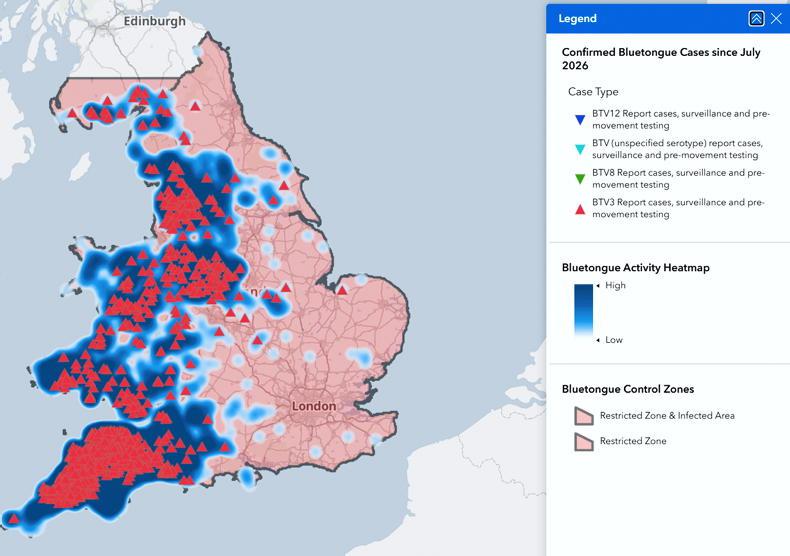
AHDB’s head of animal health and welfare Dr Mandy Nevel said: "Over the past few weeks, we have seen the bluetongue virus spread from the southwest of England and across large areas of England, Wales and Scotland.
"Vaccination firmly remains the single most effective tool available to help protect vulnerable animals.
"Although vaccine availability has been the subject of much discussion over recent weeks, we are seeing an increase in supply. Farmers who have not yet vaccinated should speak with their local vet to ensure their animals are protected from this deadly disease."
"The key message remains clear: it is not too late to vaccinate."
The industry organisation also reported that “confirmed BTV-3 cases across the UK in the 2026 to 2027 season, as of 9 September, stand at 1,015, with 883 cases in England. There are 111 cases in Wales and 21 in Scotland.”





SHARING OPTIONS