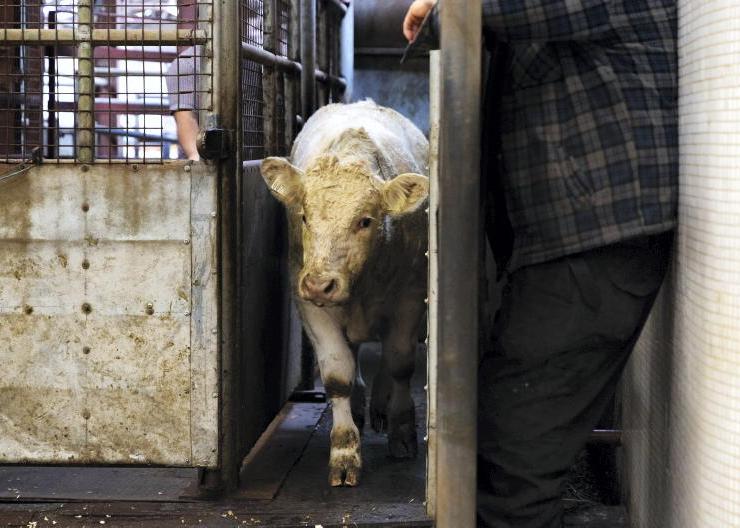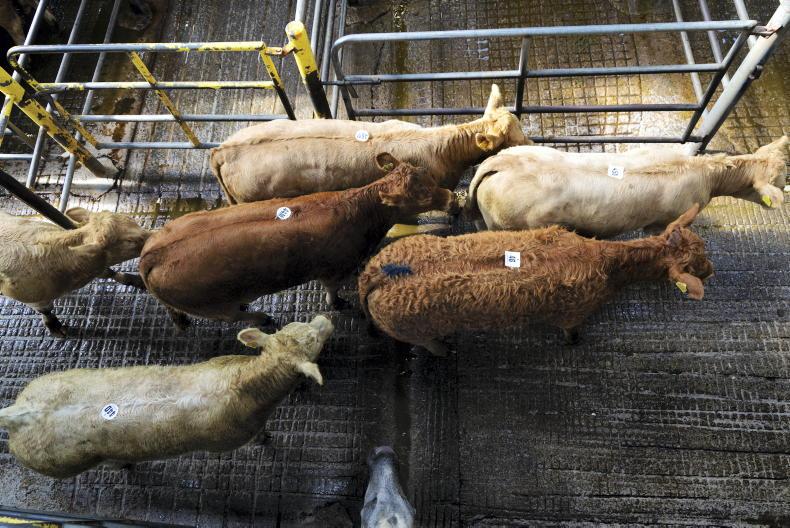
Farmers lose approximately €2.86 for every €1,000 traded through marts as a result of the reduction in the farmers’ flat-rate VAT addition to 4.5% this year, while the livestock VAT rate remains at 4.8%, the Irish Co-Operative Society (ICOS) told the Joint Oireachtas Committee on Agriculture on Wednesday.
This is a penalty farmers can avoid by selling privately to other non-VAT registered farmers, the organisation said.
ICOS is calling on the Government to address this anomaly, which it said is financially penalising non-VAT registered farmers selling livestock through marts.
Disproportionate effect
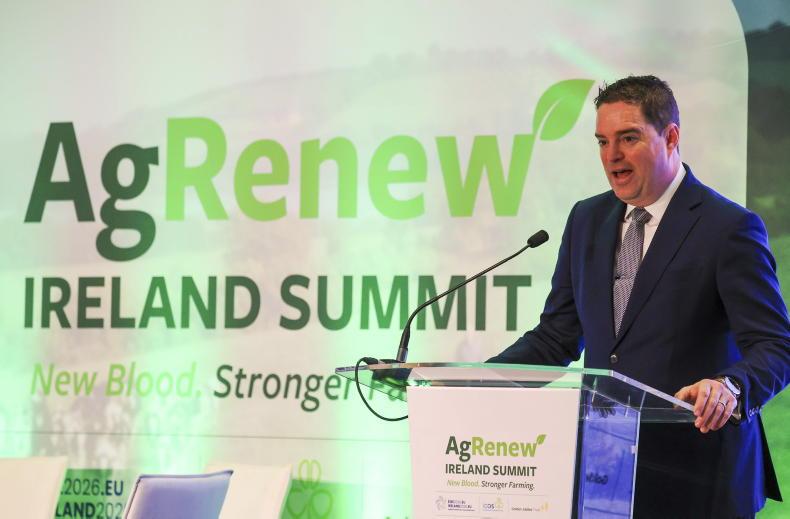
“The small farmer is losing out big time,” general manager and society secretary at Clare Co-Operative Marts Martin McNamara said.
"Unfortunately, it is targeting smaller operators.
"It has a disproportionate effect on small farmers because the larger operators and buyers are VAT registered.
“Last week, we had quite a number of cattle that topped €3,000. Effectively, in that case, there was nearly €8 in VAT taken off the farmer on top of commission. Last year the farmer was getting that.
“In our situation alone, last year we gave €380,000 to farmers in the top-up, which we subsequently reclaimed from Revenue.
“This year, with the same turnover, we would be deducted €380,000 for the same level of trade.
"That is a twist of €760,000 in one small county alone in 12 months.”
Mart fees haven’t changed
He added that he fears that this will create the perception that marts are revenue collectors rather than providing a service to farmers.
Chief executive and secretary of Golden Vale Marts Maurice Lyons said that farmers are complaining about fees this year, despite mart fees not increasing.
“There are an awful lot of farmers complaining about fees this year.
“Last year, say we had a fee of €20 on a €2,000 animal. This year, it looks like it’s about €25.60 coming off in the mart, whereas last year it was around €14 because there was a top-up and this year there is a reduction.
"The mart fees haven’t gone up.”
Competitive disadvantage
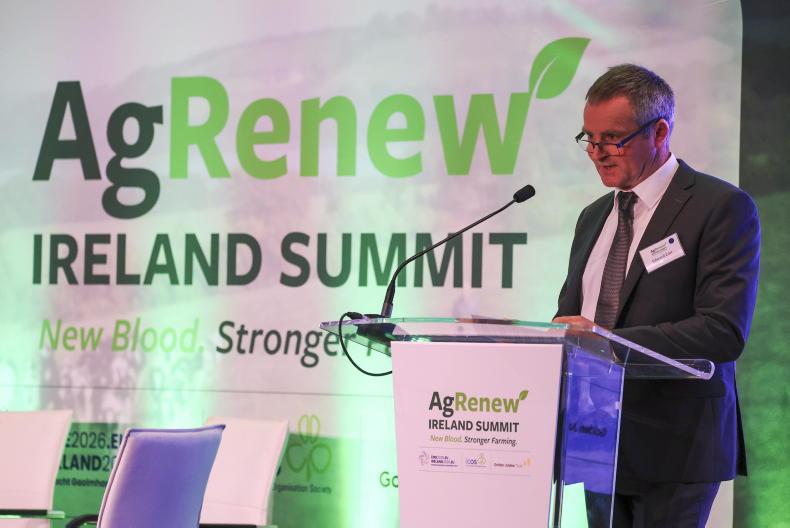
“Marts are currently at a competitive disadvantage that Revenue is imposing this difference on us,” ICOS livestock and environmental services executive Ray Doyle told the committee.
“If a farmer sells privately, there is no difference in collection. But we are being caught collecting VAT from a non-VAT registered farmer, which isn’t maybe quite technically correct, because of the anomaly, because of the way it is structured for the livestock mart," he said.
Doyle commented that while both private selling and mart selling have been down this year, the drop in livestock sales has been higher than the drop in private sales.
“We have to assume that the differential percentage is a direct result of the fact that it is now a hard cost model to actually trade in the mart.
“I can’t and won’t attribute it all to the VAT, but there is definitely a sizable contributing factor."
Causing 'significant damage'
Lyons highlighted that as a lot of marts are farmer-owned, it is their objective to do what they can to help farmers.
He said that marts have always administered the flat-rate VAT for customers, despite there being a cashflow cost and an administration cost involved.
However, he stated that now “it is causing significant damage to our business, which is why we are here”.
“There are two ways it can be resolved – the livestock rate and flat rate are both aligned or the alternative is that if it has to stay at 4.8% and there has to be an adjustment of plus or minus, that be dealt with at the end of the year when the farmer is doing their tax returns,” McNamara said.
Flat-rate addition scheme
The flat-rate addition is a special scheme for farmers who are not registered or are not required to register for VAT.
The scheme is designed to compensate non-VAT-registered farmers for the VAT they incur on farming costs, such as fuel and other inputs.
Flat-rate farmers are entitled to receive an amount known as the flat-rate addition on their supplies of agricultural activities.
Since the inception of the scheme in 1990, there have been 18 years when the flat-rate addition percentage was higher than the livestock rate and 16 years when it was on a par.
This year is the only year when it has been less than the livestock rate.