After a record dry summer, and with many areas affected by drought, farmers are hoping that the grazing season will be extended, to reduce pressure on fodder supplies and to shorten the labour-intensive winter period.
There is a lot of grass on farms, and animals are healthier and happier outside.
While farmers often complain about the restrictive nature of calendar farming when it comes to slurry-spreading, parasite control is still, often, calendar based.
Pre-housing dose
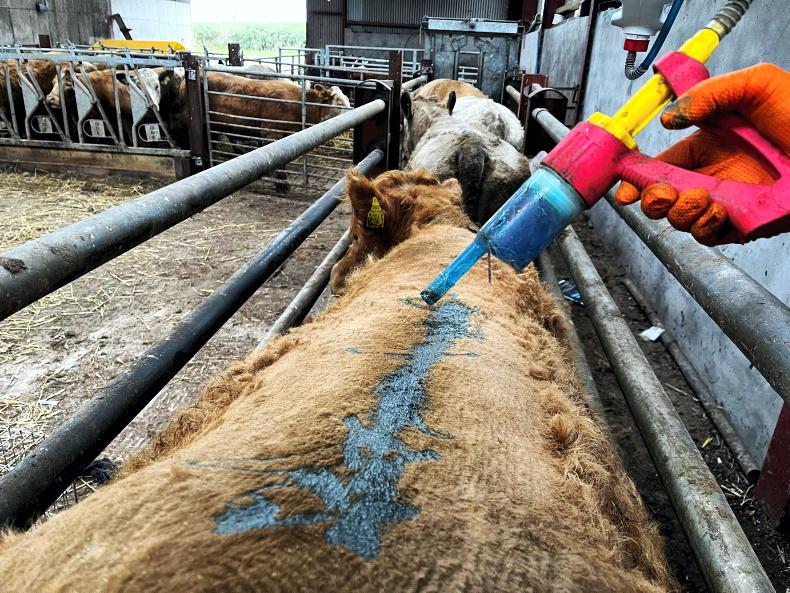
Farmers have increasingly moved from dosing calves or weanlings at housing to strategically using a pre-housing dose in September, which will cover the high-risk period until housing.
This is a sound practice and means that weanlings and calves would, normally, have low parasite burdens and clean lungs at housing, minimising the risk of respiratory disease.
If housing is delayed by a month, these animals are at risk from the next cycle of hoose and worms.
Keep in mind
It is important to keep that in mind and be aware that a further treatment may be needed. It is also important to remember that the standard faecal-egg-count tests will not detect lungworm larvae and that observation for the clinical signs of hoose (coughing) is still the best diagnostic test.
Many farmers in my area traditionally treat animals for liver fluke at Christmas time - which is usually six weeks post-housing. Most of the effective flukacides are effective against immature fluke (fluke at six to 11 weeks of age).
If housing is delayed, then treatment will either have to be delayed from the traditional time, or a flukicide effective against early-immature fluke will need to be used instead.
It is also very important to remember that faecal egg testing for fluke will only be positive if adult fluke are present in the animal.
Fluke takes 13 weeks to become adult so, typically, we don’t see positive fluke samples until December/January.
A negative fluke test in October does not mean there is no fluke in your animals.
Conor Geraghty,
XLVets Farmgate Veterinary,
Galway