



Scottish police have issued a warning to all farmers following an inquiry into the death of an elderly farmer last year.
Eighty-seven-year-old Stonehaven farmer David Ewan was killed on 16 June 2025 by a cow during loading.
Sheriff Ian Wallace headed a fatal accident inquiry into Mr Ewan’s death and published his findings this week.
The investigation set out to consider what steps could be taken to prevent other similar farmer deaths in future.
Sheriff Wallace and his team determined that the cause of Mr Ewan’s death was a traumatic brain injury and rib fractures caused by being struck by a cow and being knocked to the ground.
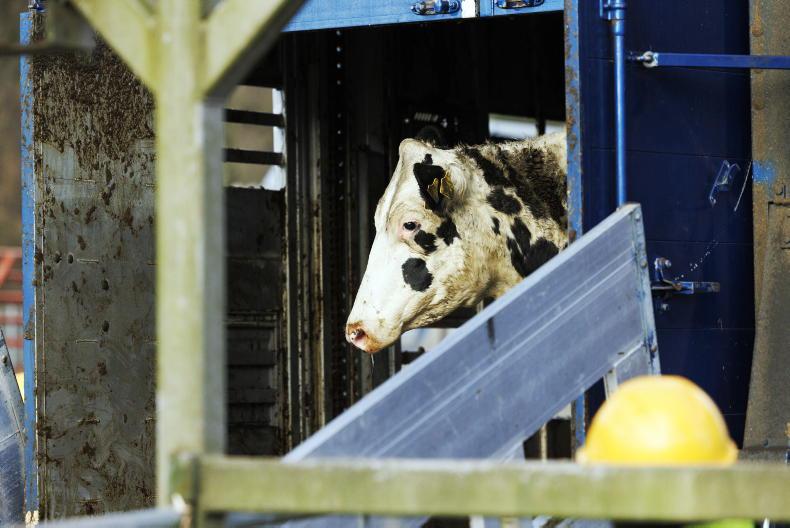
The accident occurred when Mr Ewan was moving behind three cattle in a pass to load them on to a lorry to be transported for slaughter.
One of the cows then turned and ran towards him and struck him.
The sheriff said the mother of the cattle being transported had been known to be particularly “flighty”.
Sheriff Wallace said in what is too common on many farms, Mr Ewan had been advised to get rid of the bad-tempered cow, but he had decided to keep her because she produced good calves.
No ‘ready means of escape’
As part of the inquiry, Sheriff Wallace was asked to investigate if the farmer’s death could have been prevented.
“Mr Ewan could have waited for assistance to carry out the task of conveying the cattle on to the lorry,” he said in his report.
“His daughter was on her way to the farm to provide assistance and the lorry driver would have helped.
“They were both younger and more mobile than Mr Ewan and therefore more able to take appropriate action when any cattle became out of control.”
The sheriff also found that the race to load the cattle on to the truck was unsuitable for use by a farmer of limited mobility.
He found that the race was too wide and that it allowed cattle to turn and change direction.
“The pass did not provide a ready means of escape or refuge for Mr Ewan in the event that cattle did become out of control,” he said, warning other farmers of the danger caused by unsuitable cattle handling systems.
Age and mobility a factor
Sheriff Wallace said Mr Ewan’s health had deteriorated in the months prior to the incident and his mobility had decreased.
He said the farmer was therefore at greater risk of injury when handling cattle.
The sheriff said that like many aging farmers, Mr Ewan had continued working on the farm long after a conventional retirement age.
“Mr Ewan’s family could see that it was becoming increasingly difficult for him to manage the farm,” he said.
“They increasingly stepped in to carry out jobs on the farm and would tell him afterwards what they had done.
“Mr Ewan was described as not being a man who would ask for help, but he was grateful for all the help that he did receive.
“For the previous 20 years, Mr Ewan had been saying that he would retire the next year, but he never did. The farm was his life and his hobby.”
Risks known
Sheriff Wallace said the risks to working in agriculture are well documented.
“Agriculture accounts for 1% of the British work force, but for approximately 20% of worker fatalities,” he highlighted.
“Where a fatality is caused by an animal, it is almost always cattle.”
He said between 2020 and 2025, 12 members of the public and 14 farm workers were killed by cattle.
“The age of the person handling cattle is a significant factor in assessing risk,” he said.
The sheriff said, overall, between 2020 and 2025, there were a total of 125 worker fatalities in the agriculture, forestry and fishing sector in Britain and that 45 of these fatalities were of workers aged over 65.
“There is no recommended upper age limit to handling cattle as individual capabilities vary widely,” he said.
“However, a disproportionate number of accidents involve persons who are beyond normal retirement age.
“Careful consideration must be given to the risks to anyone aged over 65 working with cattle and what they can safely do.”




SHARING OPTIONS