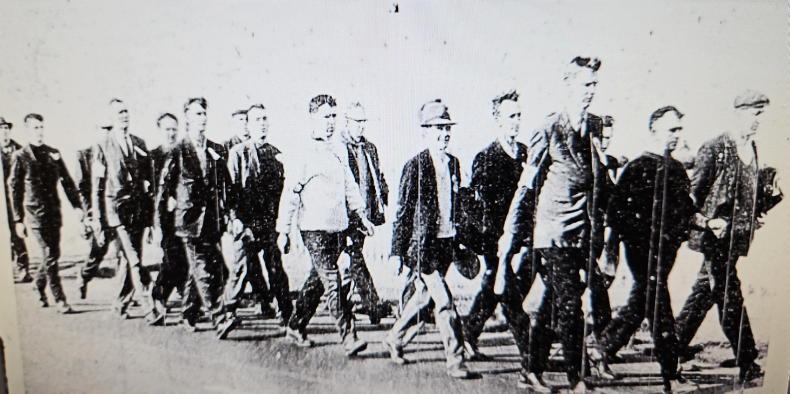
On this week 60 years ago, 16 west Cork farmers were making progress in their 217-mile walk from Bantry to Dublin as part of the Farmers’ Rights March.
Ranging in age from their late teens to early 60s, they left their farms and families on a Friday morning, not knowing if they would succeed or who, if anyone, would follow their lead.
Word came through on the Sunday that the Donegal farmers were on the road, and Kerry farmers set off next.
Momentum was building in their efforts to get recognition from government.
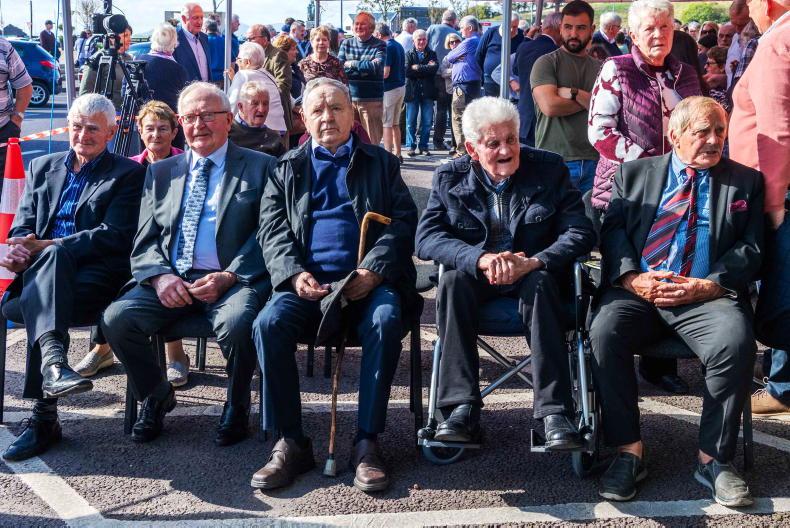
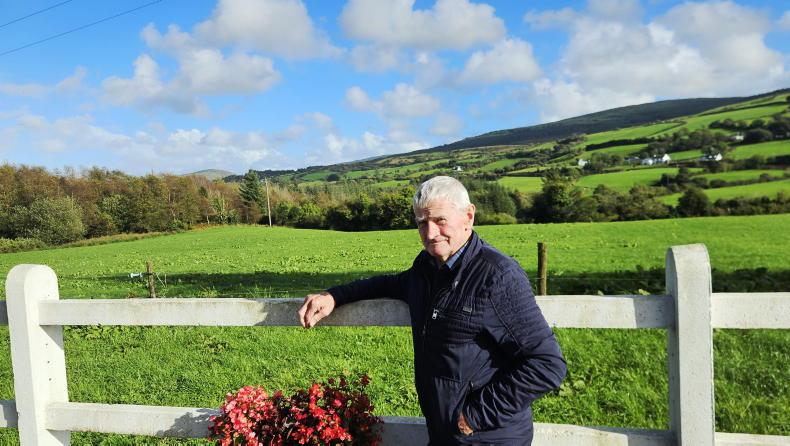
The following – the memories of two of the five surviving members of the group, Jim Morris, Drimoleague, and Johnny O’Sullivan, Kealkill – provides the briefest snapshot of what the 12-day trek was like.
Jim Morris: “Rickard Deasy had got the idea from the civil rights marches in the United States, and he put the idea to Danny Andrew McCarthy down here. Danny was a larger-than-life character and he insisted it started in west Cork.
“I was chair of the Drimoleague/Drinagh branch. When we came up to walking, I thought about it. My father had died in the meantime. I decided to go anyway, I got a first cousin to look after the farm when I was away.”
Johnny O’Sullivan: “I was the secretary of the Kealkill branch [of the NFA], and I was in the FCA with Seán O’Brien. He was the big influence that I joined. There was a meeting on the Tuesday or Wednesday night to finalise plans for it.
Amazingly enough, Seán O’Brien asked the local PP to give us his blessing and he refused. He wouldn’t turn up. There was only one Church of Ireland man in the group, Sam Kingston, but the Reverend Collard turned up. What was the idea, I don’t know.”
7-11 October, Cork
JM: “It was Bantry fair day. There was some speech, ’twas short. We took off up past the church, on the old road to Dunmanway.
“On the road east, Danny Andrew asked me to sing the Boys of Kilmichael. So, I sang that and we were going east the road, and there was a little easterly wind blowing into my face all the time, and I remember after finishing the song, saying to myself, ‘that’s hard work’. I thought to myself... singing a trampling or marching song would be easier to sing.
“I had a pair of new light boots. Jimmy Tobin of Corran had a pair of hobnail boots and he wore them all the way up. We had lunch in the Laurel Bar in Dunmanway. Danny had three blisters already. I put plasters on them and we started off... Leaving Dunmanway, I sang north men, south men, comrades all [We’re on the One Road], a song I learned from my sisters. I remember after, thinking that’s a good bit easier to sing.
“At Manch cross I was asked to sing by our leader, Seán O’Brien. I ended up singing Come Along, a Scottish marching song, eight times over the last few miles as night fell between Manch and Enniskeane.
JO’S: “I had to walk to the village [Kealkill] to get a spin in and I missed the kick-off. I met them just up from the square. The intention was that they’d make [it to] Ballineen the first day, which we did. Grub in Bandon Mart on Saturday. I stayed with my uncle that night, he was in Cork. I decided to go dancing that night. I went to the Arcady to see Doc Carroll and the Royal Blues. Old Man Trouble, he was known for that song. Sunday morning, we struck off. We went to Mass in a church on the Western Road. I knelt down and, when I went to get up, I had to put my hands out to bring out my two legs, they were that stiff at that stage. We didn’t go far that day.”
JM: “The first two days were the longest, with more than 20 miles each.”
JO’S: “Apparently why we rushed it to Cork, the guards requested that we wouldn’t walk through the city on a working day. Now, 16 fellas walking weren’t going to cause much disruption in Cork City. We weren’t putting up big mileage from Cork City on.”
JM: “In Mitchelstown, a doctor who had served in Timoleague came in and gave us a talk.
“He caught me by the jersey and said that’s the ideal wear to have. Loose clothing and a few more things like [that] would make it easier rather than a suit or a pants and coat.”
11-14 October, Tipperary
JO’S: “South Tipperary [group] joined us in Cahir. They were led by a local man, Malachy Brett. TJ Maher was with them. I got to know TJ fairly well and used always say to him that he should feel very proud that he walked in my footsteps. I was the last man in the Cork [group] and he was the first in the Tipp.”
JM: “My rainwear was a bit shook for a start. In Cashel, I said I’d get a new pants. I went down town and bought it, and when I went back, they were gone out of the mart. I don’t know how far we walked, but it was a woeful wet day. Fachtna O’Callaghan [Rosscarbery) was drenched out to the knees.”
JO’S: “’Twill tell you how naïve I was in them days. The first Friday on the road, Sam Kingston sat down to a plate of meat and we weren’t eating meat at the time. It was my first time seeing a man eat meat on a Friday.”
15-18 October, approaching Dublin
JO’S: “Once we got to Portlaoise, Waterford, north Tipp, Clare, Kerry, they all joined us. The mood was always very good. Jim Morris would break into a song.
“Come along, come along, let us sport along together. That would be sung nearly every day on the road. It was good to see the support rising, and it was positive.
“An odd car would stop and put down the window and give a big feed of abuse all right.
“One day there was a character with us. James O’Sullivan [from Coomhola], known locally as James Jerry Mike.
“We were stopped on the road and a supporter asked, ‘what kind of farm have you? ’Tis like this’, he said. ‘I have grass enough for nine or 10 cows and water enough for seven or 800.’ Your man went off down the road quick.”
JM: “We were up in the Curragh and Danny was stretched out there, and I started counting how many new skins he had. When you get a blister, a new skin would come on. I got to seven and he growled at me. ‘Amn’t I bad enough, would you leave my bloody legs alone?’”
19 October, Dublin
JM: “We walked through the quays in Dublin into Merrion Square. I remember beyond the railway station, there was crowds and girls in the offices; we could see them waving down at us from both sides.
“Fachtna O’Callaghan and Jackie O’Sullivan from Bere Island, they took the NFA flag and James Jerry Mike (James O’Sullivan) and myself, we were the two fellas with white jerseys, we carried the Cork banner. All through the town, the west Cork fellas were in front all the ways.”
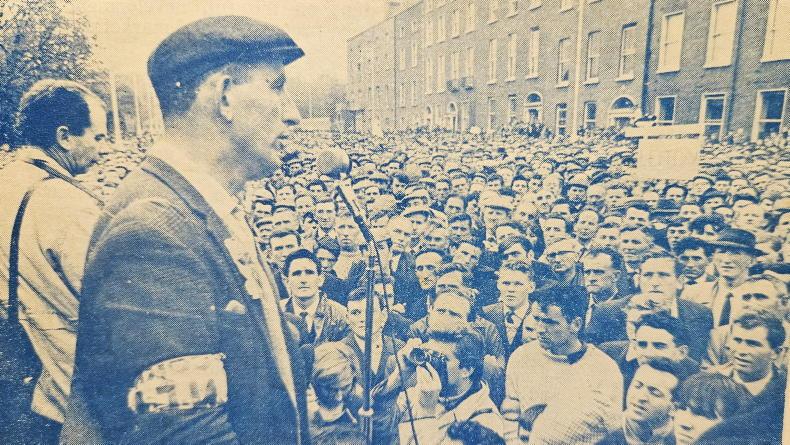
JO’S: “It was massive, to tell the truth. I felt very proud walking in there. On the day of the big parade in Dublin, there was a group [that] tried to commandeer the microphone, they were hoping they’d get the crowd into a big riot, but the Lord have mercy on Sean O’Brien, our leader.
“He took over. A chief super said after, he quelled what could have been a very dangerous situation.
“When the minister refused to meet the delegation they called it Checkpoint Charlie, [and] that was as far as we could go.”
Aftermath
JM: “It was a great experience and no one could take it away from me.”
JOS: “I’m very proud I did it. It gave a voice to the Irish farmer. According to him [Charlie Haughey] the Irish farmers had no education and ’twas easy to dump them.”