


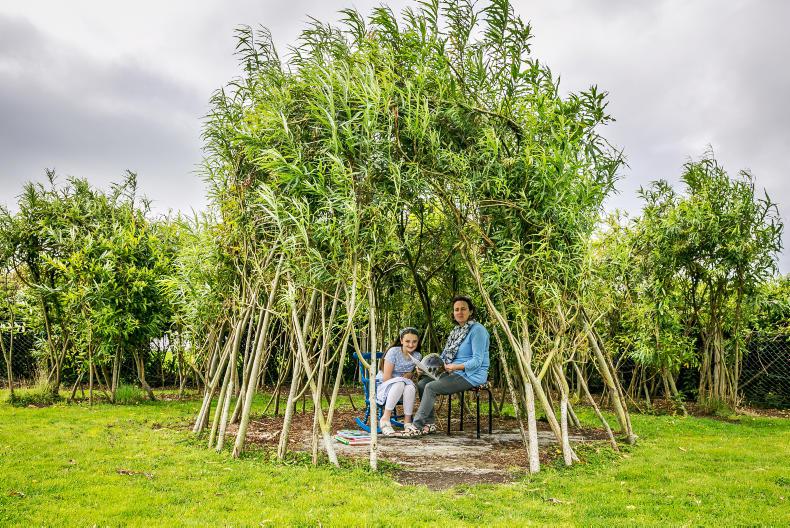
Starting a school garden is a long-term project and it’s best to start small and expand later. I would strongly recommend a commitment to organic practices from the outset and monthly committee meetings so that activities can be factored into timetables well in advance.
Ideally, it would be great to have all classes involved as the potential for learning is infinite.
Basic tool kit for a school garden
Depending on class size, try to have a hand tool for each child. It might be a good idea to invest in 15 hand trowels and 15 forks to start with.
Encourage good hygiene and insist that the children wear gloves. One wheelbarrow will be fine to begin with, and try to have a few watering cans.
Parents will be happy to donate old plant pots and trays, so don’t forget to ask. A roll of twine, some lollipop sticks, a pencil and a journal will be needed, while a couple of bags of compost and some seeds are all you need to get started.
Ground preparation
Once you have the best location chosen for your school garden, it’s time to decide how much ground you are going to use.
Consider raised beds. If you are taking over a grassy area, rather than digging out the grass, consider covering the entire area with cardboard and building a raised bed on it, as this is a quick way to get started.
A raised bed can be built on site by cutting and securing the desired-size timber frame and then securing the bed by driving in corner posts (make sure to cut these posts diagonally so that they are easy to hammer into the soil) and screw them to the frame. Why not ask the parents’ association to get involved if you need an extra hand?
Recycling tricks
As an organic gardener, I tend to recycle when possible, so I use old scaffolding boards for my raised beds. However, you can buy high-grade pressure-treated timber or, indeed, a raised-bed kit in your local garden centre.
The height of the board varies between six to 10 inches. Some people treat timber with flax oil, as it is water repellent and also seemingly deters slugs.
The final ingredient is some topsoil. Ideally, soil needs to be soft, light and airy so that roots can easily access the necessary nutrition. If you feel your soil quality is poor, you can either buy in some screened top soil and/or add some good-quality compost (homemade or shop bought) to the bed.
The knuckle test
Remove any large rocks, as they can also be obstacles for young roots. Do not overfill the beds with soil, only fill up to three quarters full. As a quick check for depth, try the knuckle test: you should be able to sink your finger into the soil right up to your knuckle.
If you have access to the sea, a trip to collect a car trailer of seaweed would be welcomed by the 5th and 6th class children and the seaweed can be used as a mulch.
Start out with four beds so that a crop rotation can be implemented. CL
For further information, call 087 061 2622 or visit www.maurascottageflowers.com.
ABOUT MAURA
Maura Sheehy is a flower farmer and florist who runs Maura’s Cottage Flowers near Tralee, Co Kerry. Maura specialises in growing and supplying natural and unique arrangements for weddings, funerals, special occasions and for local businesses, as well as running regular flower-arranging classes at her studio and school garden projects.
>> Benefits to children
1 Encourages responsibility, commitment and dedication: the more responsibility you give children, the more ownership they will have.
2 The sense of achievement that children get growing vegetables from seed right through to harvest – and better again if they get to serve it in a meal – is immeasurable.
3 They gain practical knowledge of gardening skills.
4 Gardening, particularly vegetable growing, encourages healthy eating practices.
5 Children are shown the benefits of caring for their environment and, by doing so, they are becoming stewards of their own little corner of the planet.
6 It allows opportunity for team-building and encourages peer support.
7 It exposes children to experiential learning, allowing them to gain practical, hands-on experience and insights into subjects such as geography and science. The range of experiments that can be carried out is endless.
8 It gives them a deeper understanding of where food comes from.



SHARING OPTIONS