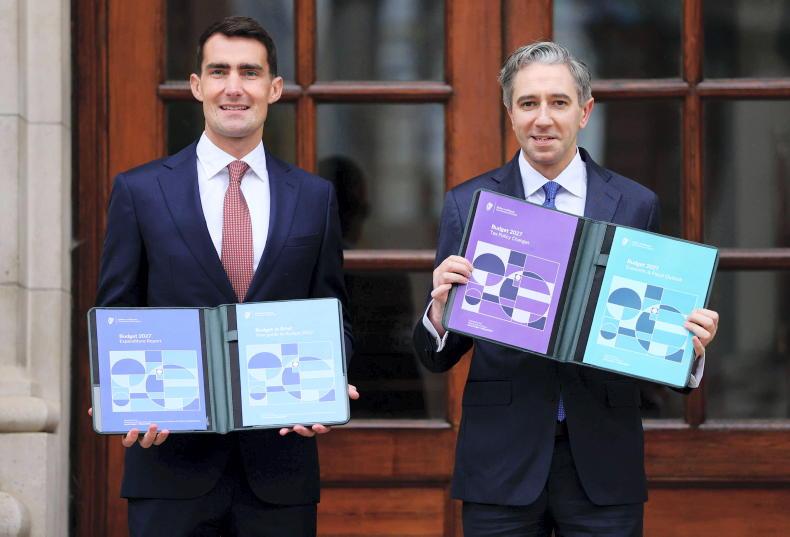
Following the 2027 budget, introduced on 6 October, the first instinct of the opinion pollsters was to check how it was received by the electorate.
Recall that the budget got a cool reception from economic commentators who described it as a “gamble with the public finances” and used terms like “giveaway budget”.
The electorate’s answer was furnished on Sunday last: the Red C poll of voting intentions published in the Business Post showed a decline in combined support for the main coalition parties, Fianna Fáil and Fine Gael, to 30% between them, the lowest combined figure ever recorded and way below the 43% they polled in the general election of 2024.
Fianna Fáil managed a 1% increase to 15% but Fine Gael dropped three points, also to 15%. These two parties regularly reached a combined total of 75% in general elections prior to the financial crash of 2008, with Fianna Fáil polling mid to high 40s and Fine Gael often above 30%.
A single opinion poll is never conclusive, opinion is fickle and there are sampling errors even with samples of decent size.
But it is clear that the tax cuts and extra spending have not impressed the ungrateful voters. Red C reports that a large majority did not feel that the budget measures alleviated cost of living pressures and only 12% said that the budget would “go a long way to help them”.
This is the same budget castigated in an instant reaction from the Fiscal Council, the body charged with oversight of the Government’s financial management.
Their document, released the same day, was called Fast and Loose and stated baldly that “Budget 2027 puts the public finances on a worse trajectory by repeatedly breaking established spending limits and increasingly relying on high-risk corporation tax”. The council will issue a full review of Budget 2027 before the end of November.
The central government departments in Merrion Street have commenced negotiations with the public service trade unions on a new public service pay deal for which €1.2bn was the figure pencilled in on budget day. It is already clear that this figure will be exceeded and the unions reportedly will seek €2bn or more. The figure announced when the talks conclude may not reflect the full cost of an across-the-board settlement – there are knock-on costs for pensions payable to retired officials for example since these are automatically increased in line with pay for those still at work.
There are also numerous bodies not formally represented at the pay talks who will expect to benefit from its terms, including people employed by publicly-funded advocacy groups and quangoes.
On past form, dating back to the days of social partnership leading up to the financial crash of 2008, whatever deal is arrived at will have economy-wide impact and could spark agitation for relativity claims in employments well removed from the public service proper. Participants at the talks will have incentives to under-state the full cost and there will be a further temptation: if the deal stretches beyond 2027, they will be tempted to focus on the first-year cost, under-stating the carry-over impacts in later years.
It is clear from the Red C findings that the general public is not at all concerned about the issues which have alarmed the Fiscal Council.
Those answering the pollsters’ questions expected more than the Government delivered and their disappointment is reflected in the poor combined support levels for Fianna Fáil and Fine Gael.
There was only a small improvement for Sinn Féin, up just one point to 22% despite their even more expansive offerings to voters in their alternative budget. Voting intentions rose only for smaller parties to their right, Aontú and Independent Ireland, while support for the Social Democrats fell. The Government has been dropping broad hints to the media, as the public service pay talks commence, that there is something called a “contingency fund” and that any excess cost over the €1.2bn opening figure can be accommodated out of the back of the sofa. Aside from anything else, this is a hopeless bargaining position.
A plea of limited funds is credible to the extent that the sofa has already been inspected and that nothing has been located. The source of this complacency is the expectation that the recent buoyancy in Ireland’s tax revenue will continue, which of course it could, at least for the next year or two. But the very existence of a contingency provision is an invitation to spend more. In managing capital budgets, many large corporations prohibit line managers from including contingency provisions in cost estimates, requiring them instead to make best estimates, accepting that there will be overshoots but balanced by undershoots.
It will be interesting to read the Fiscal Council on contingency provisions.