



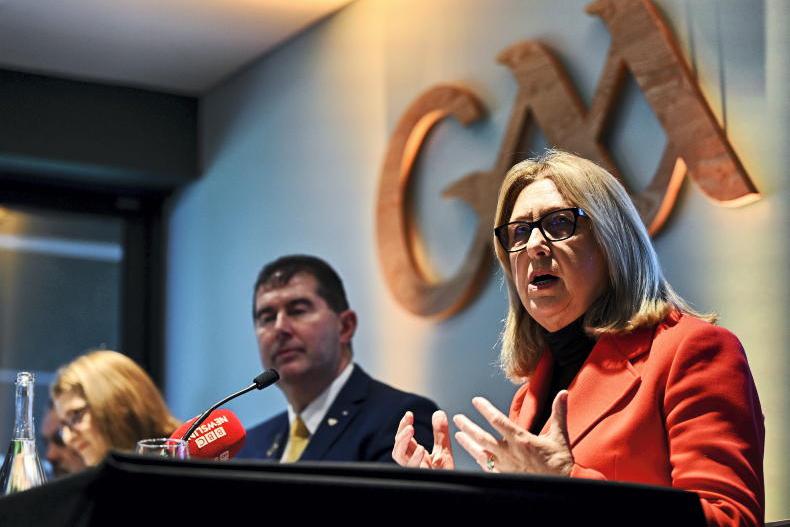
At its 2018 annual congress in Croke Park, 93% of GAA delegates voted to ban all sponsorship and pitch-side advertising by bookmakers and gambling companies, and at every level of the organisation.
There had been growing concern about gambling addiction amongst GAA members and the motion was supported by former Armagh All-Ireland winner Oisin McConville who had battled the problem himself.
He noted the inroads the gambling companies had been making in England, notably through Premier League football, and argued that the same could happen in the GAA. ‘We are nipping it in the bud,’ he told the Irish Independent.
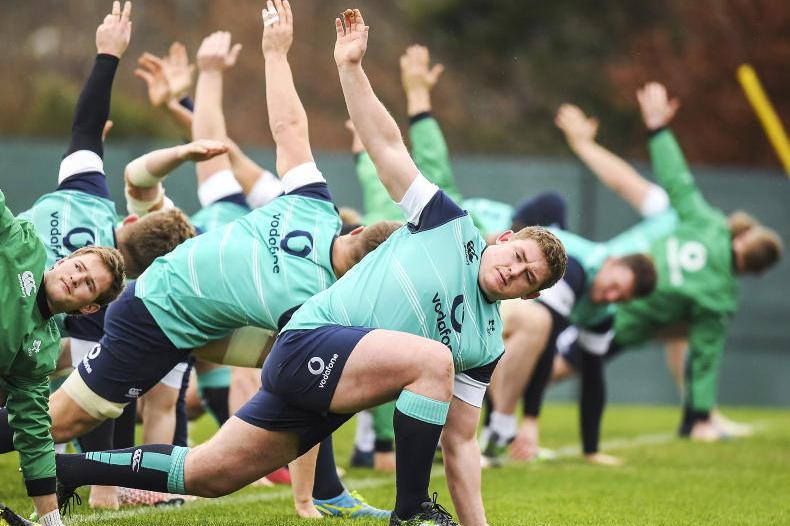
The Irish Rugby Football Union has not embraced a blanket ban on the lines of the measures taken by the GAA but neither their international teams nor the four provincial teams accept bookie sponsorship or shirt advertising.
Thus there is no elite level sponsorship by gambling firms in rugby either. The third major team sport in Ireland, on some measures the most popular, is football.
But the Football Association of Ireland has sponsorship from Sky for the both men’s and women’s national teams, and Sky (the broadcaster), which sold its shares in Skybet in 2018, secured a continuing commercial arrangement with Skybet allowing the gambling firm to use the broadcaster’s name.
So these teams enjoys sponsorship by bookies, if only at one remove. The FAI has also failed to follow the example of three premier division clubs in the League of Ireland which voluntarily decided to reject bookmaker sponsorship or logos on shirts several years ago, namely Bohemians, Drogheda United and Sligo Rovers.
Several of the remaining 10 premier division teams do not accept gambling money either but the champions, Shamrock Rovers, display a bookmaker’s sleeve logo and their home venue Tallaght Stadium, which belongs to South Dublin County Council, has perimeter advertising from several bookmaking companies.
Concern about gambling addiction has grown with the explosion of remote betting websites along with the universal popularity of smartphones, most obviously in the younger age-groups, the casino in your pocket.
Gambling companies have been relentless in product development for the digital world, with continuous opportunities to bet as the odds change on football matches in-play, or on the number of yellow cards over the full game.
This is intended to approximate the immediacy of casino games like slots and roulette, the perfect product for gambling companies, offering round-the-clock opportunities to bet repeatedly and with no irritating rights-holders like football clubs seeking a slice of the action.
A book just published (Darragh McGee, Imitation Games – How Gambling Hijacked Sport) confirms that Oisin McConville and the GAA were ahead of the game back in 2018.
The gambling firms have targeted football as a recruitment vehicle for new gamblers, including younger ones, and have been able to circumvent whatever limited measures the authorities have been implementing.
There have long been restrictions on TV ads for products deemed damaging before 9pm, but matches with pitch-side gambling ads are broadcast and streamed without constraint in Ireland. If you have ever wondered why pitch-side ads at major English football grounds are in Chinese characters, they are mostly ads for bookies.
McGee argues that the gambling industry and their professional advisers have been astute in their framing of the public debate, with the focus on what they term ‘problem gambling’.
The public are being invited to infer that the problem rests with the gambler and that betting an occasional few quid is a harmless part of the entertainment industry. But professional opinion amongst public health experts is different – a non-trivial portion of the general public are at risk of developing addictive behaviour and there have been harrowing stories of careers and families ruined, including suicides, and many such tragedies are recounted in McGee’s book.
For the victims there is no such thing as ‘responsible gambling’, the fatuous phrasing peddled by the industry and deployed by credulous football clubs who describe bookmaking firms as ‘our responsible gambling partners’.
It is unrealistic to expect the Football Association of Ireland to follow the socially progressive initiative taken by the GAA almost a decade ago, followed in rugby and by several public-spirited League of Ireland clubs.
The FAI, to be kind, is not driven to seek positive publicity on issues of corporate governance.
There is already a statutory ban on gambling in Italian football and strong support for further action in Spain, France, the United Kingdom and elsewhere.
Ireland is well-supplied with left-leaning political parties quick to propose costly legislation to address social problems across the board.
It is surprising that none of the opposition parties has drafted a bill amending Ireland’s 2024 Gambling Regulation Act to ban the involvement of bookies in Irish football.
They could even copy an Italian statute, a convenient free guide.



SHARING OPTIONS