




In October 1964, a new Labour government was elected in the UK after 13 years in opposition. The public finances were shaky, the bond markets nervous and Sterling’s exchange rate under siege. George Brown, Labour’s deputy prime minister, coined the memorable phrase ‘The Gnomes of Zurich’ to describe the dreaded bond market vigilantes, the purchasers of government debt who lurked in a cave somewhere in Switzerland and threatened to undermine the government’s spending plans.
Governments have been wailing about the evil bond markets forever, are doing so again these last few weeks and they regularly lose.
The Gnomes won the argument with Labour and Sterling was devalued by 14% in 1967, hastening the broader abandonment of fixed exchange rates in the 1970s.
Purchasers of official debt can be quiescent for long periods but governments which fail to control the finances eventually revive their natural instincts.
The bond market vigilantes (BMVs), today’s respectful designation for the Gnomes, seek compensation for risk by going on strike, refuse to buy bonds, push up the cost of servicing debt and make the budget deficit worse.
Bond markets are peopled by volunteers, thousands of fund managers all over the world rather than a small group of sadists hiding in the Alps.
They enjoy the quiet life until they all get nervous together. This happened again in several European countries just after the 2008 banking crash and in 2011 there was a sizeable default on the sovereign debt of Greece, the first major bond default in Europe since 1953.
It was described as a ‘voluntary private sector write-down’ to save political blushes and was a chastening defeat for the BMVs who lost €100 billion, over 50% of the value of their holdings. Ireland’s lenders avoided the same outcome, rescued by emergency financing from the IMF and EU institutions and the ensuing programme of tax increases and 'Bord Snip' spending curbs.
The BMVs are getting restive again. The UK government is paying 5.3% for 10-year money to replace maturing debt and Andy Burnham’s first budget on 28 October will start from a deficit at 5% of national income, adding steadily to the stock of IOUs in the Treasury basement, where the inherited IOU pile has reached 100% of national income.
The picture around Europe is worsening – the French figures are no better than the UK but they use the Euro common currency and French bonds trade only a little behind the AAA-rated German equivalents.
But even here the 10-year yield has drifted up to 3.5% while US 10-year bonds now yield almost 5%, a record for recent decades, and the dollar has weakened.
Ireland looks like one of the better-placed Eurozone members this time round. Ten-year money is costing the Government around 3.65%, just a little more costly than the AAA German figure, but will rise if German borrowing costs continue their ascent.
There is a budget surplus courtesy of the enormous in-rush of corporate tax payments by foreign multinationals, largely American.
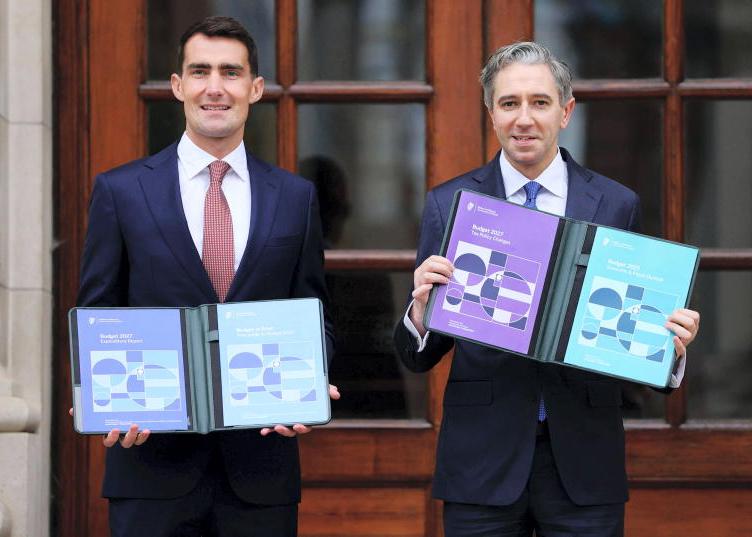
The budget story is that the government has failed thus far to eliminate the burgeoning surplus despite the steady stream of tax give-aways and spending overshoots and there is every reason to expect more of the same from minister Simon Harris on 6 October.
He has thanked the Fiscal Council repeatedly for reports urging caution but continues to ignore their advice.
The Fiscal Council and other independent commentators worry that the long-run optimism is deceptive and that population ageing will absorb whatever tax buoyancy might still be around a few years from now.
There is also a shorter-term problem. Some continental EU countries, most with their own fiscal problems, are keen to grab some of the Irish tax bounty, arguing that the companies paying tax in Ireland are operating businesses in their jurisdictions and should pay some tax there.
Since the companies are owned and managed from the USA in most cases, the Internal Revenue Service could seek legislative changes and keep some of the tax bonanza in Washington.
Whether eaten away by demographic pressure from spending on the elderly or cash-grabs from the EU or the USA, the bonanza will not endure.
The belief that the budget picture will stay rosy indefinitely was also a feature of the bubble years before the 2008 crash – remember the confident predictions of a ‘soft landing’?
Booming revenue from stamp duty collapsed as the bubble burst from mid-2007, confirming that the pessimists were right to urge caution.
In a small and volatile economy, there will be periods when things go better than is supported by economic fundamentals.
And they can be followed unexpectedly by international downturns, self-inflicted damage like the banking bust or adverse movements in the terms of trade. Hope for the best, but be prudent and prepare for the worst.





SHARING OPTIONS