



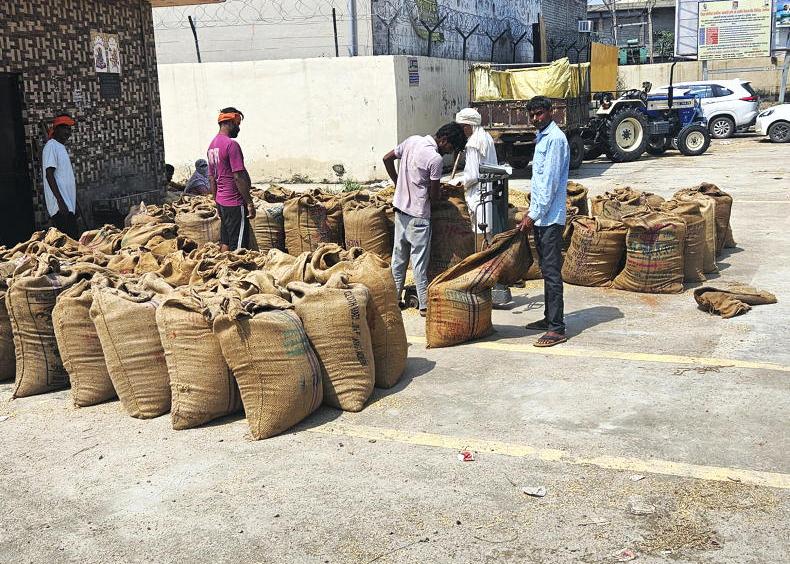
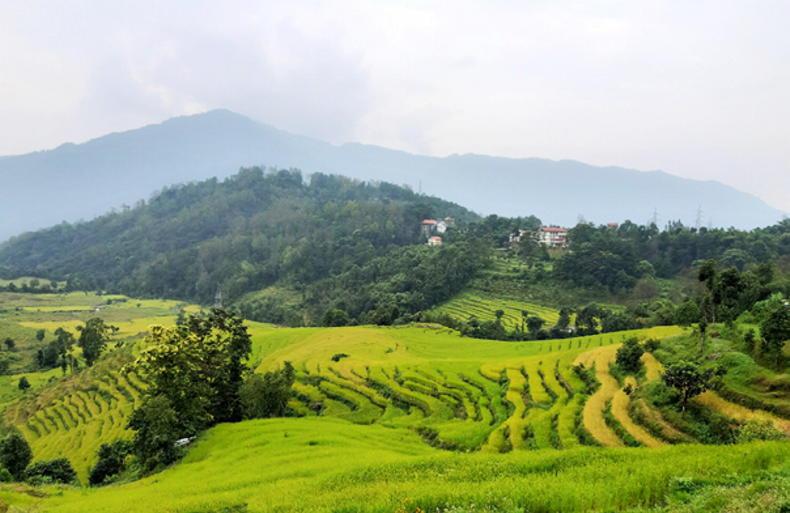
For the last 10 days I have been in India, looking at its agricultural policy and how it has delivered for farmers, consumers and taxpayers.
It is the first time I have missed the Ploughing for many years, but I was glad to hear that it was another feat of organisation that successfully portrayed the sector to the wider country.
But back to India.
The remarkable achievement of successfully feeding a country of 1.5bn people at a population density seven times that of Ireland, while achieving sustained economic growth over the last decade, is seldom acknowledged in this part of the world. The farm policy that has driven the production of sufficient food of improving quality is clear.
Providing a framework where farmers can plan with confidence, knowing that key product prices are guaranteed, at a price that will leave a profit and that exceptional surges in key import prices will be controlled.
With 60% of the population engaged across the agricultural sector, it is clearly of huge political significance, but the level of commitment goes beyond sheer numbers. Income stability and food security are key government priorities.
A few simple examples – but first, forget about beef as a sector. The slaughter of cows or their progeny is forbidden across the vast bulk of India, due to the Hindu religion.
Cattle rambling down streets and along roadsides is a normal, if to us bizarre, feature of everyday life. Wheat and rice are key crops and have a guaranteed price operated by government.
Farmers can sell wheat to the government at this year’s guaranteed price per tonne of approximately €250/t, or if there is a buyer offering more, they can sell to them.
In most of the key fertile areas, wheat occupies the ground for about six months from October to April, and 2t/ac is a typical yield.
It is then drilled with rice – a bit more valuable as a crop, but harvested with the same combine, etc. The rice is sown in April/May and was being harvested when we were there last week; again a normal yield would be 2t/ac plus, but the price is closer to €400/t.
What really struck me was the government-backed stability of input cost; 46% urea has, despite the turmoil, been held at €54/t (equivalent), yes €54/t. It is seen as a key input and the state subsidises it to maintain this as the maximum retail price that can be charged to farmers.
Diammonium phosphate (DAP – 18N 46P) at a price of €270/t (equivalent) can vary more, depending on international conditions and government subsidy, but the principle of government stepping in to stabilise prices is well established.
On the dairy side, the giant co-op Amul has, with government backing, encouraged the development of dairy farming at village level, has overseen a rise in consumption of dairy products, especially among children, and transparently raised returns to farmers.
The other side of the policy is that India has resolutely refused to open up its market to US grain and milk powders.
President Trump has berated it and accused it of torpedoing any progress at a WTO level, but given the progress in feeding its population and in securing overall economic growth, I find it difficult to criticise the Indian approach.


SHARING OPTIONS