The budget kites are in full flight, with numerous ideas being floated and flown over the last few weeks.
Budget 2027 pales into insignificance when it comes to the €2 trillion EU Multi Financial Framework (MFF) budget being negotiated in the coming months.
In its role of holding the current EU presidency, Ireland could play an integral part in agreeing the next budget. That’s not without its challenges with the so-called frugal six nations of Austria, Denmark, Finland, Germany, the Netherlands and Sweden all becoming increasingly vocal on the need for tighter controls and reduced funding of the upcoming MFF budget.
There are closer links this year between the Irish budget and the CAP budget. Budget 2027 is an important one for agriculture and almost a test of where the Irish Government places agriculture in terms of priorities.
The EU has consistently spoken in recent years about devolving the decision-making around CAP funds within a country to the country itself.
That means each country will have the ability to shape where particular funds go within each sector, and it could mean fighting for CAP funding with other government departments for something like cohesion funding.
We live in exceptional times, and exceptional times call for exceptional measures from governments to help various sectors, including agriculture, cope with the circumstances forced upon their citizens through no fault of their own.
While the Irish Government can’t in reality materially affect what happens in the Strait of Hormuz, it can apply measures to help farmers cope with the increased costs of producing food.
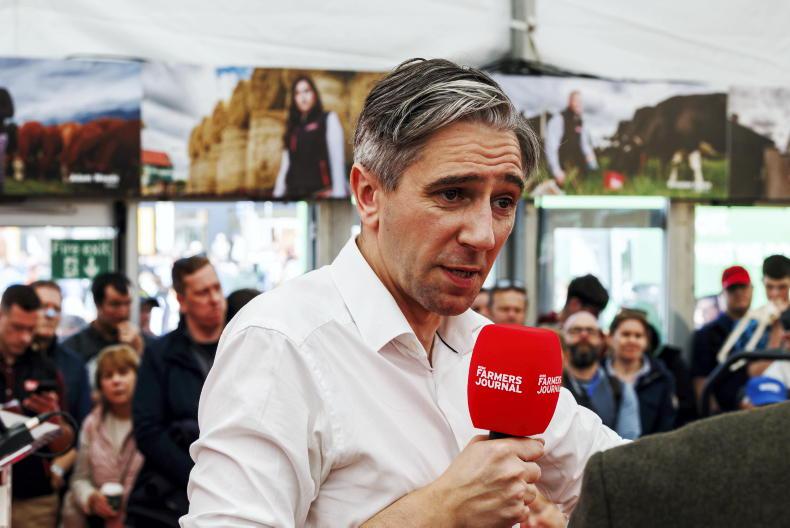
At the Ploughing Championships last week, Tánaiste Simon Harris, on the Irish Farmers Journal stand, spoke of supports in the budget for three specific areas, fodder, fuel and fertiliser. It is as yet unclear what the detail is around how the Government proposes to support these three areas.
Any supports must be simple to access. On many occasions in the past, we have seen red tape exclude genuine farmers from accessing schemes and funds.
The majority of the €85 million fuel support scheme launched last April remains unspent against the backdrop of another 20 cent/litre increase in green diesel prices in the last two weeks.
Farmers have already shown that they are up for change when it comes to the energy they consume on their farms.
Wholesale electricity prices have almost doubled in the last 12 months. That has hurt farmers financially and they are looking at their options.
Thousands of farms have made the transition to solar energy, installing solar panels on their shed roofs, availing of the grant available under the Targeted Agricultural Modernisation Scheme (TAMS) in recent years and solar energy was gaining significant momentum in agriculture – particularly on high energy use farms.
We now have the ludicrous situation where 90% of rooftop solar farm grant applications are being rejected for approval by the Department of Agriculture due to funding issues. This has resulted in a huge fall off in applications and will essentially stall the transition to solar energy on Irish farms.
We can’t have a situation where we have targets for the sector and expect farmers to meet those targets without putting a sufficient funding model in place. Budget 2027 needs to fix this.
The tillage sector remains under huge pressure, with farmers continually questioning their future in the industry. Promises in pre-election manifestos have fallen short, with incomes under sustained strain due to Irish and global price pressures.
It currently looks like growers of spring barley, Ireland’s largest cereal crop, will be looking at another loss in 2026. Tillage farmers are heavy users of fuel and fertiliser, two inputs which have seen large price increases this year.
Solid support in Budget 2027 for the tillage sector could help stabilise the sector and show tillage farmers that the Government has their backs and they want the sector to survive.