



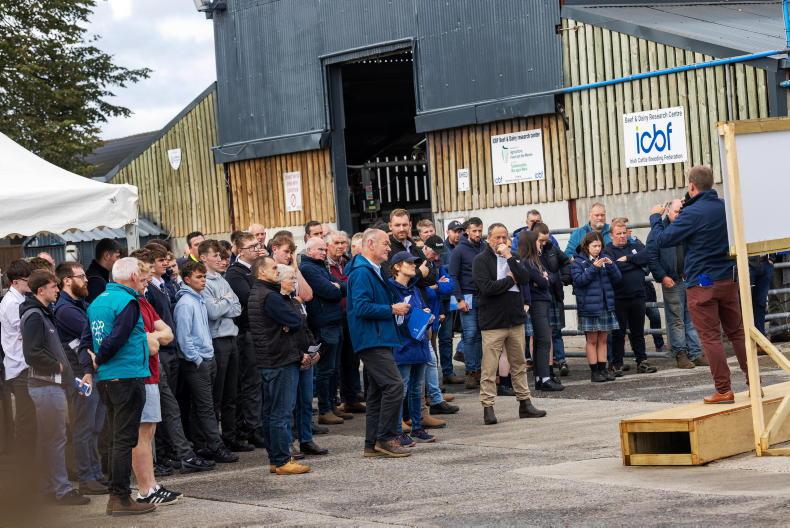
Over 800 farmers and industry stakeholders attended the ICBF Tully open day last Tuesday. The research facility at Tully has evolved over the decades and now plays an important role in understanding some of the traits like methane production, which are hard to measure on commercial farms.
The challenge for researchers is to always be ahead of the curve and conducting research today that will answer questions that will arise 10 or even 20 years down the road. Ireland is currently ahead of the curve, being one of the only countries in the world with the ability to build in methane emissions from animals into genetic indexes and in turn allowing farmers to breed for animals that have lower greenhouse gas emissions.
More than 3,300 cattle from 19 different breeds have contributed methane records to the national evaluation, with ICBF data now being able to prove that lower methane emitting cattle can be selected for without compromising performance.
The reality is that genetic gain is cumulative and permanent as opposed to other methane reduction or inhibiting technologies.
Ireland has an ambitious target of reducing national greenhouse gas emissions from livestock by 30% by 2030. Some farmers have been critical of ICBF over the years in terms of the direction of breeding but its decisions have always been based on science and it is science, including genetics, that will help us in some way to meet our climate change targets.
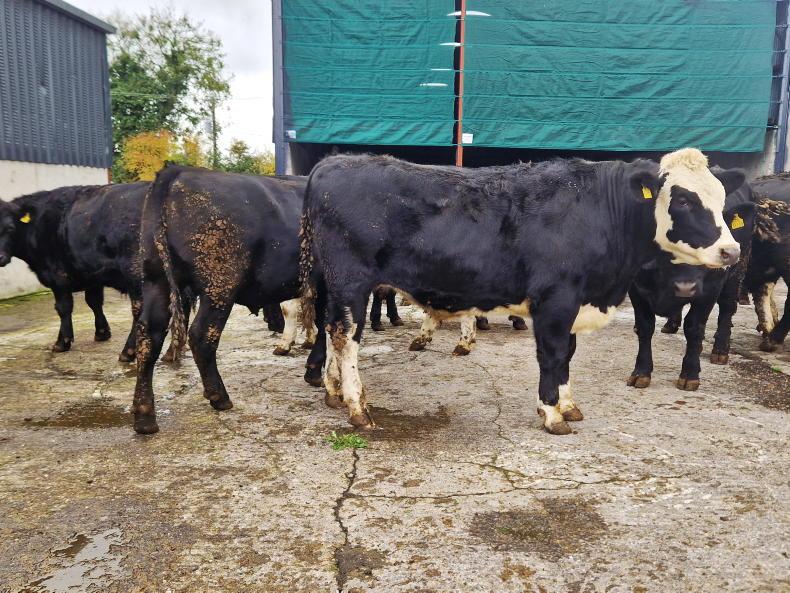
The simple analogy of two heifers slaughtered at the same age with a similar liveweight was on display. One heifer had a 4% heavier carcase than the other coupled with a 23% less methane production per day figure. Having the data and research is one thing, getting farmers to follow that research is a different challenge and this has been the failing point for some technologies in the past.
Farmers must be supported in the adoption of this technology. The market has so far failed to recognise different production systems.
That means it’s down to government to come up with a plan to incentivise this research being applied on farms.



SHARING OPTIONS