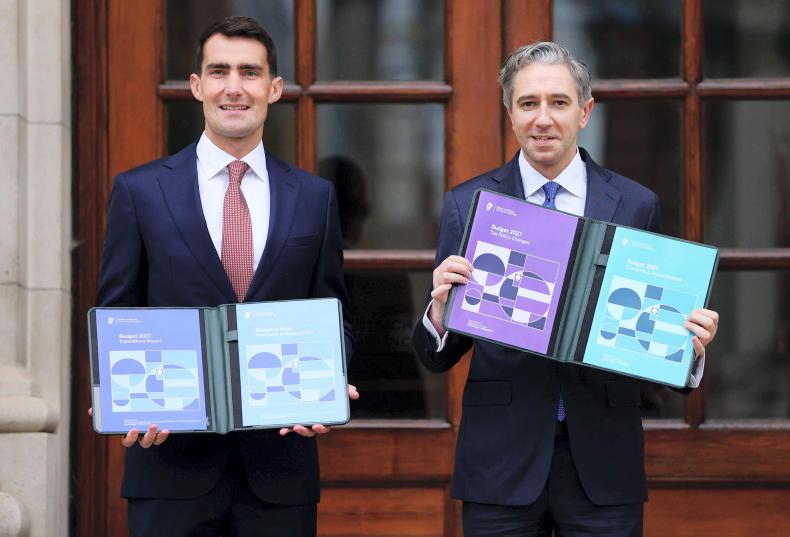
There are some describing this week’s budget as a boring one for farming. With the 2027 outline of funding and finances devoid of any innovation or ambition for the sector.
There are others who take the view that a boring and uneventful budget is better than an upheaval of schemes at a time when there is huge uncertainty around fuel prices and input costs on farms.
I’m siding with the latter with the Multiannual Financial Framework (MFF) budget the only show in town for 2027.
There are positives in Budget 2027 for farmers. The full 200% top up payment being made by the Irish Government is on top of the EU fertiliser action plan fund for farms.
This should bring the total fund to €46 million and will end up in a payment of €34/tonne for farmers. It’s a small but important acknowledgment of the pressures that farmers are facing. Increasing TB compensation values is another big positive.
It’s understood that Ireland is one of the only EU countries that will apply the maximum amount of co-funding to the EU scheme. The increase in the flat rate addition for non-VAT registered farmers from 4.5% to 4.8% is another positive move for livestock farmers.
It’s estimated that this is worth €30 million to farmers in 2027. There has been huge frustration in marts since the changes were made last year, with confusion around deductions from mart cheques. Marts continue to be the best avenue for farmers to buy and sell cattle, and it’s important that they are protected.
The extension of the fuel rebate scheme and suspension of any more carbon tax increases will also go some way to alleviating the huge increases in fuel bills that farmers are facing.
One area that was disappointing was the lack of any real movement on generational renewal.
Macra had put forward a detailed proposal on a pilot scheme that would have cost €5 million to fund an entry and exit package for retiring farmers and young farmers entering the sector.
The Tánaiste in his budget speech referenced Irish family farms as producing food in a safe, reliable and sustainable way. If we don’t grasp our farm succession problems, we won’t have as many farms in the future ticking these boxes. The 2027 Irish budget was always going to be the pre-show or supporting act for the headliner that is the CAP budget, which could be finalised within the next three months.
Ireland is currently drafting a negotiating document ahead of next week’s European Council Summit scheduled to take place from 15-16 October 2026.
The Irish Council presidency’s “negotiating box” is expected to be unveiled on Saturday 10 October. For the EU’s long-term budget to be adopted, a unanimous decision in Council and Parliament’s consent, by an absolute majority of MEPs, is required.
The current mood on the negotiating document isn’t good, with the so-called frugal six group of countries taking a hard line with the Irish government on funding levels ahead of next week’s negotiations.
Irish officials have dropped the notion that Ireland will need to be honest brokers during the negotiating phase, but that won’t wash with Irish farmers.
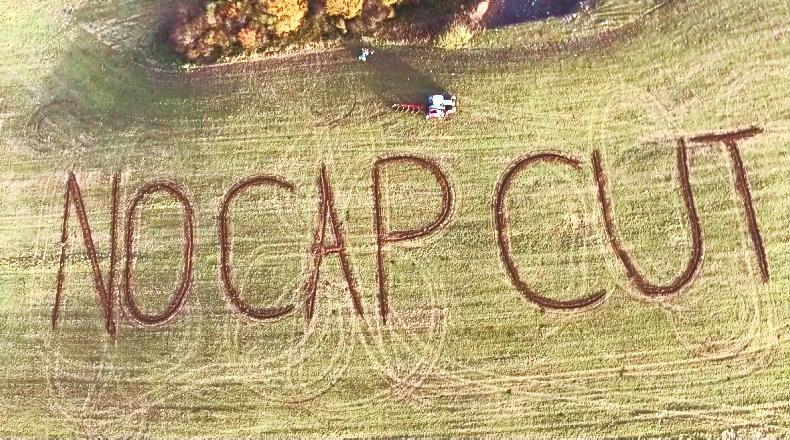
They expect our elected politicians to fight tooth and nail for a fully funded CAP budget and to use all their influence across Europe to make sure funding is put in place to protect Irish family farms.
There is a worry that our voice isn’t loud enough when it comes to the MFF negotiations. This year’s national budget for agriculture is broadly similar to where it was in 2025 when supplementary funding issued during 2026 is added in.
This is against the backdrop of an overall increase in government spending of 6% in Budget 2027. Under the next MFF funding model, member states will have more power to divert funding to cohesion projects and other areas.
That’s when a strong voice for agriculture around the cabinet table will be critical to make sure Ireland’s CAP fund isn’t raided by other interest groups.