We have had two results back over the last few days. The first was reassuring that the dung samples we sent off to test for worms came back negative. These were from cattle that had been grazed all summer and facing into the winter, we would normally give them a precautionary drench to eliminate any worm burden that had built up.
Normally the advice is to wait about six weeks after housing so we will take some more samples coming up to Christmas and see what’s needed.
The second set of results was on our first cut silage.
Because of the wet spring and grazing everything before closing up, it was well past mid-June before we took our first cut.
At that stage it was warming up and the grass was cut in excellent conditions.
We left it to wilt as usual for a good 24 hours. At that stage we knew it was dry – in fact we were told it was too dry for pit silage at just over 40% dry matter.
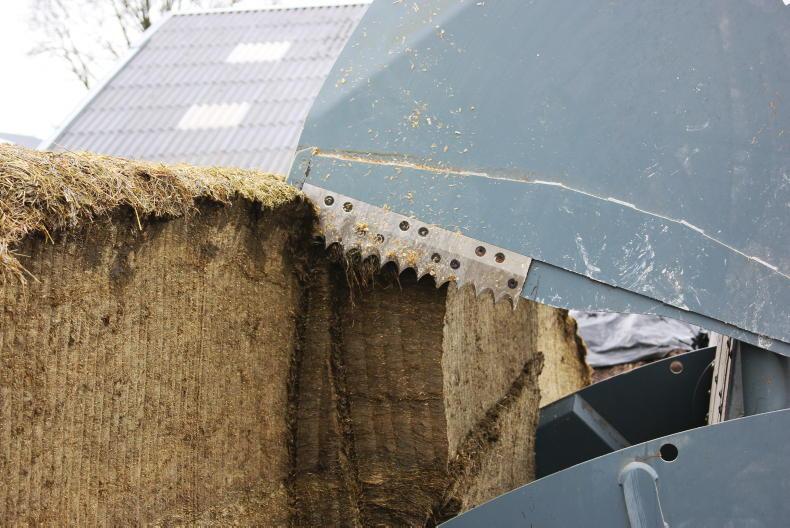
At such a high dry matter, it is difficult to roll it enough to exclude all the air and it can go off quickly once the pit is open.
The samples we took from the face of the pit showed a digestibility below 63 and a high pH.
Eating well
Theoretically, intake of such material should be very low but in fact the cattle are eating it well.
We really need to take a sample using a core to get fresh material and then see if we need to adjust our feeding regime.
But the basic message is clear – the recommended dry matter for pit silage is around 25% to 30%. Over-wilting can clearly cause compaction and fermentation problems.
What I am not sure of is whether there is a safe way of preserving the high intrinsic feeding value of such material without going to the expense and trouble of wrapping it with multiple layers of bale wrap?
Meanwhile, the very last of the cattle went this week.
I was surprised to be quoted a lower price than a fortnight ago despite the strengthening in the key UK market.
I can only assume that with a good supply of cattle coming forward that a concerted effort by key factory groups succeeded in pulling the price.
One wonders what the function of the competition authority actually is.
Meanwhile, all the crops – including the last wheat crop to be sown – are above ground.
We took the opportunity of the good weather to get slug pellets out on the seed crop following oilseed rape – normally a really vulnerable place in the rotation to have a severe attack of slugs.
We will keep an eye on the rest of the crops as they develop.
One feature of this year’s sowing season has been the pronounced wheel marks after rolling, especially on land that was slightly sticky despite having been sown for a few days.
Perhaps it was because of the long dry spell that left seed beds fluffy and more vulnerable to extra wheel compaction.