




After the sudden heavy rain of 10 days ago, I wasn’t sure, as I mentioned last week, when or even if we were going to get the oilseed rape sown. In the event it was an unnecessary panic.
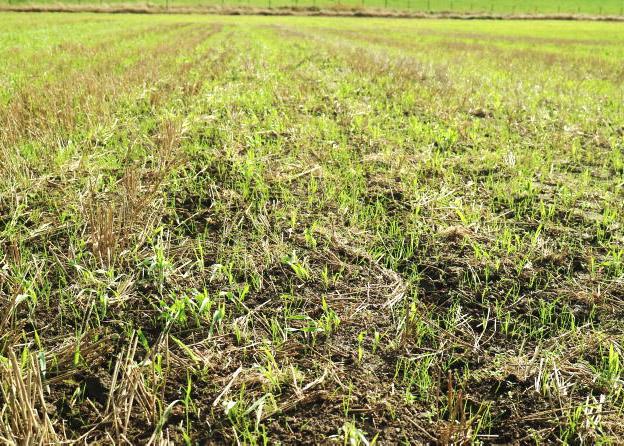
In the middle of last week, we got two dry days, which followed a few light mists. We tentatively tried a heavy disc with a strong tine harrow and got a really nice tilth which let the one pass operate ideally.
On the second day, the job was completed and finished off with a rolling. To be on the safe side, our regular slug contractor came with his quad and spread a half rate of pellets in the two fields.
It was noticeable that the field after winter barley had greened up quite a bit with volunteers and presumably some grass weeds, while the field after winter wheat was “clean as a whistle“ with just bare stubble.
We will wait until the crops have emerged before we decide on a herbicide strategy.
Meanwhile, the rest of the crops for the 2027 harvest are more difficult to work out than usual. My normal standby break crop of oats is not really a runner, with the new conditions attaching to any potential contract.
While looking at the beans which have yet to be harvested, it’s clear that they are a hugely variable crop and are, at least in our case, totally dependent on the direct aid that is payable.
I am reluctant to become too dependent on them without some form of breakthrough, as has occurred with oilseed rape in terms of dependable yield and profitability.
That means we are back to the mainstream crops of wheat and barley to fill out the acreage, with just a small area of beans.
We will try and grow crops with some kind of quality premium, which means discussions with potential customers over the next few weeks. Meanwhile, we have had to postpone cutting for our second cut of silage, as there was too much rain. It had bulked up well and we want to get as good a wilt as we can – not so much to increase animal intake, but to get good preservation in the absence of an additive.
The remaining aftergrass that isn’t earmarked for cutting is a lush green colour and is clearly highly palatable.
The store cattle are getting through it quickly and at this time of the year, the amount of regrowth will be very small so the hope is that by rationing it out, paddock by paddock, it will last at least through October.
One of the essentials of modern life was disrupted. Our new fibre optic internet had its connecting wire going right through the creeper on the house.
Not surprisingly, as we cut back the summer growth, the internet wire was accidentally severed. It will take a specialist to repair it, hopefully in the not too distant future.



SHARING OPTIONS