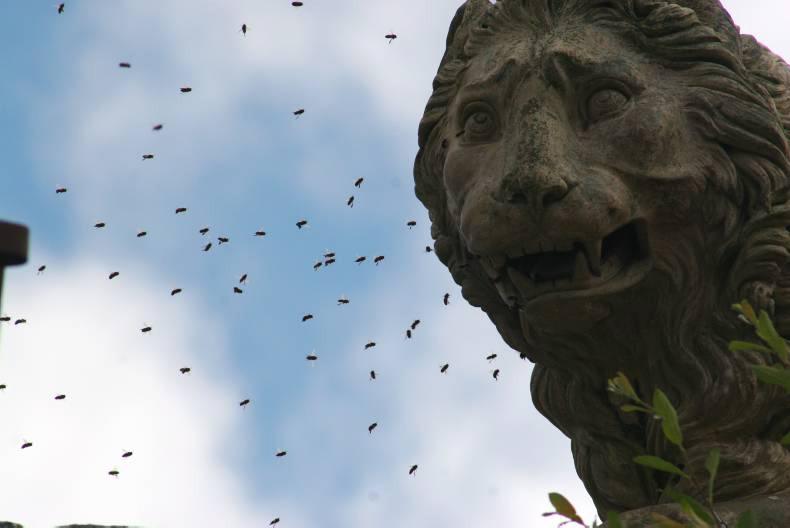
As part of the NUI Galway project, one feral indigenous Irish honey bee hive in the statue of a lion on the estate of Mote Park, Roscommon. Photo: Daniel Connell.
The team of scientists from NUI Galway is calling on members of the public to report sightings of wild beehives. They say those are most likely to be found in old abandoned houses and castles, outbuildings, residential houses and woodlands.
It is not currently clear whether pure native Irish honey bees still exist in Ireland after decades of mixing with subspecies imported from Europe. “If they do exist, then their gene pool may well prove important in the fight against the varroa mite which is destroying hives all over the world,” the scientists said.
Genotype
ADVERTISEMENT
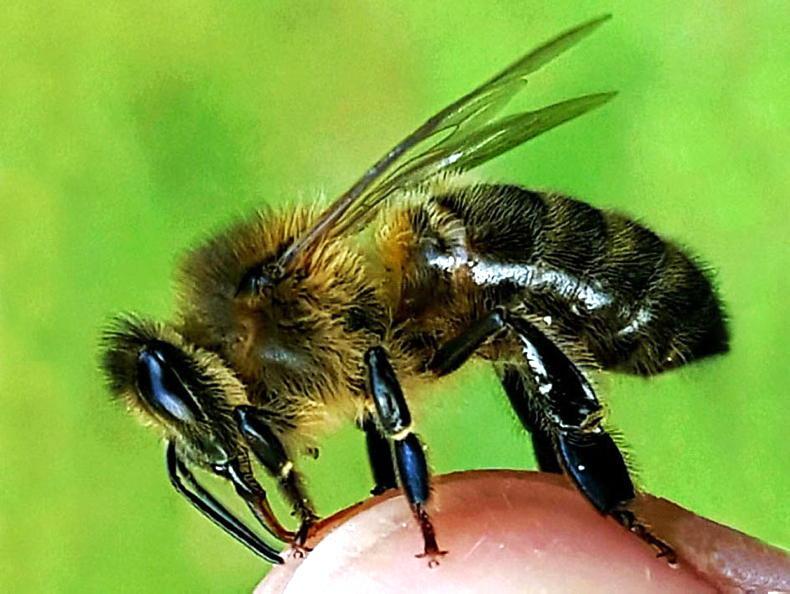
While most types of bees must be treated chemically several times a year to survive mite attacks, purebred Apis mellifera mellifera honeybees with unique Irish genotypes remain healthy without treatment.
Bees are crucial pollinators of crops and flowers, but they are under threat from climate change and habitat destruction, with three of Ireland’s bee species becoming extinct in the past 80 years and many others endangered.
If you find a feral beehive on your land, you can email nuigbeeresearch@gmail.com, call 091 494490 or visit the Bee Genes Facebook page to report it.
Register for free to read this story and our free stories.
This content is available to digital subscribers and loyalty code users only. Sign in to your account, use the code or subscribe to get unlimited access.
The reader loyalty code gives you full access to the site from when you enter it until the following Wednesday at 9pm. Find your unique code on the back page of Irish Country Living every week.
CODE ACCEPTED
You have full access to the site until next Wednesday at 9pm.
CODE NOT VALID
Please try again or contact support.
The team of scientists from NUI Galway is calling on members of the public to report sightings of wild beehives. They say those are most likely to be found in old abandoned houses and castles, outbuildings, residential houses and woodlands.
It is not currently clear whether pure native Irish honey bees still exist in Ireland after decades of mixing with subspecies imported from Europe. “If they do exist, then their gene pool may well prove important in the fight against the varroa mite which is destroying hives all over the world,” the scientists said.
Genotype
While most types of bees must be treated chemically several times a year to survive mite attacks, purebred Apis mellifera mellifera honeybees with unique Irish genotypes remain healthy without treatment.
Bees are crucial pollinators of crops and flowers, but they are under threat from climate change and habitat destruction, with three of Ireland’s bee species becoming extinct in the past 80 years and many others endangered.
If you find a feral beehive on your land, you can email nuigbeeresearch@gmail.com, call 091 494490 or visit the Bee Genes Facebook page to report it.
If you would like to speak to a member of our team, please call us on 01-4199525.
Link sent to your email address
We have sent an email to your address. Please click on the link in this email to reset your password. If you can't find it in your inbox, please check your spam folder. If you can't find the email, please call us on 01-4199525.
ENTER YOUR LOYALTY CODE:
The reader loyalty code gives you full access to the site from when you enter it until the following Wednesday at 9pm. Find your unique code on the back page of Irish Country Living every week.








SHARING OPTIONS