The Teagasc Specialist report, entitled Tillage Crops Report, released this week, highlighted the threat posed by grass weeds to Irish farmers, and emphasised the increased danger of blackgrass in crops.
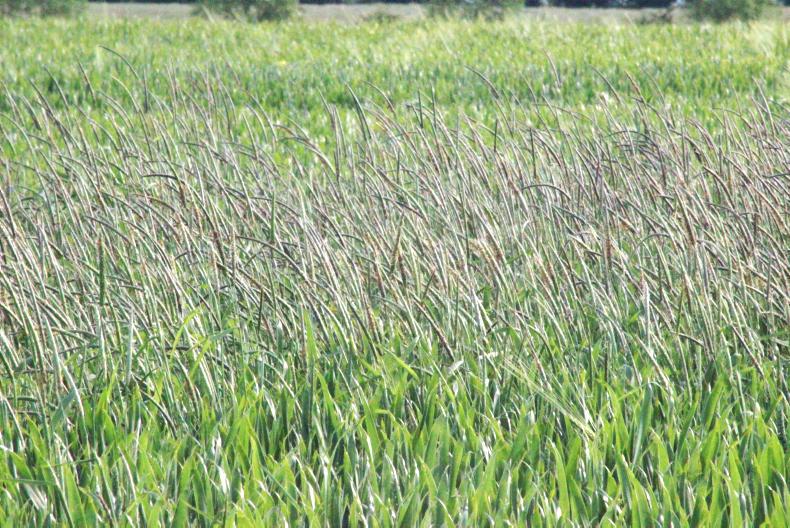
Blackgrass (Alopecurus myosuroides), is also known as slender fox tail, which describes its general shape. The heads will often take on a dark purple to black colour and this is what gives it its most-used name.
The plant mainly germinates in autumn, but individuals can also germinate in spring.
ADVERTISEMENT
By the time you see the heads, you have missed any potential selective control opportunity by six to eight months, but you should seriously consider removing infested areas to help prevent seed return.
The report, which was assembled by the specialist team at Teagasc, encouraged farmers to implement a grass weed control plan and to carefully monitor the situation.
Teagasc will host a series of septoria workshops in early July.
These will address emerging septoria resistance issues and the best ways to address season-long control.
This content is available to digital subscribers and loyalty code users only. Sign in to your account, use the code or subscribe to get unlimited access.
The reader loyalty code gives you full access to the site from when you enter it until the following Wednesday at 9pm. Find your unique code on the back page of Irish Country Living every week.
CODE ACCEPTED
You have full access to the site until next Wednesday at 9pm.
CODE NOT VALID
Please try again or contact support.
The Teagasc Specialist report, entitled Tillage Crops Report, released this week, highlighted the threat posed by grass weeds to Irish farmers, and emphasised the increased danger of blackgrass in crops.
Blackgrass (Alopecurus myosuroides), is also known as slender fox tail, which describes its general shape. The heads will often take on a dark purple to black colour and this is what gives it its most-used name.
The plant mainly germinates in autumn, but individuals can also germinate in spring.
By the time you see the heads, you have missed any potential selective control opportunity by six to eight months, but you should seriously consider removing infested areas to help prevent seed return.
The report, which was assembled by the specialist team at Teagasc, encouraged farmers to implement a grass weed control plan and to carefully monitor the situation.
Teagasc will host a series of septoria workshops in early July.
These will address emerging septoria resistance issues and the best ways to address season-long control.
If you would like to speak to a member of our team, please call us on 01-4199525.
Link sent to your email address
We have sent an email to your address. Please click on the link in this email to reset your password. If you can't find it in your inbox, please check your spam folder. If you can't find the email, please call us on 01-4199525.
ENTER YOUR LOYALTY CODE:
The reader loyalty code gives you full access to the site from when you enter it until the following Wednesday at 9pm. Find your unique code on the back page of Irish Country Living every week.





SHARING OPTIONS