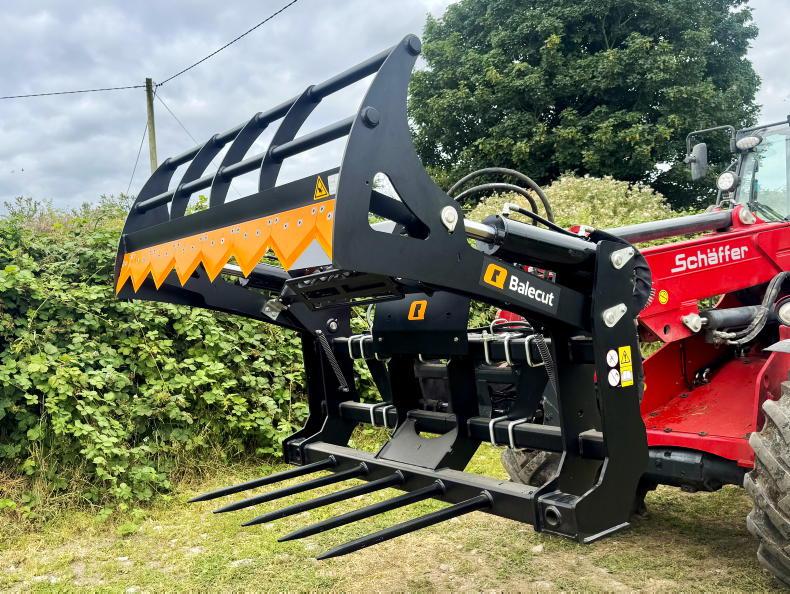
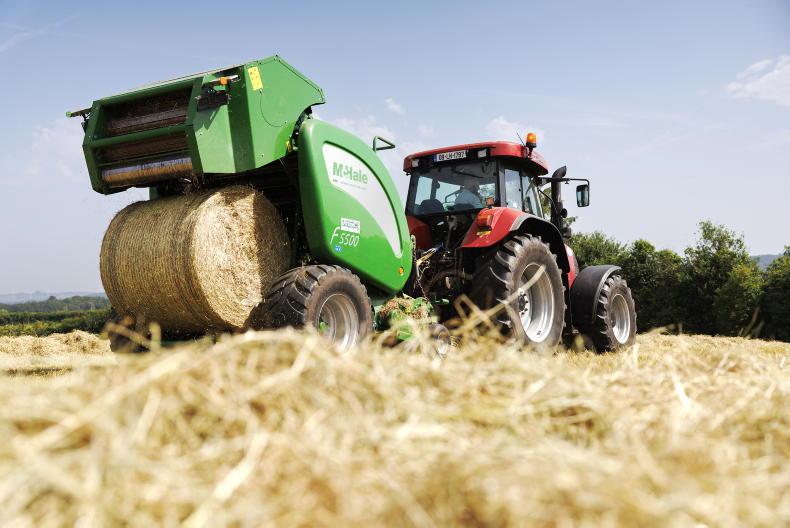
From small suckler farmers right up to large dairy farms, round bales of silage are ubiquitous across the Irish landscape. They’re a great way to preserve silage either on a small or large scale. They are used to bring grazing rotations back into line by “taking out” a strong paddock and feeding stock in the back-end of the year when opening a pit of silage is not needed or when grazing is getting tight.
Alternative solutions
Generally, a front loader or loading shovel is used to feed these but some companies out there have come up with alternative solutions.
ADVERTISEMENT
Hustler SL350
New Zealand company Hustler manufactured the SL350 bale feeder. It is available through its Irish agent, Johnston Farm Equipment, in Longford. The Hustler is designed to handle either round or square bales of silage, hay, haylage or straw. It’s a machine that can be operated on a three-point linkage or on the front loader.
The machine is made up of two main parts, the bale spike and the bale cradle. The key point of this machine is that the bale can be loaded on to the bale cradle without having to detach the machine from the three-point linkage. A simple spring-loaded latch releases the built-in bale spike that slots neatly into the underside of the bale cradle. When it comes to loading a bale, the operator pulls the latch, drives out exposing the bale spike, loads a new bale into the bale cradle and returns the spike into the slots under the cradle. The dog-clutch on the cradle then re-engages with the drive motor on the spike and work can recommence.
Lining up the spikes is made easier thanks to one being shorter than the other. To unravel the bale, a single hydraulic valve is used to drive the hydraulic motor that turns the chain upon which the bales sits. Spikes on the crossbars grab the bale and rotate it to feed either the left- or right-hand side, depending on preference.
Kane O’Connor of Johnston Farm Equipment said: “The machine can handle both round and square bales thanks to its 12,000lb galvanised chain. PVC in the floor means you can leave a bale sitting in it and it won’t rust either. Any time we demonstrate this machine we sell it as they’re so simple and easy to use plus they make life a lot easier for the farmer. A small 60hp or 70hp tractor can easily handle it due to its light weight.”
Four bearings require infrequent greasing which is the total amount of maintenance required. The price for the SL350 is €5,900 including VAT. Other companies have realised the benefits of this system and have also turned their engineering skills to making similar machines.
Register for free to read this story and our free stories.
This content is available to digital subscribers and loyalty code users only. Sign in to your account, use the code or subscribe to get unlimited access.
The reader loyalty code gives you full access to the site from when you enter it until the following Wednesday at 9pm. Find your unique code on the back page of Irish Country Living every week.
CODE ACCEPTED
You have full access to the site until next Wednesday at 9pm.
CODE NOT VALID
Please try again or contact support.
From small suckler farmers right up to large dairy farms, round bales of silage are ubiquitous across the Irish landscape. They’re a great way to preserve silage either on a small or large scale. They are used to bring grazing rotations back into line by “taking out” a strong paddock and feeding stock in the back-end of the year when opening a pit of silage is not needed or when grazing is getting tight.
Alternative solutions
Generally, a front loader or loading shovel is used to feed these but some companies out there have come up with alternative solutions.
Hustler SL350
New Zealand company Hustler manufactured the SL350 bale feeder. It is available through its Irish agent, Johnston Farm Equipment, in Longford. The Hustler is designed to handle either round or square bales of silage, hay, haylage or straw. It’s a machine that can be operated on a three-point linkage or on the front loader.
The machine is made up of two main parts, the bale spike and the bale cradle. The key point of this machine is that the bale can be loaded on to the bale cradle without having to detach the machine from the three-point linkage. A simple spring-loaded latch releases the built-in bale spike that slots neatly into the underside of the bale cradle. When it comes to loading a bale, the operator pulls the latch, drives out exposing the bale spike, loads a new bale into the bale cradle and returns the spike into the slots under the cradle. The dog-clutch on the cradle then re-engages with the drive motor on the spike and work can recommence.
Lining up the spikes is made easier thanks to one being shorter than the other. To unravel the bale, a single hydraulic valve is used to drive the hydraulic motor that turns the chain upon which the bales sits. Spikes on the crossbars grab the bale and rotate it to feed either the left- or right-hand side, depending on preference.
Kane O’Connor of Johnston Farm Equipment said: “The machine can handle both round and square bales thanks to its 12,000lb galvanised chain. PVC in the floor means you can leave a bale sitting in it and it won’t rust either. Any time we demonstrate this machine we sell it as they’re so simple and easy to use plus they make life a lot easier for the farmer. A small 60hp or 70hp tractor can easily handle it due to its light weight.”
Four bearings require infrequent greasing which is the total amount of maintenance required. The price for the SL350 is €5,900 including VAT. Other companies have realised the benefits of this system and have also turned their engineering skills to making similar machines.
If you would like to speak to a member of our team, please call us on 01-4199525.
Link sent to your email address
We have sent an email to your address. Please click on the link in this email to reset your password. If you can't find it in your inbox, please check your spam folder. If you can't find the email, please call us on 01-4199525.
ENTER YOUR LOYALTY CODE:
The reader loyalty code gives you full access to the site from when you enter it until the following Wednesday at 9pm. Find your unique code on the back page of Irish Country Living every week.
SHARING OPTIONS