




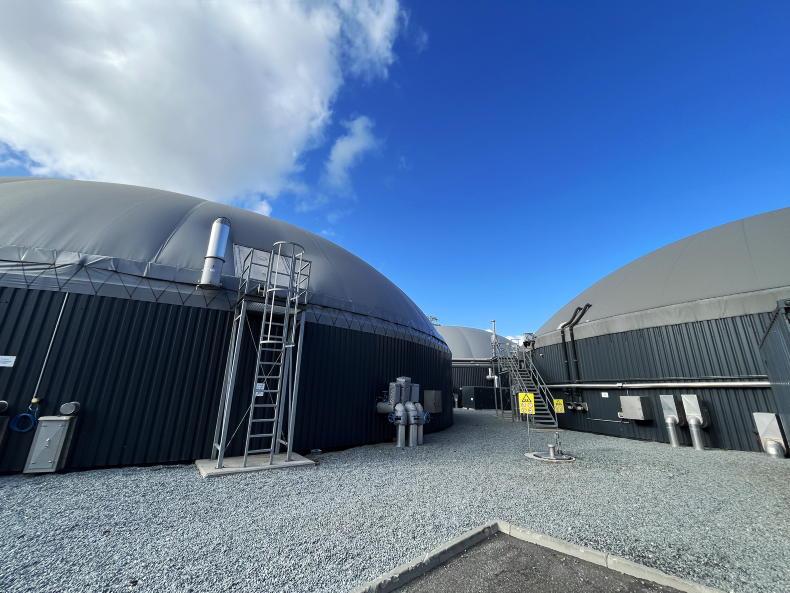
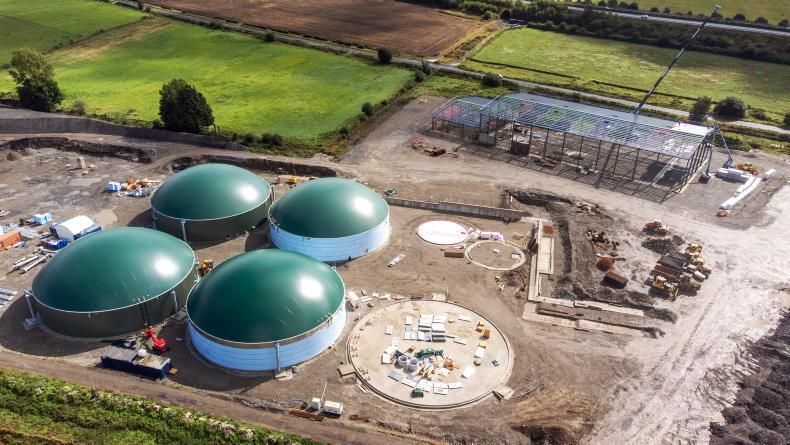
Some 227 agri-led anaerobic digestor (AD) plants will be needed by 2030, if Gas Networks Ireland’s Vision 2050 plan is to be realised, a KPMG report has found.
These plants would hoover up 4.8m tonnes of slurry and 5.8m of additional grass silage, annually.
Vision 2050 reports that a decarbonised gas network can offset national emissions, including agriculture, by one third by 2050. It aims to replace 12% of current natural gas consumption with low-carbon, renewable gas, produced largely from agricultural waste and grass.
“Ireland can save 2.6m tonnes of CO2 per annum, supporting our decarbonisation targets and creating over 3,000 jobs for rural Ireland by 2030,” PJ McCarthy chair of the Renewable Gas Forum Ireland has said.
gas biomethane is the only viable and available alternative for many businesses to decarbonise their processes without impacting their overall operations
Investment
Along with the 227 AD plants, the report recommends that a number of larger food and commercial waste plants will need to be built by 2030, requiring a capital investment of about €1.5bn.
The proposed ramp-up is in line with Northern Ireland, where in the region of 60 AD plants were built in the first five years of the industry being developed.
Russell Smyth, partner at KPMG, said that a localised commercial model and dedicated funding is recommended to support a growing and maturing industry.
“If implemented, an agricultural industry-led biomethane sector has the ability to align with a large number of Government policies and objectives including decarbonisation, the Government’s Action Plan for Rural Development, the Nitrates Action Plan and DAFM’s Code of Good Agricultural Practice,” he said.
The report said that a robust AD bio-methane industry will provide:
Within the food and pharma industries, renewable gas biomethane is the only viable and available alternative for many businesses to decarbonise their processes without impacting their overall operations, the report states.



SHARING OPTIONS