



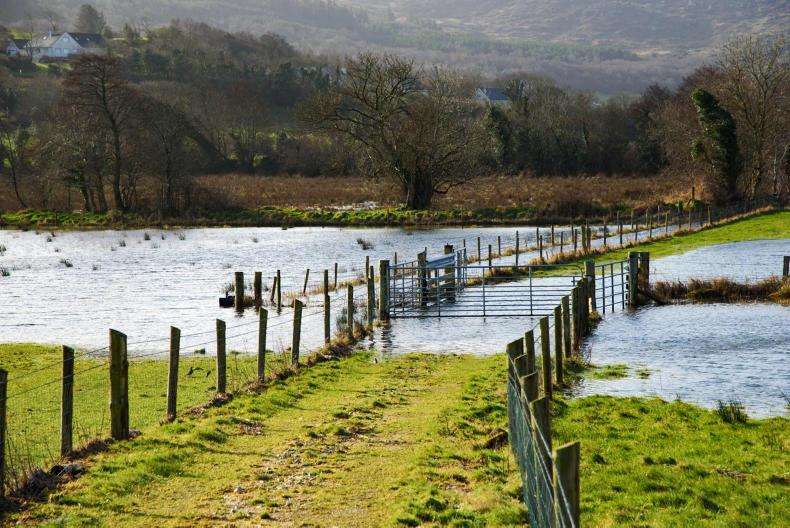
Rainfall of between 20mm and 30mm is expected in Munster, Connacht and Donegal on Friday and Saturday, as storm Jorge tracks near Ireland.
Up to 50mm of rain is forecast in mountainous areas of the country.
Teagasc’s Dermot Forristal has some key advice for farmers operating machinery in floods:
Machine wear and tear
Operating machinery in floods can risk damaging the machine or increasing wear and tear, Forristal said. He warned that engine air intakes must not take in any water.
“Cars are most vulnerable, with 4x4 vehicles somewhat better and tractors usually best in this regard. It depends on the height of the air intake and if the water is deflected towards the intake.
“If the water level is below the level of front and rear axle seals, then there should be no adverse effects to the axles or transmission.
“Continuous use of tractors in deep floods where the water is over the axle seals could cause problems, as these seals may not necessarily keep the water out. Water could damage seals and bearings and even mix with transmission oil in some situations,” he said.
In very deep water conditions, he warned that it is possible to damage electronic systems in modern tractors.
“While the main computer processors should be protected from water, these systems are extremely complex, with sensors and wiring located in many parts of the tractor – all prone to water damage in extreme flood conditions.”
Take photos of flooding
In some farmyards, there may be potential to avoid the worst of the flooding at a future date; this can be facilitated by recording flood levels now.
Forristal said the best option is to mark the heights to where the flood reaches or to record by taking photos on your phone and storing these photos carefully.
“These records may prove useful in future planning. Where the flooding is caused by running water, there may be an opportunity to redirect that waterflow to protect the farmyard, animal housing and feed storage areas.
“Where the flooding is as a result of general high water levels, in some cases it may be possible to relocate bale storage areas or the siting of new buildings. It may even be possible to have a protective bank of soil put in place to offer limited protection to some flooding,” he advised.



SHARING OPTIONS