




A feed additive to cut methane from cattle in indoor beef systems has been proven to reduce the greenhouse gas by 28%.
The significant finding comes from the project ‘Meth-Abate’ which is supported by €1.248m of funding from the Department of Agriculture and the Department of Agriculture, Environment and Rural Affairs (DAERA) in Northern Ireland.
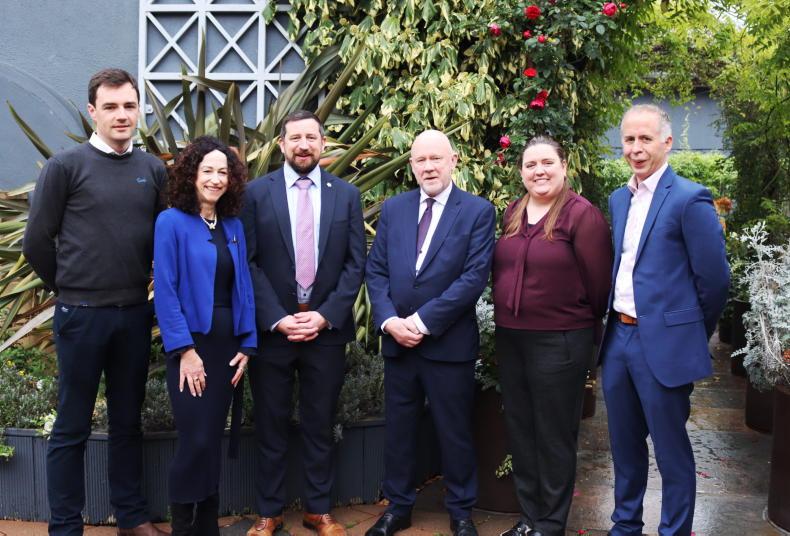
The collaborative research is led by Professor Sinead Waters in Teagasc and Professor Vincent O’Flaherty in University of Galway, co-founder of GlasPort Bio. It’s understood the additive in question was developed and will be rolled out by the Galway-based company.
The researchers' Northern Irish partners include Queen’s University Belfast and the Agri-Food and Biosciences Institute (AFBI).
Additive
The project, which began in 2019, has demonstrated that the new ruminant feed additive can reduce methane emissions by 28% in indoor systems in beef cattle.

The research is now progressing to further validate this and to investigate the potential for it to be formulated in pellet form or as a bolus for longer-lasting effects.
The aim of this further work will be to facilitate application of the additive in a pasture-based production system.
The research also found:
Further research and demonstration trials are ongoing to test its use in Irish systems.
Findings
Minister for Agriculture Charlie McConalogue and Minister of State Martin Heydon announced the findings ahead of the upcoming Agriculture and Climate Change – Science into Action conference on 15 November at the Aviva Stadium.
Minister McConalogue said: “Suffice to say this research demonstrating the potential of feed and manure additives to reduce emissions from livestock farming is very welcome. Further research, funded by my department, is underway to move this technology from being successful in an indoor system to being successful and utilisable in our world-renowned outdoor pasture-based system."

“I will continue to support science that brings forward effective solutions for farmers, and our upcoming Agriculture and Climate Change conference will be a valuable opportunity to discuss both the science that is policy and implementation ready but also where emerging science could lead us in the future.”
Co-ordinator of the Meth-Abate project, Prof Sinead Waters, said: “The ‘Meth-Abate’ team are delighted to report that this project has facilitated the evaluation and development of promising feed and manure additives. We have demonstrated that dietary supplementation in an Irish indoor beef system can significantly reduce methane emissions from several feed additives.
“While research continues the development of the effectiveness of these additives for pasture-based systems, we are excited at the preliminary results coming from our work.”



SHARING OPTIONS