



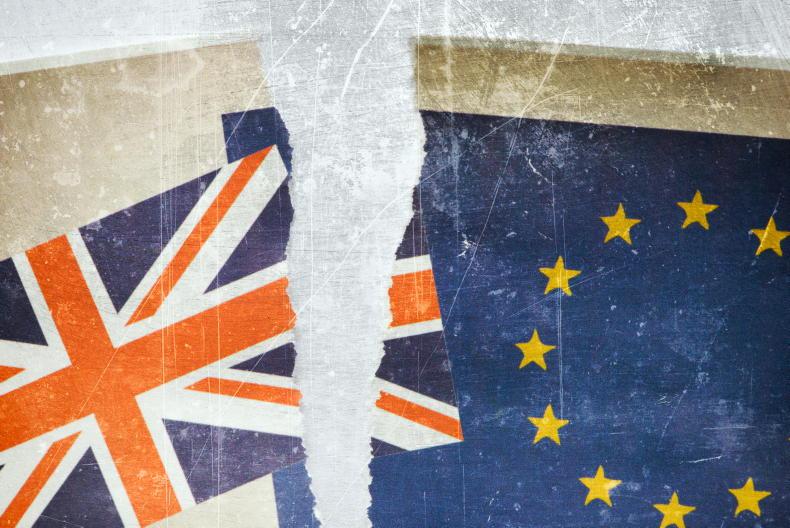
This coming Tuesday marks a decade since the UK voted to leave the European Union.
The negotiation for their withdrawal went on for several years, and it was on 1 January 2021 that the UK ceased being a member of the Single Market and Customs Union.
At the time it was considered the seismic event of our lifetime, but since then we have had a global pandemic, a prolonged war in Europe and more recently, a major conflict in the Middle East.
The UK departure from the EU was a major concern for Irish farmers and agri food exporters.
In the end, the negotiation of a tariff-free deal on all trade between the EU and UK meant the worst consequences of penal tariffs on Irish exports to the UK was avoided. However, Brexit has and will continue to cost Irish farmers as the UK pursues its own separate trade policy.
The implications of this are now beginning to impact our beef exports as competition from New Zealand and Australia increases. Farmers and the agri-food industry in Northern Ireland have had to navigate the difficult balancing act of operating in the single market of both the UK and EU, and needless to say it hasn’t been without its problems, the most obvious for farmers has been access to veterinary medicines.
In UK politics, there is now considerable talk of a reset of relations and a fair bit of buyers’ remorse with Brexit. Negotiations are underway on a veterinary agreement that would remove many of the issues in relation to animal and plant movements, and there may be further convergence in the years ahead.
Such a move would be good news for Irish agriculture, though of course nothing will be as good as the UK being part of the EU.


SHARING OPTIONS