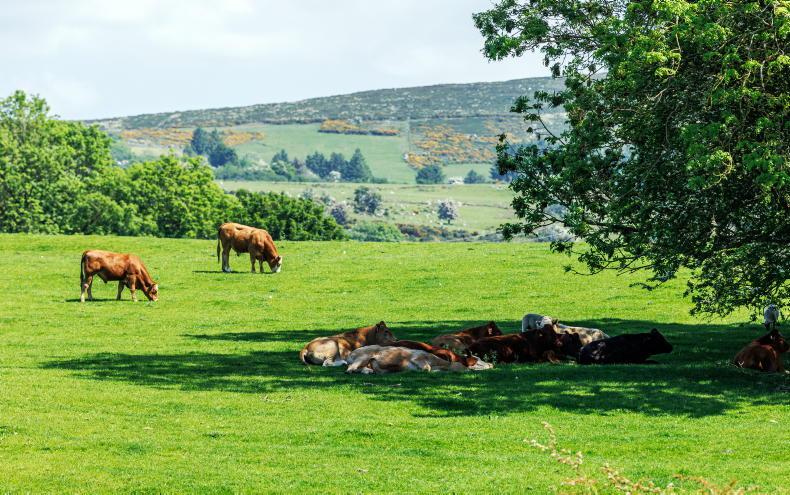
Farmers and pet owners are being advised to protect their animals and themselves during the current high temperatures by the Minister for Agriculture Martin Heydon and Minister of State with responsibility for Forestry, Farm Safety and Horticulture, Niall Collins.
The ministers are also urging people to be vigilant to fire as an orange fire risk warning is in place.
“Hot weather can pose a risk to pets and livestock, and it is vital to take action to protect animals in these conditions. Having adequate shelter or shade and ensuring a plentiful supply of drinking water are particularly important to protect animals from heatstroke and discomfort,” Minister Heydon said.
Minister Collins also warned that arising from the current high temperatures, a high fire risk exists in all areas where dead grasses and dry shrubs such as heather and gorse exist.
High-risk areas
“Fire lines, fire plans, fire suppression equipment should be made ready. I would also remind the public to cooperate with all fire safety requirements and not light open fires or barbecues in high-risk areas. Rural users should cooperate with all requests regarding fire safety and ensure vehicles do not to impede access by emergency services.”
When outside, farmers should wear light, loose-fitting clothes that cover the skin, alongside a wide-brimmed hat and sunglasses
He advised farmers and outdoor workers to protect themselves in hot weather and be sun smart.
“Farmers are the most important asset on any farm. Farmers and outdoor workers must stay safe in the sun by avoiding the intense heat during peak hours from 11am to 3pm.”
“When outside, farmers should wear light, loose-fitting clothes that cover the skin, alongside a wide-brimmed hat and sunglasses. Any exposed skin should be protected by regularly applying water-resistant sunscreen, using at least factor 30+ for adults and 50+ for children.
"Finally, always stay in the shade whenever possible and keep well-hydrated by drinking plenty of fluids throughout the day.”
1. Ensure plentiful supply of drinking water
2. Ensure access to suitable shade or shelter
3. Minimise handling and transport
4. Intensively housed species (pigs and poultry) may need additional checks.
Reduce stocking densities where necessary to increase air space and flow and to reduce the effect of heat generated by the animals themselves.
5. Monitor all livestock closely for health issues or heat stress
Heat stress
Signs of heat stress include faster breathing or panting; loss of appetite; increased water intake; drooling; listlessness or lethargy. In severe cases, animals may become unconscious.
If you suspect an animal may be heat stressed, it is vital to act quickly.
Steps to manage heat stressed animals include moving them to shade or shelter; offering cool water; using sprinklers for cattle, pigs and horses, or allow the animals to stand in cool water; increase ventilation for housed species such as pigs and poultry; and reduce the stocking density to allow animals to lie out.
If there is no improvement, seek veterinary assistance without delay.