



Farmers were only successful in 34% of challenges to scheme penalty or payment eligibility decisions by the Department of Agriculture closed by the Agricultural Appeals Office in 2025.
That is the joint-lowest proportion of successful challenges seen since 2004.
The overall number of appeals received in 2025 was 417, the lowest since 2007 and a 14% reduction in the number seen in 2024.
It was significantly below the recent peak of 809 in 2021, and less than half the all-time high of 1,036 submitted in 2011.
The appeals office said the drop in the number of challenges to Department of Agriculture decisions is in line with the pattern seen in recent years and is likely linked to “a greater awareness of the vital importance of compliance with the terms and conditions of schemes”.
The office also noted that the move to online applications has resulted in the identification and correction of errors at an early stage. The office started the year with 326 appeals open, it processed 488 during the year and ended 2025 with 255 open appeals.
Only 98 appeals were closed within the office’s target three-month timeframe.
Largest number
Galway was the county with the largest number of appeals, while SCEP was the most-appealed scheme with 142 challenges to Department decisions. BISS saw 65 appeals, while TAMS had 61.
Under the Agricultural Appeals (amendment) Act 2024, an independent agricultural review panel, consisting of seven members with two of them from a farming background, was to be established to review decisions made by the appeals office.
In the annual report for 2025, the office said that work on the regulation continued throughout 2025 and “is at an advanced stage”.
The appeals office included some examples of the decisions made in 2025, which highlight the importance of understanding the terms and conditions of schemes, and following those to the letter.
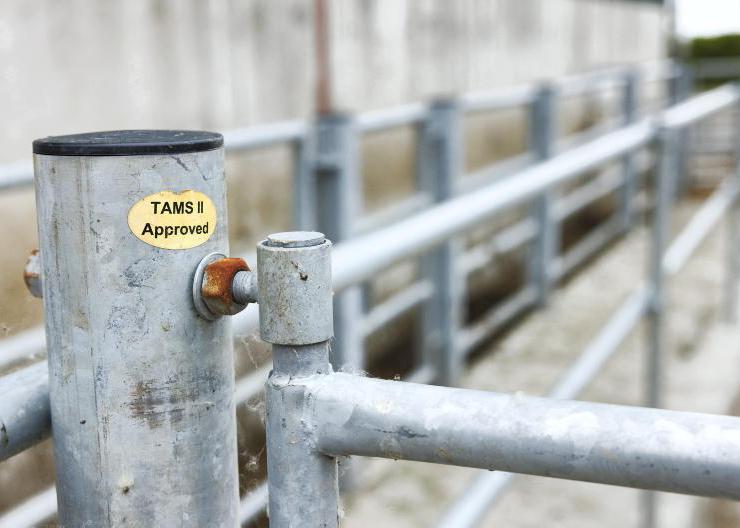
In one example, a farmer’s TAMS application was disallowed as the payment for the works undertaken came from a joint account held with the farmer’s spouse who was also farming in their own right.
The applicant said their spouse was named on the joint account to facilitate day-to-day management of the household.
The farming operation of the applicant is kept completely separate from the operation of their spouse with two sets of tax returns submitted to Revenue.
This appeal failed as the terms and conditions of the TAMS scheme state that payment for works cannot be issued from a joint account where a spouse is farming in their own right.
Another TAMS appeal failed as the farmer applied for the grant under their own name and herd number, but paid for the works was issued from a company in which the applicant is a director. This was considered to be payment by a third party, which is also in breach of the terms and conditions of the scheme.
Another farmer failed to register his well water extraction with the EPA which exceeded the limit of 25 m3 per day.
The farmer was considered non-compliant under statutory management requirements. The farmer said there was little communication of the limit from the Department and it had not been highlighted in the Irish Farmers Journal or elsewhere.
The appeal failed as it was found that the rules are stated in the handbook for conditionality requirements, publicised “in various media.”
The Irish Farmers Journal reported on the need to register with the EPA when extracting more than 25,000 litres per day of water in 2018, 2019, 2022, 2023 and 2025.




SHARING OPTIONS