



Ireland continues to be in a high-risk period for the spread of the bluetongue virus as the warm weather continues, according to the Department of Agriculture.
A period of warm weather where the average daily temperature is greater than 12°C is required for the replication of the bluetongue virus within the midge – and therefore for transmission to occur to ruminants like cattle and sheep.
“It remains too early to understand what the clinical picture and effects of bluetongue will be and the disease picture has had different outcomes in different countries to date,” a Department spokesperson told the Irish Farmers Journal.
To date, bluetongue has been detected in herds in counties Wexford, Wicklow, Louth, Laois, Monaghan, Kildare, Cork and Tipperary.
Tipperary is the most recent county to be identified, first reported in the Department's third bluetongue update in May.
No further counties have been identified since, as reflected in the June bluetongue update, according to the Department.
“All cases detected in 2026 to date, appear to relate to [a] suspected autumn-2025 incursion,” a Department spokesperson said.
Testing
In 2026, a total of approximately 36,000 samples were tested for bluetongue across the Department's laboratory network, comprising approximately 26,236 samples at the blood testing laboratory in Cork and 10,247 tests at the central veterinary research laboratory in Backweston.
The tests carried out at the central veterinary research laboratory comprised serological (ELISA) testing and confirmatory PCR testing, including post-mortem samples.
ELISA testing comprises the majority of the Department's testing and a positive ELISA result does not confirm active infection, as it can test positive for antibodies due to vaccination or previous exposure.
Confirmation of infection is carried out by PCR. Therefore, while a number of antibody-positive results have been recorded, PCR-confirmed detections remain limited and relate to previously identified cases.
Vaccination
The Department does not hold figures on the number of individual animals vaccinated, a spokesperson said.
“In terms of supply, approximately 5.78 million doses of BTV-3 vaccine have been licensed for import into Ireland to date.
“Farmers have been very responsive to the threat and there has been good uptake of BTV3 vaccination.”
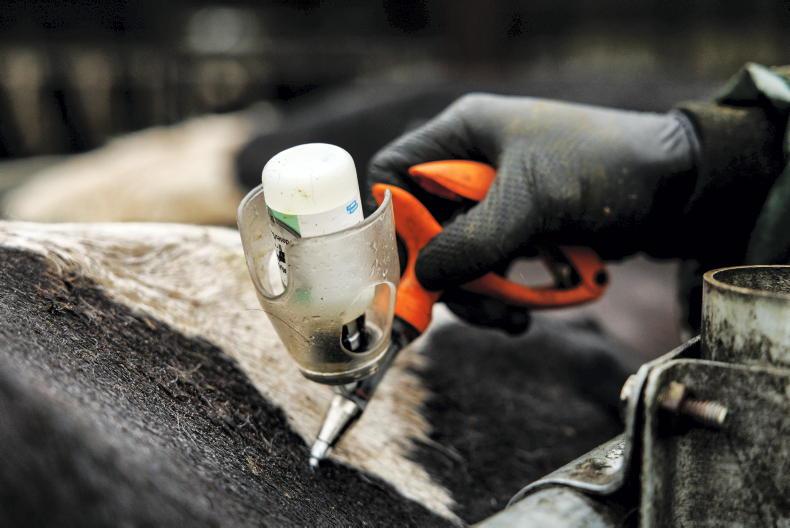
The spokesperson said that vaccination remained an effective means of mitigating the risk of bluetongue and advised that it was not too late to vaccinate.
“Herd owners who have not yet had an opportunity to vaccinate should consult their private veterinary practitioner as to whether vaccination is right for them.”
Bluetongue was recategorised as a D+E disease on 15 July at EU level.
When questioned if this will change how the Department reports on the disease, the spokesperson said: “The categorisation of bluetongue virus at EU level is a matter for the European Commission and the Department is engaging with the Commission and other member states on the arrangements for implementation.
“This has no impact on the Department's approach to managing the challenge of bluetongue in Ireland, and the status quo in relation to trade of bluetongue-susceptible livestock remains the same.”



SHARING OPTIONS