



The on-farm effects of the 22% CAP cut were laid bare on the Irish Farmers Association stand at the National Ploughing championships this week, where they launched their CAP hub.
The figures are stark. The EU Commission’s proposal cuts Ireland’s ring-fenced, post-2027 CAP budget from €10.7 billion to €8.16 billion; a €2.54 billion reduction, roughly translating into a cut of somewhere between 22-24%.
It means at current budget levels, financial supports may be closer to the minimum €130/ha level than the €240/ha that was on the table for the new Degressive Area-Based Income Support (DABIS) – the successor and replacement for BISS, CRISS and Young Farmer Top-Up, unless additional funding is secured.
At farm level nationally, the IFA says that this would mean about €305 million less every year.
Delving a little deeper into the figures, farmers can input their current farm size and entitlement value and the CAP payment calculator will estimate what your future CAP payment could look like if the current 22-24% cut remains. Taking Cork as an example, the IFA calculations show that under the €130/ha flat rate scenario, Co Cork would lose out to the tune of €39 million each year for the years 2028-2034 or €273 million over the next lifetime of the CAP.
On a 40 ha farm, the farm payment would drop from €8,439 to €5,148, a drop in family farm income of €3,291/year or just over €23,000 over the seven years of the next CAP.
It doesn’t matter what county you live in, the cuts are severe and will put huge pressure on our most vulnerable farming sectors.
Long play
Farming is a long play game. Breeding decisions made to breed replacement heifers on a farm this spring won’t come to fruition until that heifer calves down in 2029 for the first time.
So, farmers need some form of sight on where we are going in relation to CAP reform. At the moment they are completely in the dark, with mixed messages coming from both the EU and our own Government.
Earlier this year, Minister for Agriculture Martin Heydon said that a deal on the Multi-annual Financial Framework (MFF) would be difficult to achieve within the term of the Irish presidency of the EU.
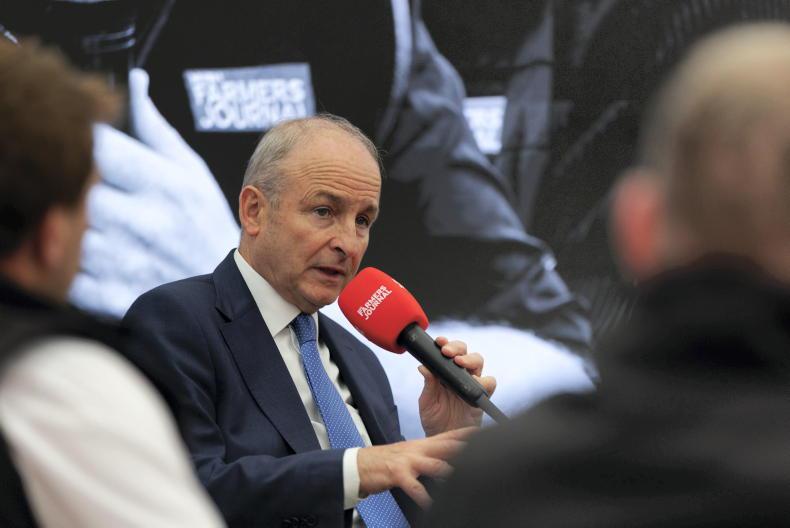
In an alternative view, the Taoiseach Micheál Martin, speaking on the Irish Farmers Journal stand on Tuesday at the National Ploughing Championships, pointed to the need for a big push towards getting a deal done before the end of the year.
He spoke about a number of national elections across Europe making it very difficult to achieve a deal in 2027.
We have a huge issue with farm succession in Ireland, with the average age of farmers now nearly 60 and just 4% under the age of 35. It’s a similar situation across Europe but could you blame a young person for not looking at a career in agriculture given the current volatility in farm incomes? If we fix the income issue on farms, the succession issue will correct itself very quickly.
The European Commissioner for Agriculture and Food Christophe Hansen, speaking on Today with David McCullough on RTE Radio 1 this week, agreed with the IFA president Francie Gorman that a budget of €500 billion was needed to fund the next CAP, €200 billion more than is currently on the table.
Commissioner Hansen placed the onus on the countries that want an increased CAP budget to essentially shout louder when it comes to an increased CAP portion of the MFF budget.
His remarks pose the question: is the Government shouting loud enough when it comes to a well-funded CAP?
We’ve seen a number of references over the last few months to Ireland being an honest broker when it comes to negotiations around the budget but you might ask the question: who is hammering the table when it comes to fighting for the best outcome for Ireland?




SHARING OPTIONS