The current round of CAP reform looks to replace Pillar 1 income supports averaging around €268/ha, when eco schemes are included, with a single Degressive Area-based Income Support (DABIS) payment.
This DABIS is proposed to pay an average rate of €130-240/ha over 2028 to 2034.
It would have a baseline rate and top ups for young farmers and other categories of farmers to be decided by each country.
With the CAP budget and key payment decision still to be decided, it remains impossible to accurately judge how the reform could impact individual farms as a ringfenced budget cut looms. However, crunching figures based on assumptions around these decisions can lay the full extent of the farm viability threat bare.
Three farm scenarios are modelled below assuming that a 24% budget cut will impact all farm payments. Ireland must decide what payment rate DABIS will pay, knowing that maximising it will require cuts to other schemes.
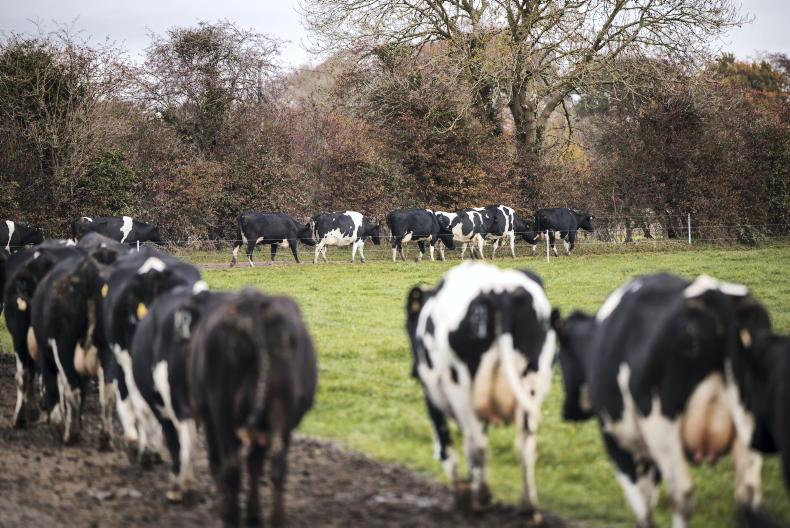
Young dairy farmer John takes over a 50ha dairy farm in 2028 that had BISS entitlements of €285/ha in 2027.
It is assumed that the DABIS rate was set at a baseline of €130/ha nationally and that eco schemes are subsumed into a more onerous annual agri-environmental scheme with measures John decides are not worth completing on the balance of costs and benefits.
It supposes that the young farmer supports provided are a once-off installation aid sum of €35,000 and a DABIS top up of €100/ha.
On qualifying for young farmer supports, the next CAP could pay John a DABIS at €230/ha.
John’s farm ends up a net €2,390 worse off compared to his parents’ last payment year of 2027 when assuming that other supports are kept stable – and that he treats his €35,000 installation aid as a €5,000 annual payment over the CAP’s seven years.
John would need the baseline DABIS payment rate to be set at €177/ha, to receive installation aid of €35,000 and a young farmer top-up of €100/ha for his payments to backfill his farm’s loss of eco scheme payments and the hit of flattening.
However, this €177/ha scenario would see still John effectively using his young farmer supports to plug the income gap left by the changes, rather than using it to invest in the farm.
John’s uncle Bill has a farm equivalent to his (50ha at a €285/ha BISS entitlement value in 2027) but finds himself without a successor in 2028.
Bill does not qualify for young farmer supports and faces a decline of €12,390 in what he can claim from DABIS compared to his 2027 BISS, CRISS and eco scheme payments if DABIS is paid out at €130/ha. If Government prioritised DABIS income supports, setting the baseline at €240/ha nationally, Bill’s payments would still decrease by €6,890 if like Michael, he found the new agri-environmental scheme too onerous to participate in, and he lost the equivalent of his 2027 eco scheme payment.
In this supposed €240/ha scenario, Bill decides to invest in fencing, additional slurry storage and buildings to improve farm efficiency and make up for his lower payments, but finds that as DABIS has been prioritised, the 2028-2034 TAMS scheme has a lower rate of grant aid.
Bill pays an additional €21,000 towards these works himself than he would have received in the previous CAP.
His overall payment, when factoring in lower income supports, an eco scheme equivalent he cannot meet and poorer TAMS offering, is roughly €10,000 per year worse off in 2028-2034.
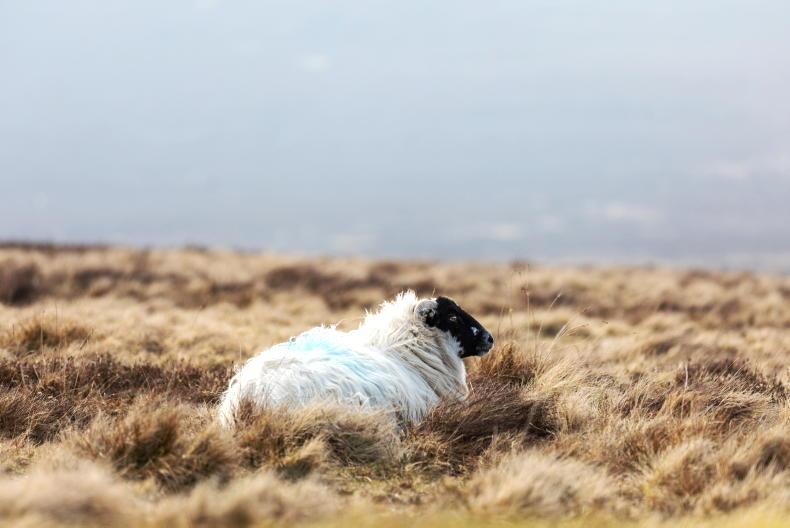
Michael, 50, is an extensive suckler and sheep farmer on designated lands with BISS entitlements worth €148/ha in 2027. This scenario assumes Ireland decided its DABIS should target the lower income beef and sheep sectors with an extra €20/ha and to top up designated land with another €30/ha – up to a maximum of 40ha.
It also makes the big assumption that Michael receives the equivalent of his eco scheme payment in the annual agri-environmental payment that replaces eco schemes due to a low stocking rate action and space for nature.
At a baseline DABIS of €130/ha in 2028, Michael’s payment is €11,100, including top ups, where his BISS and CRISS had been €11,650 in 2027.
The impact of a low DABIS rate on his payments is entirely dependent on assuming there was agreement that farms like his deserved top ups – and that he automatically qualified for the equivalent to his 2027 eco scheme payment.
If the DABIS payment rate was set at the maximum allowable rate of €240/ha, Michael’s payment would be €7,150 higher than his BISS and CRISS was in 2027.
However, to fund a DABIS payment rate averaging €240/ha in the next CAP, funding for the Area of Natural Constraint (ANC) is cut and eco scheme-style payments in the next ACRES are cut. Here, while Michael gains €7,150 in 2028 income supports, the next CAP’s eco scheme equivalent has terms he does not automatically meet costing him €4,700 and his mountain ANC is halved to just €2,000.
The net result is that Michael gains just €450 in total payments, despite the high DABIS and his top ups.