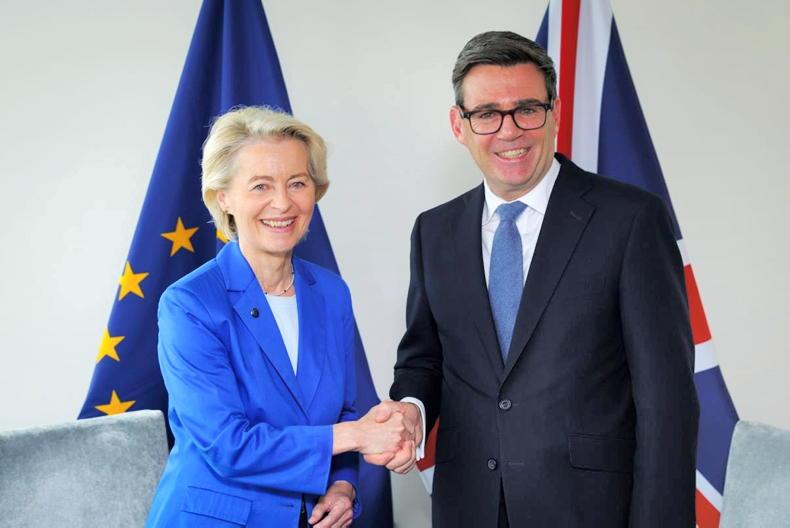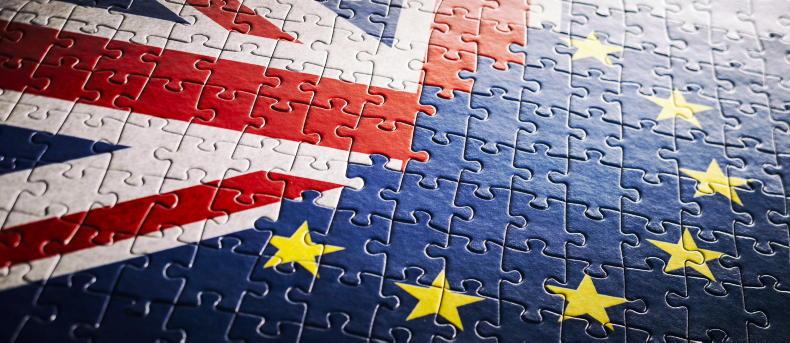
British-EU relations are improving, which we should all welcome and it was a feature of the editorial in Monday’s Irish Times. But the recent moves to ease the process by which British food products can enter the general EU market carry potential problems which should be tackled now so that there is clarity before the critical EU meeting to be held on 20 November.
In all the favourable comment about the progress on easing the bureaucracy, there has been very little mention of the inherent contradiction created in the post-Brexit rush by the British government under the shambolic Boris Johnson to negotiate trade deals with third countries.
The easiest thing to offer was access to the UK food market, but under the existing EU-Brexit deal, the UK is allowed free access to the EU market for UK-produced beef and lamb and for practically all dairy products, but subject to a lot of paperwork and phytosanitary rules. These will be effectively eliminated.
Inevitably, as Australia and New Zealand production continues under its post-Brexit agreement towards totally free access to the UK market, it will undercut UK production on the British market and UK production will be diverted to the EU market. The likely consequences are straight forward.
British food prices will decline as imports from lower-cost countries increase and British produced food exports to mainland Europe will increase. We have already seen a sharp rise in Australian and New Zealand beef exports to the UK displacing, to some extent, Irish product.
This is clearly an anomaly that needs to be tackled. The original UK Brexit deal was a distortion in allowing UK-produced product to be freely exported to the EU, though the administrative processes limited the damage until now.
The latest proposed arrangement needs to recognise the abandonment of the whole principle of community preference as a key plank of food security. Now is the time to either reimpose quantitative limits or at least have minimum import prices on product coming into the UK from Australia/New Zealand. This should form part of the new deal.