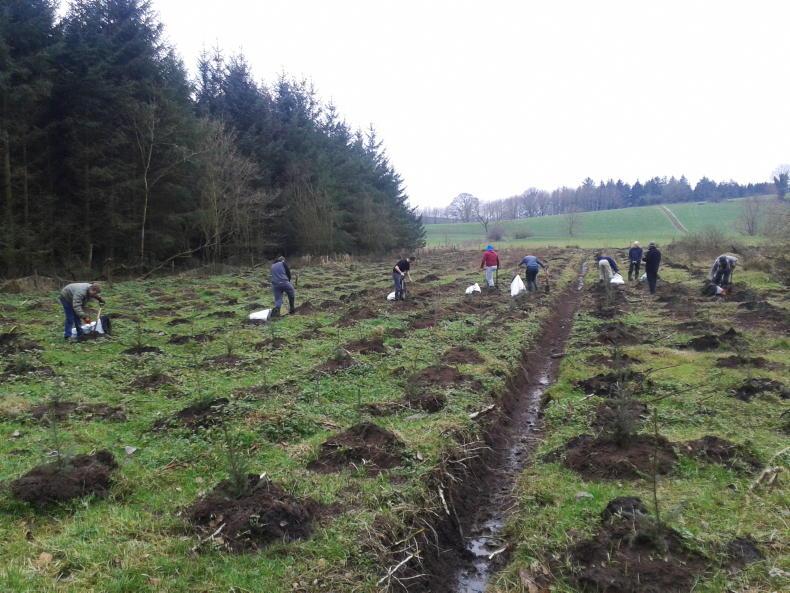
Over 8,000ha of trees could be comfortably be planted on private land each year if a reasonable proportion of the queries received by forestry companies were given the green light, the Social Economic and Environmental Forestry Association of Ireland (SEEFA) claimed.
However, SEEFA pointed out that data from its members showed that just one query in 10 makes it from the initial phone call to trees in the ground.
The latest figures from the Department of Agriculture show that planting levels this year will drop 25% compared to 2025.
While more than 2,500ha of private forestry was planted in 2025, just 1,877ha were planted to the end of October and less than 2,000ha is likely to be in the ground by the end of the year.
Conor Daly of the Forestry Company and SEEFA said the sector’s figures for 2026 were disappointing, but he insisted that landowners are still interested in planting trees.
“The good news here is that there is still huge interest in forestry. The frustration is that we, as an industry, are not able to convert that interest into planted woodland under the current regulations,” Daly said.
“The reality is that if we get 10 enquiries for forestry from landowners, six of those potential applicants won’t get past a computer check because their lands are either in an SAC, and SPA or an NHA. Or the land is in an acid sensitive zone, or in a hen harrier nesting area, or is subject to one of the various other designations,” he explained.
Two more possible applicants will fall due to “site specific factors”, Daly said.
“The lands could be in a high nature value area, or be too rocky, or the peat depth is too high, or the ground is prone to flooding,” he pointed out.
Out of the original 10, just two applications are left at this stage to go into the system, Daly said.
“One of these will inevitably fall out because the owner might change his mind, or a portion of the lands applied for is refused and the farmer decides to pull the entire application,” he maintained.
Daly is adamant that across the forestry sector there are still enough of enquiries being received to plant 8,000ha, which is the national target, but just a fraction of this area is making it through the system.
“The pendulum has swung too far to the environmental side in relation to forestry regulations. And the ironic thing is that nature is not winning as a result. In fact, nature is losing, because half of what we are planting now is native tree species, and we could do more of it if allowed,” he claimed.
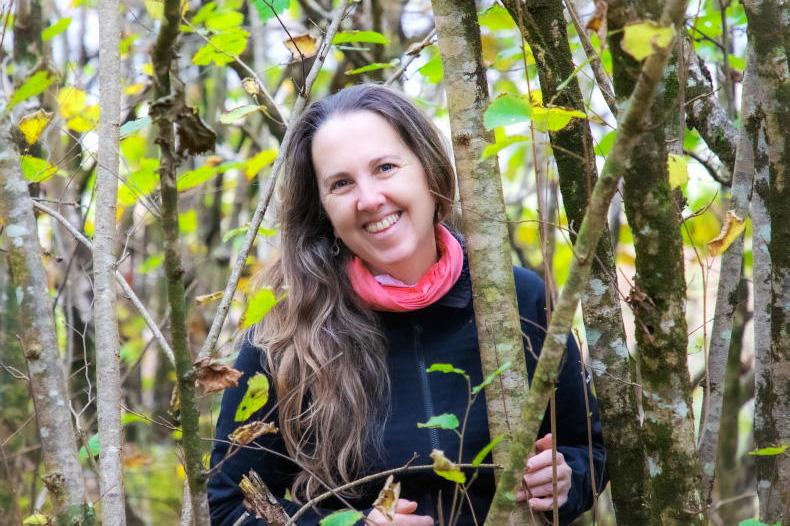
Meanwhile, Nuffield scholar and forester Marina Conway said the requirement for permanent land use change relating to forestry was the “number one obstacle” to the greater uptake of agroforestry in Ireland.
“It’s that psychological barrier around not giving people flexibility about how they manage their land into the future,” Conway told Nuffield Ireland’s conference on Friday last.
Conway, who works with the forestry charity Hometree, set out the need for Ireland to improve the level of tree planting against the looming threat of multi-billion euro climate fines should Ireland fail to meet its agreed carbon emissions targets by the end of the decade.