



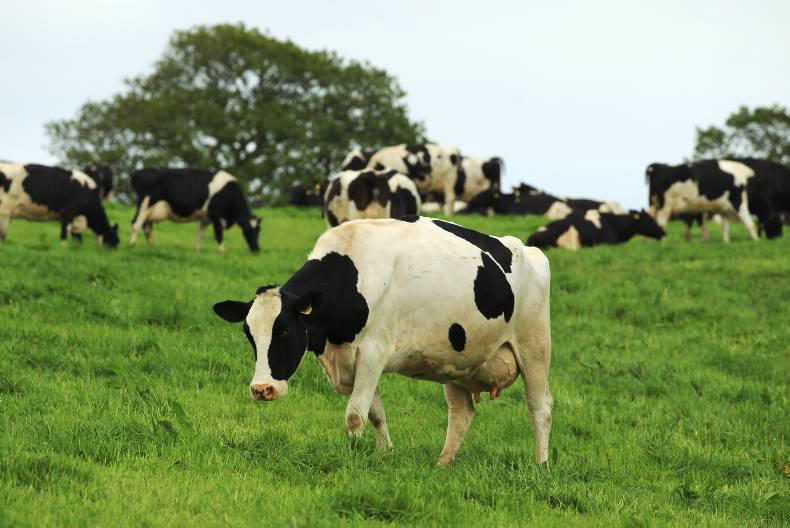
A further rise of 10.9% in the Global Dairy Trade (GDT) price index this week, on top of almost 15% a fortnight ago, has strengthened hopes that world dairy commodity markets have indeed changed direction after five months on the slide.
Meanwhile, the official Dutch quoted prices on Wednesday this week for whole milk powder (WMP) were up by €80/t to average €1,980/t. SMP prices were up by €20/t for food grade and €50/t for feed grade. Butter quotes fell by €20/t to average €2,620/t.
This positive sentiment in New Zealand is also apparent in futures markets, which had signalled the likelihood of a price lift at this week’s GDT. This involved contracts for supply between October 2015 and March 2016.
NZX futures for skimmed milk powder (SMP) have risen above the current EU intervention price, but this GDT average of US$1,698/t for SMP (up by 11.7%) was still around US$200/t below the EU intervention level (€1,698/t).
Commentators in New Zealand feel that this price is a good option for European dairy traders, given the additional requirements they have to meet for sales into intervention.
They also suggest that any move by the European Commission to increase the intervention price would be sending the wrong signal to milk producers at a time when the world market is oversupplied. But the reality is that GDT prices, equivalent to no more than 14p/litre (in sterling terms) need to rise a lot more to hit a level at which European producers can make profits.
The last two GDT auctions seem to be classic cases of the interaction of supply and demand as just 36,865t of product was sold at Tuesday’s auction and just under 37,000t a fortnight ago. That’s a reduction of around 10,000t from the volumes sold in the corresponding auctions last year and the tonnage offered in the auction at the beginning of August.
The tonnage listed for the next GDT on 15 September is also understood to be down by a similar amount.
GDT organisers predict that supplies in New Zealand will be lower than previously anticipated due to cutbacks by producers. There are reports of greater numbers of cows being culled, even though it is the start of lactation for the mainly spring-calving herds across the country.
Commodity traders are unsure of how much product is being put into store in NZ. It is known that Fonterra has been making every effort to sell product directly to customers around the world to reduce the tonnages offered on the GDT.
These sales have been at prices below the latest GDT averages.
Significant boost
The most significant boost at this GDT was a rise of 12.1% in the average prices for WMP to average US$1,856/t. This followed a lift of 19.1% at the previous GDT.
Prices for butter also rose strongly, up by 8.1% following a rise of 10.8% last time.
These two products and SMP account for more than 80% of the tonnage sold on the GDT. In a separate development in August, Russian regulators (Rosselkhoznadzor) removed temporary restrictions on deliveries of certain dairy products from 29 companies in New Zealand. This applies to anhydrous milk fat (AMF), whey protein concentrate and milk protein concentrate and it might be a further positive factor in the market. The ban had been in place since August 2013, following alleged detection of botulinum toxin in some dairy products from New Zealand at that time.
The regulator said it made the decision after studying data provided by the Veterinary Service of New Zealand.
Thurs 3 September
Fri 4 September
3 and 4 September
Sat 5 September
Mon 7 September
Tues 8 September
Wed 9 September


SHARING OPTIONS